What does Genesis 42:12 mean?
“And he said unto them, Nay, but to see the nakedness of the land ye are come.” — Genesis 42:12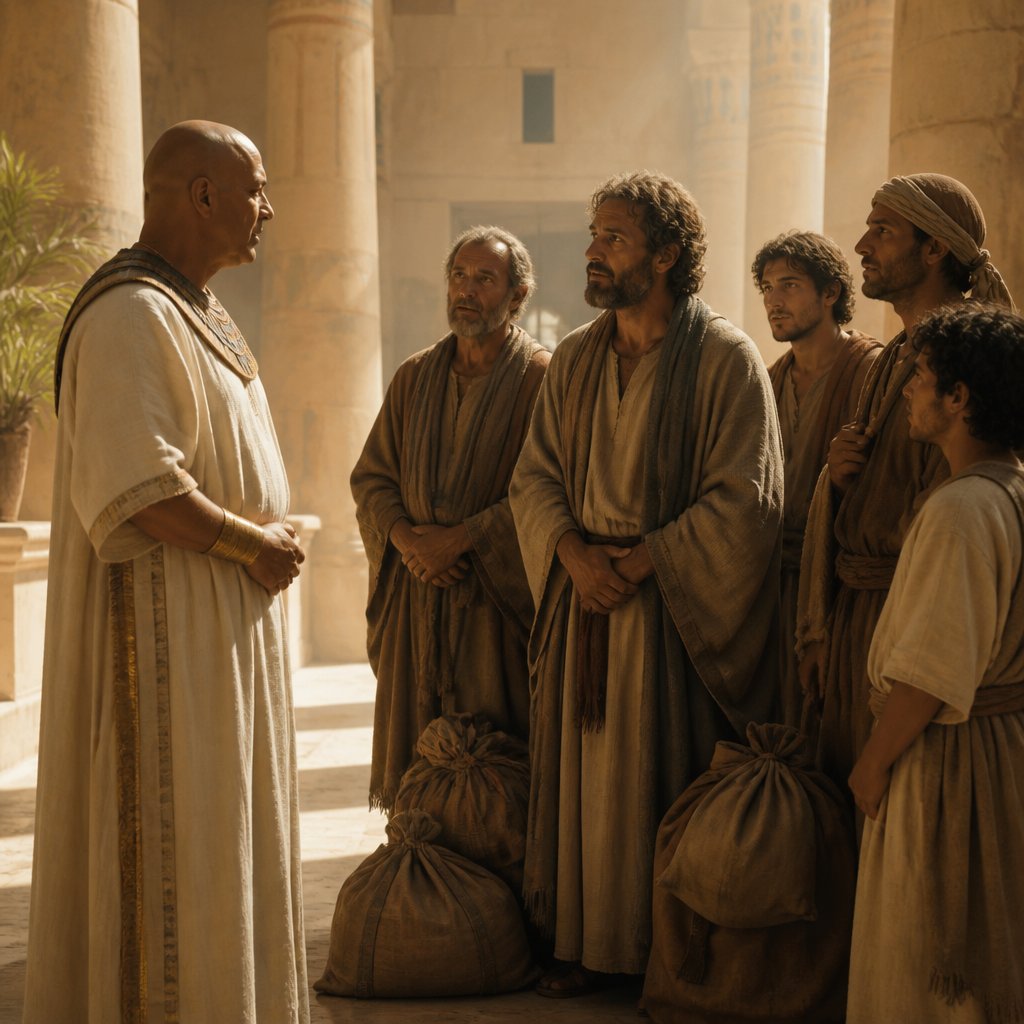
Genesis 42:12 (KJV) - And he said unto them, Nay, but to see the nakedness of the land ye are come.
The verse Genesis 42:12 comes from the book of Genesis in the Old Testament. This verse is part of the story where Joseph's brothers come to Egypt seeking food during a famine. Joseph, who had been sold into slavery by his brothers, is now a ruler in Egypt and doesn't reveal his true identity to them at first. Instead, he accuses them of being spies and puts them in prison for three days. When he finally releases them, he demands that they return with their younger brother Benjamin, as a way of testing their honesty.
The verse in question is spoken by Joseph as he accuses his brothers of ill intentions. As they protest their innocence, Joseph insists that they have come to Egypt not out of genuine need, but rather to "see the nakedness of the land." This phrase is often interpreted as a reference to spying or to determine the vulnerabilities of the land. Joseph is suspicious of his brothers and is testing their motives in coming to Egypt.
The book of Genesis is the first book in the Bible and is foundational to the rest of the Bible. It tells the story of the creation of the world, the fall of humanity, and God's covenant with Abraham and his descendants. The story of Joseph and his brothers is a pivotal and dramatic moment in the Genesis narrative, as it sets the stage for the eventual migration of the Israelites to Egypt and their enslavement there. It also explores themes of betrayal, forgiveness, and divine providence.
In this particular verse, we can see several themes that are prominent throughout the book of Genesis. One of these themes is the idea of testing and proving one's integrity. Joseph is putting his brothers to the test, both to determine their true intentions and to see if they have changed since they sold him into slavery. This theme of testing is also seen in the story of Abraham being tested by God with the sacrifice of his son Isaac, and later with Jacob wrestling with an angel and being given a new name, Israel.
Another important theme in this verse is the idea of divine providence and the hidden hand of God at work in human affairs. Despite the brothers' betrayal and Joseph's suffering, we see in this story that God has orchestrated events in such a way that Joseph is in a position to save his family and the entire nation of Egypt from famine. This idea of God's sovereignty and control over human history is a recurring theme in the book of Genesis and the Bible as a whole.
The symbolism in this verse is also worth examining. The phrase "to see the nakedness of the land" can be seen as a metaphor for the brothers' hidden intentions and the vulnerability of the land. It can also be interpreted as a form of poetic justice, as Joseph is now in a position of power over his brothers and is testing their integrity, just as they once tested his by selling him into slavery.
In a broader sense, this verse can also be seen as a cautionary tale about the consequences of betrayal and the importance of forgiveness. Joseph's brothers acted out of jealousy and betrayed him, only to find themselves in a position of need where they must rely on his mercy and generosity. This echoes the larger narrative of the Bible, which emphasizes the need for repentance and forgiveness as a way of restoring broken relationships and finding redemption.
Overall, Genesis 42:12 is a verse that is rich in symbolism and meaning. It reflects important themes in the book of Genesis and the Bible as a whole, such as testing, divine providence, and the consequences of betrayal. It also serves as a powerful reminder of the need for forgiveness and reconciliation in the face of past wrongs.
Get our apps


Artwork for Genesis 42:12

Genesis 42:12 - "And he said unto them, Nay, but to see the nakedness of the land ye are come."
"And he said unto them, Nay, but to see the nakedness of the land ye are come." - Genesis 42:12

Genesis 42:1-2

Genesis 42:29

Genesis 24-42

Genesis 42:26 - "And they laded their asses with the corn, and departed thence."

Genesis 42:8 - "And Joseph knew his brethren, but they knew not him."

Genesis 36:42 - "Duke Kenaz, duke Teman, duke Mibzar,"

Genesis 42:17 - "And he put them all together into ward three days."

Genesis 42:3 - "¶ And Joseph's ten brethren went down to buy corn in Egypt."

Genesis 42:31 - "And we said unto him, We are true men; we are no spies:"

Genesis 42:23 - "And they knew not that Joseph understood them; for he spake unto them by an interpreter."

Genesis 41:41-42 focus on signet ring

Genesis 42:11 - "We are all one man's sons; we are true men, thy servants are no spies."

Genesis 42:14 - "And Joseph said unto them, That is it that I spake unto you, saying, Ye are spies:"

Genesis 42:5 - "And the sons of Israel came to buy corn among those that came: for the famine was in the land of Canaan."

Genesis 42:30 - "The man, who is the lord of the land, spake roughly to us, and took us for spies of the country."

Genesis 42:18 - "And Joseph said unto them the third day, This do, and live; for I fear God:"

Genesis 42:10 - "And they said unto him, Nay, my lord, but to buy food are thy servants come."

"And they laded their asses with the corn, and departed thence." - Genesis 42:26

Isaiah 42:12 - "Let them give glory unto the LORD, and declare his praise in the islands."

Genesis 30:42 - "But when the cattle were feeble, he put them not in: so the feebler were Laban's, and the stronger Jacob's."

Genesis 42:32 - "We be twelve brethren, sons of our father; one is not, and the youngest is this day with our father in the land of Canaan."

"Duke Kenaz, duke Teman, duke Mibzar," - Genesis 36:42

Mark 12:42 - "And there came a certain poor widow, and she threw in two mites, which make a farthing."

"And Joseph knew his brethren, but they knew not him." - Genesis 42:8

Genesis 42:4 - "But Benjamin, Joseph's brother, Jacob sent not with his brethren; for he said, Lest peradventure mischief befall him."

Genesis 42:29 - "¶ And they came unto Jacob their father unto the land of Canaan, and told him all that befell unto them; saying,"

Genesis 42:13 - "And they said, Thy servants are twelve brethren, the sons of one man in the land of Canaan; and, behold, the youngest is this day with our father, and one is not."

Nehemiah 12:42 - "And Maaseiah, and Shemaiah, and Eleazar, and Uzzi, and Jehohanan, and Malchijah, and Elam, and Ezer. And the singers sang loud, with Jezrahiah their overseer."