What does Genesis 42:20 mean?
“But bring your youngest brother unto me; so shall your words be verified, and ye shall not die. And they did so.” — Genesis 42:20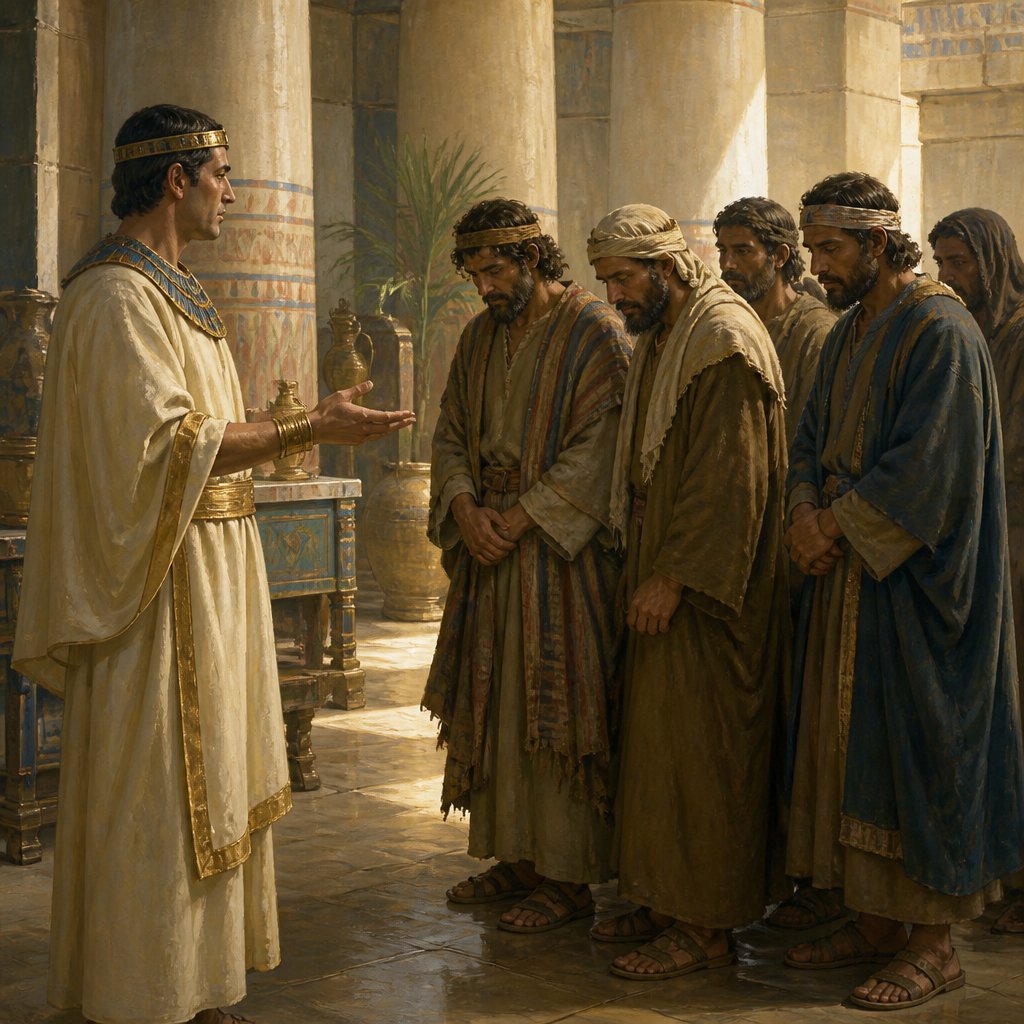
Genesis 42:20 (KJV): But bring your youngest brother unto me; so shall your words be verified, and ye shall not die. And they did so.
Context:
Genesis 42:20 comes from the story of Joseph, one of the twelve sons of Jacob. Joseph was sold into slavery by his jealous brothers and ended up in Egypt, where his gift of interpreting dreams propelled him to a position of power in the Egyptian government. A severe famine struck the region, and Joseph's brothers traveled to Egypt to buy grain. Joseph recognized his brothers but they did not recognize him. In an effort to test his brothers' character, Joseph accused them of being spies and demanded that they bring their youngest brother, Benjamin, to him as proof of their innocence. The verse in question is Joseph's command to his brothers to bring Benjamin to him.
Meaning and Commentary:
The verse in Genesis 42:20 carries several layers of meaning. On the surface, it is a simple command from Joseph to his brothers to bring Benjamin to Egypt. However, this command is laden with implications and significance that reverberate throughout the rest of the narrative.
One of the key themes in this verse is the idea of verification and validation. Joseph insists that his brothers bring Benjamin to him so that "your words be verified." This request is driven by Joseph's desire to confirm the truthfulness of his brothers' account and to test their character. Throughout the story, Joseph grapples with questions of trust, forgiveness, and reconciliation. His demand for Benjamin is a pivotal moment in the narrative, as it sets the stage for the emotional and spiritual transformation that is to come.
Furthermore, the verse reflects the overarching theme of redemption and reconciliation. The brothers' betrayal of Joseph is a central conflict in the narrative, and Joseph's demand for Benjamin represents a critical step towards reconciliation and healing. By bringing Benjamin to Joseph, the brothers ultimately face their past and take responsibility for their actions. This act of accountability becomes a catalyst for the restoration of their fractured relationship and for the healing of their family's wounds.
Symbolism plays a significant role in the verse as well. Benjamin, as the youngest brother, symbolizes innocence and vulnerability. His presence is not merely a physical requirement but a symbolic representation of the brothers' moral and emotional growth. The journey to retrieve Benjamin becomes a metaphor for the brothers' inner journey towards repentance, forgiveness, and transformation.
From a broader theological perspective, the verse can be seen as an expression of God's redemptive and reconciliatory work. Throughout the Bible, the theme of reconciliation is central to God's plan for humanity. The story of Joseph and his brothers serves as a powerful archetype for the process of repentance, forgiveness, and restoration that God desires for all people. Joseph's command for his brothers to bring Benjamin can be seen as a reflection of God's own call to humanity to come to him in repentance and faith.
In conclusion, Genesis 42:20 is a verse rich with meaning and significance. Through its themes of verification, redemption, and reconciliation, it offers profound insights into the complexities of human relationships, the nature of forgiveness, and the redemptive work of God. As part of the larger narrative of Joseph and his brothers, this verse continues to inspire reflection, discussion, and exploration of the profound truths it contains.
Get our apps


Artwork for Genesis 42:20

Genesis 42:20 - "But bring your youngest brother unto me; so shall your words be verified, and ye shall not die. And they did so."
"But bring your youngest brother unto me; so shall your words be verified, and ye shall not die. And they did so." - Genesis 42:20

Genesis 42:29

Genesis 24-42

Genesis 42:1-2

Genesis 42:26 - "And they laded their asses with the corn, and departed thence."

Genesis 42:8 - "And Joseph knew his brethren, but they knew not him."

Genesis 36:42 - "Duke Kenaz, duke Teman, duke Mibzar,"

Genesis 42:17 - "And he put them all together into ward three days."

Isaiah 42:20 - "Seeing many things, but thou observest not; opening the ears, but he heareth not."

Genesis 42:3 - "¶ And Joseph's ten brethren went down to buy corn in Egypt."

Genesis 42:31 - "And we said unto him, We are true men; we are no spies:"

Genesis 42:23 - "And they knew not that Joseph understood them; for he spake unto them by an interpreter."

Genesis 41:41-42 focus on signet ring

Genesis 42:12 - "And he said unto them, Nay, but to see the nakedness of the land ye are come."

Genesis 42:14 - "And Joseph said unto them, That is it that I spake unto you, saying, Ye are spies:"

Genesis 42:5 - "And the sons of Israel came to buy corn among those that came: for the famine was in the land of Canaan."

Genesis 42:11 - "We are all one man's sons; we are true men, thy servants are no spies."

Genesis 42:30 - "The man, who is the lord of the land, spake roughly to us, and took us for spies of the country."

Genesis 42:18 - "And Joseph said unto them the third day, This do, and live; for I fear God:"

Genesis 42:10 - "And they said unto him, Nay, my lord, but to buy food are thy servants come."

"And they laded their asses with the corn, and departed thence." - Genesis 42:26

Genesis 30:42 - "But when the cattle were feeble, he put them not in: so the feebler were Laban's, and the stronger Jacob's."

Genesis 42:32 - "We be twelve brethren, sons of our father; one is not, and the youngest is this day with our father in the land of Canaan."

"Duke Kenaz, duke Teman, duke Mibzar," - Genesis 36:42

"And Joseph knew his brethren, but they knew not him." - Genesis 42:8

Genesis 42:4 - "But Benjamin, Joseph's brother, Jacob sent not with his brethren; for he said, Lest peradventure mischief befall him."

Genesis 42:29 - "¶ And they came unto Jacob their father unto the land of Canaan, and told him all that befell unto them; saying,"

Luke 20:42 - "And David himself saith in the book of Psalms, The LORD said unto my Lord, Sit thou on my right hand,"

Genesis 42:13 - "And they said, Thy servants are twelve brethren, the sons of one man in the land of Canaan; and, behold, the youngest is this day with our father, and one is not."