What does Genesis 43:3 mean?
“And Judah spake unto him, saying, The man did solemnly protest unto us, saying, Ye shall not see my face, except your brother be with you.” — Genesis 43:3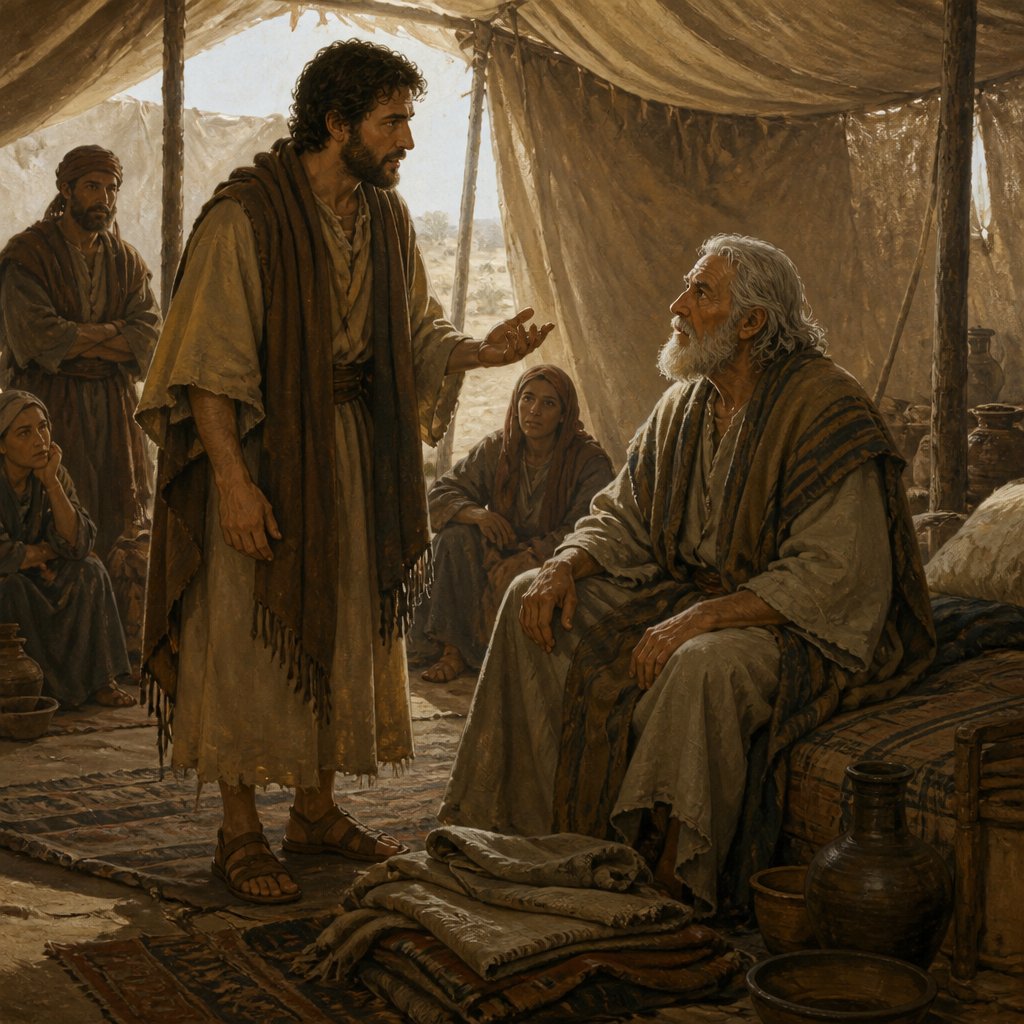
The Bible verse Genesis 43:3 in the King James Version (KJV) states, "And Judah spake unto him, saying, The man did solemnly protest unto us, saying, Ye shall not see my face, except your brother be with you." This verse is part of the narrative in the Book of Genesis which tells the story of Joseph and his brothers. To fully understand the meaning and significance of this verse, it is essential to delve into its historical and literary context, as well as consider the themes and symbolism present in the passage.
The Book of Genesis is the first book of the Bible and is considered a foundational text in both Judaism and Christianity. It contains the stories of the creation of the world, the fall of man, and the lives of the patriarchs, including Abraham, Isaac, and Jacob. The narrative of Joseph and his brothers is one of the most well-known and compelling stories in the book, and it is replete with themes such as family, forgiveness, redemption, and the sovereignty of God.
In Genesis 43, the story unfolds as Jacob, the father of Joseph and his brothers, instructs his sons to return to Egypt to buy more grain due to famine in their land. However, the brothers are hesitant to go back without their youngest brother, Benjamin, as the ruler of Egypt had insisted that they bring him along in order to verify their honesty. In the verse under consideration, Judah is speaking to his father Jacob, and he is recounting the words of the ruler of Egypt, who had insisted that they would not be able to see his face unless they brought Benjamin with them.
The context of this verse is crucial for understanding its significance. It is a pivotal moment in the narrative, as it illustrates the brothers' growing unease and dependence on one another. After having sold Joseph into slavery out of jealousy, the brothers are now faced with the consequences of their actions and are compelled to come to terms with their past. Additionally, the verse highlights the theme of honesty and integrity, as the brothers are being held accountable for their words and actions.
Symbolism is also abundant in this verse. The insistence of the ruler of Egypt that Benjamin must accompany the brothers in order to see his face can be interpreted as a symbol of the requirement for repentance and reconciliation. As the story progresses, it becomes evident that the brothers' journey to Egypt is not merely about obtaining grain, but also about their spiritual and moral growth. Furthermore, the verse can be seen as a metaphor for the necessity of facing the consequences of one's actions, as the brothers are confronted with the reality of their past deeds.
The theme of family is central to the narrative of Joseph and his brothers, and it is particularly emphasized in this verse. The brothers' concern for the welfare of their father Jacob and their younger brother Benjamin underscores the importance of familial bonds and responsibilities. Despite their past transgressions, the brothers are now motivated by a sense of duty and love for their family, which reflects a theme of redemption and reconciliation.
In conclusion, Genesis 43:3 from the King James Version of the Bible is a verse rich in meaning and significance. Its historical, literary, and thematic contexts all contribute to a deeper understanding of the passage. Through its themes of family, honesty, and redemption, and its symbolism of repentance and reconciliation, the verse offers timeless lessons and insights for readers of the Bible. It serves as a reminder of the enduring power of faith, forgiveness, and the sovereignty of God in the lives of individuals and families.
Get our apps


Artwork for Genesis 43:3

Genesis 43:3 - "And Judah spake unto him, saying, The man did solemnly protest unto us, saying, Ye shall not see my face, except your brother be with you."
"And Judah spake unto him, saying, The man did solemnly protest unto us, saying, Ye shall not see my face, except your brother be with you." - Genesis 43:3

Genesis 24-43

Genesis 43:1 - "And the famine was sore in the land."

"And the famine was sore in the land." - Genesis 43:1

Genesis 43:19 - "And they came near to the steward of Joseph's house, and they communed with him at the door of the house,"

Genesis 43:13 - "Take also your brother, and arise, go again unto the man:"

Genesis 43:17 - "And the man did as Joseph bade; and the man brought the men into Joseph's house."

Genesis 43:20 - "And said, O sir, we came indeed down at the first time to buy food:"

Genesis 43:25 - "And they made ready the present against Joseph came at noon: for they heard that they should eat bread there."

Genesis 30:43 - "And the man increased exceedingly, and had much cattle, and maidservants, and menservants, and camels, and asses."

Genesis 43:4 - "If thou wilt send our brother with us, we will go down and buy thee food:"

Genesis 43:10 - "For except we had lingered, surely now we had returned this second time."

Genesis 43:31 - "And he washed his face, and went out, and refrained himself, and said, Set on bread."

Genesis 43:24 - "And the man brought the men into Joseph's house, and gave them water, and they washed their feet; and he gave their asses provender."

Genesis 36:43 - "Duke Magdiel, duke Iram: these be the dukes of Edom, according to their habitations in the land of their possession: he is Esau the father of the Edomites."

Genesis 43:6 - "And Israel said, Wherefore dealt ye so ill with me, as to tell the man whether ye had yet a brother?"

Genesis 27:43 - "Now therefore, my son, obey my voice; and arise, flee thou to Laban my brother to Haran;"

Genesis 43:26 - "¶ And when Joseph came home, they brought him the present which was in their hand into the house, and bowed themselves to him to the earth."

Genesis 43:33 - "And they sat before him, the firstborn according to his birthright, and the youngest according to his youth: and the men marvelled one at another."

Genesis 43:28 - "And they answered, Thy servant our father is in good health, he is yet alive. And they bowed down their heads, and made obeisance."

Genesis 43:12 - "And take double money in your hand; and the money that was brought again in the mouth of your sacks, carry it again in your hand; peradventure it was an oversight:"

Genesis 43:15 - "And the men took that present, and they took double money in their hand, and Benjamin; and rose up, and went down to Egypt, and stood before Joseph."

Genesis 43:27 - "And he asked them of their welfare, and said, Is your father well, the old man of whom ye spake? Is he yet alive?"
Lamentations 3:43 - "Thou hast covered with anger, and persecuted us: thou hast slain, thou hast not pitied."

Genesis 43:22 - "And other money have we brought down in our hands to buy food: we cannot tell who put our money in our sacks."

Genesis 43:5 - "But if thou wilt not send him, we will not go down: for the man said unto us, Ye shall not see my face, except your brother be with you."

"Take also your brother, and arise, go again unto the man:" - Genesis 43:13

Genesis 43:30 - "And Joseph made haste; for his bowels did yearn upon his brother: and he sought where to weep; and he entered into his chamber, and wept there."

Genesis 43:16 - "And when Joseph saw Benjamin with them, he said to the ruler of his house, Bring these men home, and slay, and make ready; for these men shall dine with me at noon."