What does Genesis 44:12 mean?
“And he searched, and began at the eldest, and left at the youngest: and the cup was found in Benjamin’s sack.” — Genesis 44:12
Genesis 44:12 (KJV) – "And he searched, and began at the eldest, and left at the youngest: and the cup was found in Benjamin's sack."
The verse above comes from the story of Joseph and his brothers in the book of Genesis. This particular verse is part of the climax of the story, where Joseph tests his brothers to see if they have truly changed and repented for their mistreatment of him.
The context of this verse is essential for understanding its full meaning. Joseph, who was sold into slavery by his jealous brothers, has risen to a position of power in Egypt. Unbeknownst to his brothers, Joseph is the one they are coming to ask for food during the famine that has struck their land. When they arrive in Egypt, Joseph accuses them of espionage and orders that a silver cup be planted in the youngest brother Benjamin's sack. This verse is the moment of discovery, as Joseph's servant searches through their sacks and finds the cup in Benjamin's possession.
The themes present in this verse are numerous and powerful. One of the main themes is the idea of reconciliation and forgiveness. Throughout the story, Joseph is faced with a choice – to seek revenge on his brothers for their betrayal or to forgive them and be reconciled. This verse represents the moment of truth, where Joseph must decide how to respond to the situation. It also speaks to the theme of redemption, as the brothers are given the opportunity to right the wrongs of their past and prove that they have changed.
Another important theme in this verse is the idea of divine providence. The discovery of the cup in Benjamin's sack is not just a coincidence, but rather a part of God's plan. Joseph himself recognizes this, as he later reveals his true identity to his brothers and explains that it was God who sent him to Egypt to preserve life. This theme of divine providence underscores the idea that God is in control of all things, even the seemingly random discovery of a silver cup in a sack.
The symbolism in this verse is rich and significant. The cup itself is a powerful symbol throughout the Bible, often representing themes of sacrifice, redemption, and forgiveness. In this particular verse, the cup serves as a test for Joseph's brothers, a test that they ultimately pass when they are willing to sacrifice themselves for Benjamin and take responsibility for their past actions. The order in which the servant searches the brothers' sacks, from eldest to youngest, is also symbolic, representing the reversal of the natural order and the idea that God often works in unexpected ways.
In conclusion, Genesis 44:12 is a pivotal moment in the story of Joseph and his brothers, and it is filled with deep meaning and symbolism. It speaks to the themes of reconciliation, redemption, and divine providence, and it serves as a powerful reminder of God's ability to turn even the most difficult situations into opportunities for grace and transformation.
Get our apps


Artwork for Genesis 44:12

Genesis 44:12 - "And he searched, and began at the eldest, and left at the youngest: and the cup was found in Benjamin's sack."

"And he searched, and began at the eldest, and left at the youngest: and the cup was found in Benjamin's sack." - Genesis 44:12

Genesis 24-44

Mark 12:41 - 44
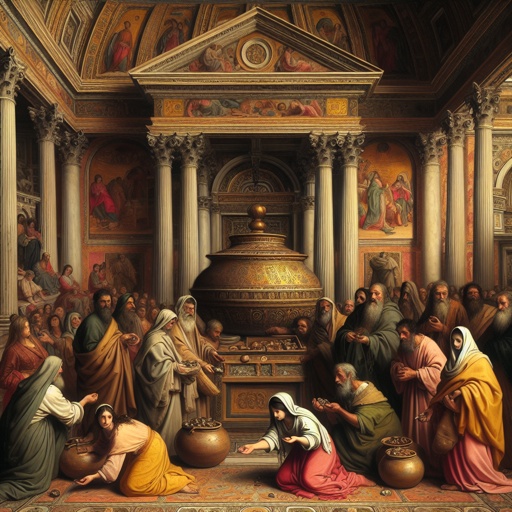
Mark 12:41 - 44

Mark 12:41 - 44

Mark 12:41 - 44

Mark 12:41 - 44

Genesis 44:3 - "As soon as the morning was light, the men were sent away, they and their asses."

Genesis 44:13 - "Then they rent their clothes, and laded every man his ass, and returned to the city."

Genesis 44:25 - "And our father said, Go again, and buy us a little food."

Genesis 27:44 - "And tarry with him a few days, until thy brother's fury turn away;"

Genesis 44:19 - "My lord asked his servants, saying, Have ye a father, or a brother?"

Genesis 44:6 - "¶ And he overtook them, and he spake unto them these same words."

Genesis 44:14 - "¶ And Judah and his brethren came to Joseph's house; for he was yet there: and they fell before him on the ground."

Psalms 44:12 - "Thou sellest thy people for nought, and dost not increase thy wealth by their price."

John 12:44 - "¶ Jesus cried and said, He that believeth on me, believeth not on me, but on him that sent me."

Genesis 44:5 - "Is not this it in which my lord drinketh, and whereby indeed he divineth? ye have done evil in so doing."

Genesis 44:9 - "With whomsoever of thy servants it be found, both let him die, and we also will be my lord's bondmen."

Genesis 44:11 - "Then they speedily took down every man his sack to the ground, and opened every man his sack."

Genesis 44:27 - "And thy servant my father said unto us, Ye know that my wife bare me two sons:"

Luke 12:44 - "Of a truth I say unto you, that he will make him ruler over all that he hath."

Genesis 44:28 - "And the one went out from me, and I said, Surely he is torn in pieces; and I saw him not since:"

Genesis 31:44 - "Now therefore come thou, let us make a covenant, I and thou; and let it be for a witness between me and thee."

Exodus 12:44 - "But every man's servant that is bought for money, when thou hast circumcised him, then shall he eat thereof."

Genesis 44:29 - "And if ye take this also from me, and mischief befall him, ye shall bring down my gray hairs with sorrow to the grave."

Genesis 44:21 - "And thou saidst unto thy servants, Bring him down unto me, that I may set mine eyes upon him."

Genesis 44:15 - "And Joseph said unto them, What deed is this that ye have done? wot ye not that such a man as I can certainly divine?"

Genesis 44:7 - "And they said unto him, Wherefore saith my lord these words? God forbid that thy servants should do according to this thing:"

Genesis 44:34 - "For how shall I go up to my father, and the lad be not with me? lest peradventure I see the evil that shall come on my father."