What does Genesis 5:30 mean?
“And Lamech lived after he begat Noah five hundred ninety and five years, and begat sons and daughters:” — Genesis 5:30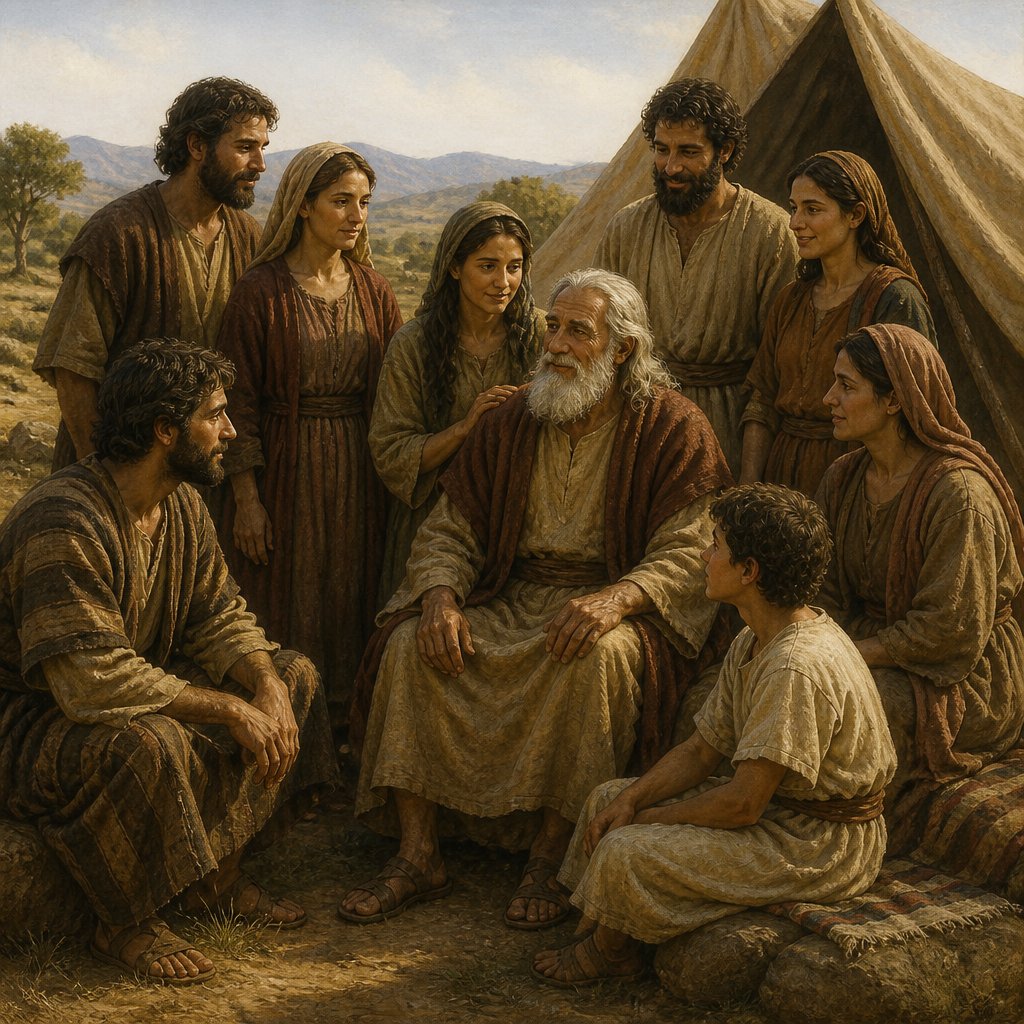
Genesis 5:30 (KJV) states, "And Lamech lived after he begat Noah five hundred ninety and five years, and begat sons and daughters." This verse is part of the genealogy of Adam found in the book of Genesis, which lists the descendants of Adam and their lifespans.
The genealogy in Genesis 5 is significant because it provides a historical record of the descendants of Adam, starting with his son Seth. This genealogy traces the lineage from Adam to Noah, who survived the great flood and repopulated the earth. Each person mentioned in the genealogy lived for an exceptionally long time, often over 900 years. This is a common theme in the early chapters of Genesis, and it serves to emphasize the extreme longevity of the early patriarchs.
Lamech, the focus of Genesis 5:30, is an often overlooked figure in the Bible, but his story has deep significance. Lamech was the father of Noah, who is best known for building the ark and saving his family from the flood. Lamech's long life and his role as the father of Noah show that he played an important role in the unfolding of God's plan for humanity.
The mention of Lamech living for 595 years after the birth of Noah underscores the idea of longevity that is prevalent in this genealogy. The fact that he continued to have sons and daughters after the birth of Noah is an indication of the long lifespans and prolific nature of these early patriarchs. This also highlights the importance of the family unit and the continuation of the human race.
The symbolism of Lamech's lifespan and his role as the father of Noah can be interpreted in various ways. Firstly, it can be seen as a reflection of God's plan for humanity and the unfolding of history. Lamech's long life allowed him to witness significant events and play a key role in the continuation of the human race. This reflects God's sovereignty and the way in which He works through individuals to accomplish His purposes.
Furthermore, the mention of Lamech having sons and daughters after the birth of Noah can also be seen as a symbol of hope and renewal. Despite the impending judgment of the flood, life continues to be propagated, and God's promise of the preservation of humanity is fulfilled through the birth of Noah and his descendants. This serves as a reminder of God's faithfulness and His ability to bring about new life and restoration even in the midst of judgment.
In a broader sense, the genealogy in Genesis 5 and the specific mention of Lamech in verse 30 can be seen as a reflection of the overarching theme of God's faithfulness and His plan for redemption. Through the genealogy, we see the continuity of God's plan unfolding through the generations, ultimately leading to the birth of Jesus Christ, who is the ultimate fulfillment of God's promise of redemption for humanity.
In conclusion, Genesis 5:30, through its mention of Lamech's lifespan and role as the father of Noah, provides a deep and meaningful reflection on the themes of God's sovereignty, the continuity of His plan for humanity, and His faithfulness in the midst of judgment. It serves as a reminder of God's ability to bring about new life and renewal, despite the challenges and trials that may come. This verse ultimately points to the larger narrative of God's redemptive plan for humanity, which finds its fulfillment in the person of Jesus Christ.
Get our apps


Artwork for Genesis 5:30

Genesis 5:30 - "And Lamech lived after he begat Noah five hundred ninety and five years, and begat sons and daughters:"

Genesis 5:30

"And Lamech lived after he begat Noah five hundred ninety and five years, and begat sons and daughters:" - Genesis 5:30

Genesis 30:5 - "And Bilhah conceived, and bare Jacob a son."

"And Bilhah conceived, and bare Jacob a son." - Genesis 30:5

Genesis 19-30

Genesis 24-30

Genesis 18-30

Genesis 21-30

Genesis 30:10-11

Genesis 29:15-30

Genesis 11:30 - "But Sarai was barren; she had no child."

Matthew 5:30

Matthew 5:30

Genesis 30:10 - "And Zilpah Leah's maid bare Jacob a son."

Genesis 30:19 - "And Leah conceived again, and bare Jacob the sixth son."

Genesis 26:30 - "And he made them a feast, and they did eat and drink."

Genesis 30:12 - "And Zilpah Leah's maid bare Jacob a second son."

Genesis 30:28 - "And he said, Appoint me thy wages, and I will give it."

Genesis 30:21 - "And afterwards she bare a daughter, and called her name Dinah."

Genesis 30:34 - "And Laban said, Behold, I would it might be according to thy word."

Genesis 30:22 - "¶ And God remembered Rachel, and God hearkened to her, and opened her womb."

Jeremiah 5:30 - "¶ A wonderful and horrible thing is committed in the land;"

Genesis 30:7 - "And Bilhah Rachel's maid conceived again, and bare Jacob a second son."

Genesis 10:30 - "And their dwelling was from Mesha, as thou goest unto Sephar a mount of the east."

Genesis 30:11 - "And Leah said, A troop cometh: and she called his name Gad."

Daniel 5:30 - "¶ In that night was Belshazzar the king of the Chaldeans slain."

Genesis 30:39 - "And the flocks conceived before the rods, and brought forth cattle ringstraked, speckled, and spotted."

Genesis 30:17 - "And God hearkened unto Leah, and she conceived, and bare Jacob the fifth son."

Genesis 30:43 - "And the man increased exceedingly, and had much cattle, and maidservants, and menservants, and camels, and asses."