What does Genesis 50:4 mean?
“And when the days of his mourning were past, Joseph spake unto the house of Pharaoh, saying, If now I have found grace in your eyes, speak, I pray you, in the ears of Pharaoh, saying,” — Genesis 50:4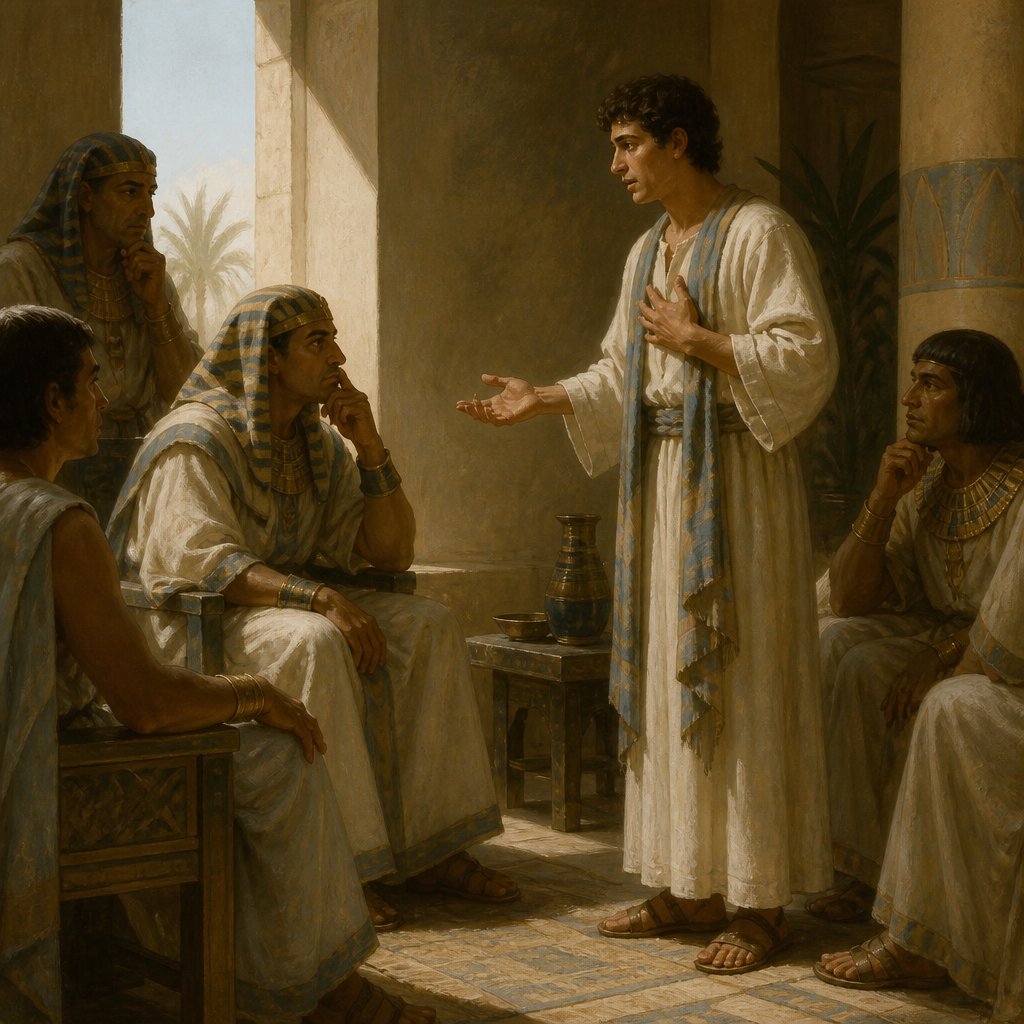
Genesis 50:4 (KJV): "And when the days of his mourning were past, Joseph spake unto the house of Pharaoh, saying, If now I have found grace in your eyes, speak, I pray you, in the ears of Pharaoh, saying,"
The book of Genesis is the first book of the Bible and is often seen as a foundational text for both Judaism and Christianity. It tells the story of the creation of the world, the early history of humanity, and the origins of the Israelite people. It is in this context that the verse Genesis 50:4 appears, towards the end of the book, during the closing chapters of the story of Joseph, a key figure in the book of Genesis.
But to fully understand the significance of this verse, we must first consider the broader context of the entire story of Joseph. The tale of Joseph is one of betrayal, suffering, redemption, and forgiveness. Joseph was the favorite son of his father Jacob, which stirred up jealousy and resentment among his brothers. They sold him into slavery in Egypt, where he endured many trials and tribulations before eventually rising to a position of great power and influence as a result of his ability to interpret dreams. Ultimately, Joseph was able to save his family from a devastating famine and reconcile with his brothers, demonstrating forgiveness and compassion.
The verse Genesis 50:4 takes place towards the end of the story, after the death of their father Jacob. Joseph and his brothers return to Egypt after burying their father and it is at this point that Joseph approaches the house of Pharaoh to make a request. This moment is not just a simple request, but a crucial turning point in the narrative, as it represents the final step in Joseph's journey of reconciliation and forgiveness. This act of approaching Pharaoh to make a request also highlights Joseph's position of power and authority, as well as his humility and respect for the ruling house.
One of the key themes of this verse is the theme of forgiveness. Throughout the story of Joseph, we see the power and importance of forgiveness. Despite the terrible wrongs done to him, Joseph is able to forgive his brothers and reconcile with them. This act of forgiveness is a powerful testimony to the redemptive and transformative power of forgiveness, even in the face of great suffering and injustice. It also serves as a model for the importance of reconciliation and healing in relationships, emphasizing the need for compassion and empathy.
Another theme present in this verse is the theme of grace. Joseph asks for grace in the eyes of the house of Pharaoh, acknowledging that his request is dependent on their favor. This demonstrates an understanding of the importance of grace and mercy in human interactions, and the recognition that we are often dependent on the kindness and compassion of others. This theme of grace ties into the broader narrative of Joseph's story, highlighting the importance of divine grace and mercy in the face of human suffering and injustice.
Symbolism is also present in this verse, particularly in Joseph's approach to the house of Pharaoh. Joseph's act of approaching Pharaoh's house can be seen as a symbol of his willingness to engage with power and authority in order to bring about positive change. It also symbolizes his readiness to take on new responsibilities and roles, reflecting his growth and development throughout the story.
In conclusion, Genesis 50:4 is a powerful verse that encapsulates many of the key themes and messages of the book of Genesis as a whole. It speaks to the importance of forgiveness, grace, and reconciliation, and serves as a powerful reminder of the redemptive and transformative power of these concepts. It also represents a significant moment in Joseph's journey, demonstrating his humility and strength as he seeks to bring about healing and resolution. Through its rich symbolism and deep thematic content, Genesis 50:4 continues to offer profound insights and lessons for readers today.
Get our apps


Artwork for Genesis 50:4
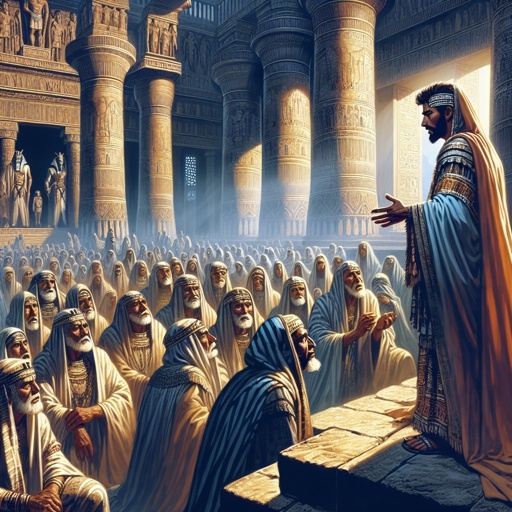
Genesis 50:4 - "And when the days of his mourning were past, Joseph spake unto the house of Pharaoh, saying, If now I have found grace in your eyes, speak, I pray you, in the ears of Pharaoh, saying,"
"And when the days of his mourning were past, Joseph spake unto the house of Pharaoh, saying, If now I have found grace in your eyes, speak, I pray you, in the ears of Pharaoh, saying," - Genesis 50:4

Genesis 24-50

Genesis 50:26

Genesis 50:25

Genesis 50:26

Genesis 50:25

Genesis 50:26

Genesis 50:25

Genesis 50:26

Genesis 50:12 - "And his sons did unto him according as he commanded them:"

Genesis 50:19 - "And Joseph said unto them, Fear not: for am I in the place of God?"

Create a coffin for Joseph Genesis 50:26

Genesis 50:1 - "And Joseph fell upon his father's face, and wept upon him, and kissed him."

Genesis 50:9 - "And there went up with him both chariots and horsemen: and it was a very great company."

Genesis 50:22 - "¶ And Joseph dwelt in Egypt, he, and his father's house: and Joseph lived an hundred and ten years."

Genesis 50:2 - "And Joseph commanded his servants the physicians to embalm his father: and the physicians embalmed Israel."

Genesis 50:6 - "And Pharaoh said, Go up, and bury thy father, according as he made thee swear."

Genesis 50:16 - "And they sent a messenger unto Joseph, saying, Thy father did command before he died, saying,"

Genesis 50:18 - "And his brethren also went and fell down before his face; and they said, Behold, we be thy servants."

Genesis 50:26 - "So Joseph died, being an hundred and ten years old: and they embalmed him, and he was put in a coffin in Egypt."

Genesis 50:20 - "But as for you, ye thought evil against me; but God meant it unto good, to bring to pass, as it is this day, to save much people alive."

Genesis 50:3 - "And forty days were fulfilled for him; for so are fulfilled the days of those which are embalmed: and the Egyptians mourned for him threescore and ten days."

Genesis 24:50 - "Then Laban and Bethuel answered and said, The thing proceedeth from the LORD: we cannot speak unto thee bad or good."

Genesis 50:25 - "And Joseph took an oath of the children of Israel, saying, God will surely visit you, and ye shall carry up my bones from hence."

Genesis 50:8 - "And all the house of Joseph, and his brethren, and his father's house: only their little ones, and their flocks, and their herds, they left in the land of Goshen."

Genesis 50:7 - "¶ And Joseph went up to bury his father: and with him went up all the servants of Pharaoh, the elders of his house, and all the elders of the land of Egypt,"

Genesis 50:14 - "¶ And Joseph returned into Egypt, he, and his brethren, and all that went up with him to bury his father, after he had buried his father."

Genesis 50:21 - "Now therefore fear ye not: I will nourish you, and your little ones. And he comforted them, and spake kindly unto them."

Genesis 50:23 - "And Joseph saw Ephraim's children of the third generation: the children also of Machir the son of Manasseh were brought up upon Joseph's knees."