What does Genesis 50:6 mean?
“And Pharaoh said, Go up, and bury thy father, according as he made thee swear.” — Genesis 50:6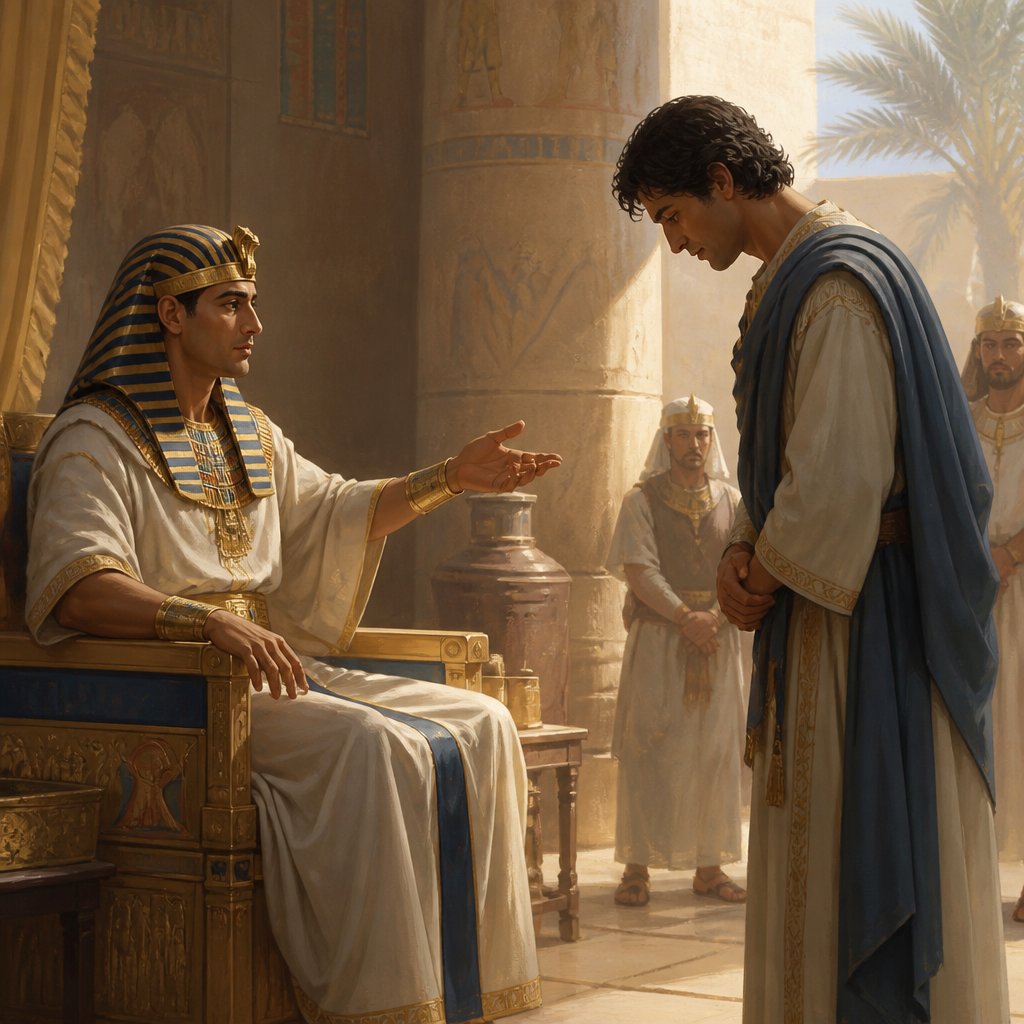
Genesis 50:6 (KJV) reads, "And Pharaoh said, Go up, and bury thy father, according as he made thee swear." This verse is found in the final chapter of the book of Genesis, which is the first book of the Bible. The verse is part of the story of Joseph, who is being instructed by Pharaoh to travel to Canaan to bury his father, Jacob, as he had promised. This particular verse is a small part of a larger story, but it holds significance in terms of the themes of obedience, honor, and the fulfillment of promises.
The context of this verse is important to understand the gravity of the situation. Joseph, the son of Jacob, had been sold into slavery by his jealous brothers and had risen to great prominence in Egypt, eventually becoming the second most powerful man in the kingdom under Pharaoh. Throughout his trials and tribulations, Joseph remained faithful to God and was ultimately able to reconcile with his family. Now, as his father Jacob has passed away, Joseph is given a command by Pharaoh to honor his father's wishes and bring him back to Canaan for burial.
One of the themes present in this verse is the concept of obedience. Joseph is being obedient to both his father's wishes and the command of Pharaoh. In biblical teachings, obedience is often tied to the idea of faithfulness and trust in God. By following through with the instructions given to him, Joseph is showing his commitment to honoring his father and fulfilling his duty to him in death, as well as his duty to his earthly authority, Pharaoh.
Another important theme in this verse is the concept of honoring one's parents. In the Bible, honoring one's parents is considered a moral and spiritual imperative. The fifth commandment in the Old Testament is "Honor your father and your mother" (Exodus 20:12). By obeying Pharaoh's command to bury his father according to his wishes, Joseph is not only fulfilling a promise he made to his father, but he is also demonstrating respect and honor for his father's memory. This act of honoring his father's wishes is a sign of Joseph's integrity and his commitment to upholding family honor.
Additionally, this verse illustrates the importance of keeping promises. When Jacob was on his deathbed, he made Joseph swear that he would bury him in the land of Canaan, the promised land given to their ancestors by God. Joseph's fulfillment of this promise demonstrates his faithfulness and trustworthiness, not only to his father but also to God. Keeping promises is a significant value in the Bible, and Joseph's obedience to his father's request shows his commitment to upholding his word.
Symbolism can also be found in this verse. The act of burying Jacob in the land of Canaan carries symbolic significance, as it represents a connection to the promised land and the covenant that God made with their ancestors. By honoring his father's wishes and returning him to Canaan for burial, Joseph is demonstrating his commitment to preserving the heritage and faith of his family. The act of burial itself is symbolic of closure and respect for the deceased, as well as a recognition of their place in history and their significance to future generations.
In conclusion, Genesis 50:6 (KJV) is a verse that may seem simple on the surface, but it holds deep meaning and significance within the larger context of the biblical narrative. Through the themes of obedience, honor, and the fulfillment of promises, this verse demonstrates the importance of faithfulness, integrity, and respect for one's family and heritage. It also serves as a reminder of the importance of keeping one's word and remaining true to the values and commitments established by God.
Get our apps


Artwork for Genesis 50:6

Genesis 50:6 - "And Pharaoh said, Go up, and bury thy father, according as he made thee swear."
"And Pharaoh said, Go up, and bury thy father, according as he made thee swear." - Genesis 50:6

Genesis 24-50

Genesis 50:26

Genesis 50:25

Genesis 50:25

Genesis 50:26

Genesis 50:26

Genesis 50:26

Genesis 50:25

Genesis 50:12 - "And his sons did unto him according as he commanded them:"

Genesis 50:19 - "And Joseph said unto them, Fear not: for am I in the place of God?"

Create a coffin for Joseph Genesis 50:26

Genesis 50:1 - "And Joseph fell upon his father's face, and wept upon him, and kissed him."

Genesis 50:9 - "And there went up with him both chariots and horsemen: and it was a very great company."

Genesis 50:22 - "¶ And Joseph dwelt in Egypt, he, and his father's house: and Joseph lived an hundred and ten years."

Psalms 50:6 - "And the heavens shall declare his righteousness: for God is judge himself. Selah."

Genesis 50:2 - "And Joseph commanded his servants the physicians to embalm his father: and the physicians embalmed Israel."

Genesis 50:16 - "And they sent a messenger unto Joseph, saying, Thy father did command before he died, saying,"
1 Chronicles 6:50 - "And these are the sons of Aaron; Eleazar his son, Phinehas his son, Abishua his son,"

Genesis 50:18 - "And his brethren also went and fell down before his face; and they said, Behold, we be thy servants."

Genesis 50:26 - "So Joseph died, being an hundred and ten years old: and they embalmed him, and he was put in a coffin in Egypt."

Genesis 50:20 - "But as for you, ye thought evil against me; but God meant it unto good, to bring to pass, as it is this day, to save much people alive."

Genesis 50:3 - "And forty days were fulfilled for him; for so are fulfilled the days of those which are embalmed: and the Egyptians mourned for him threescore and ten days."

John 6:50 - "This is the bread which cometh down from heaven, that a man may eat thereof, and not die."

Genesis 24:50 - "Then Laban and Bethuel answered and said, The thing proceedeth from the LORD: we cannot speak unto thee bad or good."

Genesis 50:25 - "And Joseph took an oath of the children of Israel, saying, God will surely visit you, and ye shall carry up my bones from hence."

Genesis 50:8 - "And all the house of Joseph, and his brethren, and his father's house: only their little ones, and their flocks, and their herds, they left in the land of Goshen."

Genesis 50:7 - "¶ And Joseph went up to bury his father: and with him went up all the servants of Pharaoh, the elders of his house, and all the elders of the land of Egypt,"

Genesis 50:14 - "¶ And Joseph returned into Egypt, he, and his brethren, and all that went up with him to bury his father, after he had buried his father."