What does Genesis 8:19 mean?
“Every beast, every creeping thing, and every fowl, and whatsoever creepeth upon the earth, after their kinds, went forth out of the ark.” — Genesis 8:19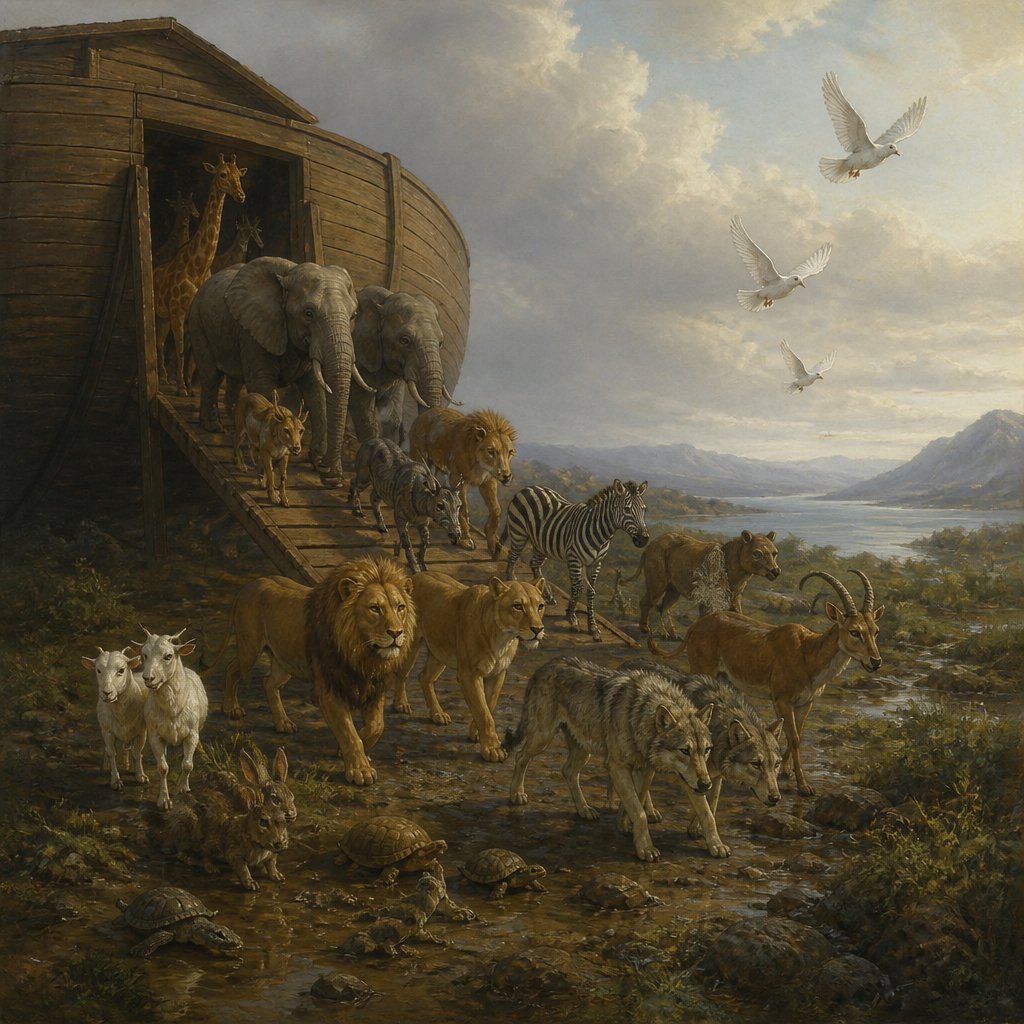
Genesis 8:19 (KJV) reads, "Every beast, every creeping thing, and every fowl, and whatsoever creepeth upon the earth, after their kinds, went forth out of the ark." This verse is a significant moment in the story of Noah's Ark, after the flood waters had receded and the earth began to replenish itself. To truly understand the important themes, context, and symbolism of this verse, we must first examine the broader narrative of Noah's Ark and the events leading up to Genesis 8:19.
In Genesis 6:5-8, we learn that the wickedness of man had become great, and God decided to bring a flood upon the earth to destroy all living creatures. However, God found favor in Noah, a righteous man, and instructed him to build an ark to save himself, his family, and two of every kind of animal. This act of preservation on behalf of God displays His compassion and mercy, even in the face of widespread corruption and wickedness. The flood itself serves as a powerful symbol of God's judgment and the consequences of sin, while the ark is a symbol of salvation and deliverance for those who remain faithful to God.
As the floodwaters receded, the ark came to rest on the mountains of Ararat, and Noah waited for God's timing to exit the ark. When the time was right, Noah released the animals from the ark, and they went forth "after their kinds." This particular phrase emphasizes the intricacy and diversity of God's creation as well as His providence in preserving each species during the flood. It also echoes the language used earlier in Genesis 1, when God created the animals and commanded them to multiply and fill the earth, thus underscoring the theme of God's faithfulness to His original creation.
The imagery of the animals leaving the ark serves as a powerful symbol of renewal and new beginnings. Just as the flood waters washed away the old, sinful world, the animals emerging from the ark represent the start of a new era, one in which God's covenant with Noah and all living creatures would be established. This covenant is characterized by God's promise to never again destroy all flesh with a flood, and the sign of this covenant is the rainbow (Genesis 9:8-17). In this way, the animals leaving the ark embody the hope and promise of a fresh start, a theme that resonates throughout the biblical narrative, particularly in the context of redemption and restoration.
Another important aspect of this verse is the inclusion of "every beast, every creeping thing, and every fowl." This comprehensive list reinforces the idea that God's salvation and providence extend to all living creatures, regardless of their size, appearance, or perceived importance. In God's eyes, every animal has value and significance, reflecting His wisdom and intention in the diversity of creation. This inclusivity echoes the broader biblical message that all of creation belongs to God and is subject to His care and provision.
In summary, Genesis 8:19 captures a pivotal moment in the story of Noah's Ark, where the animals, representing God's diverse and intricate creation, emerge from the ark to embark on a new beginning. This verse emphasizes themes of God's faithfulness, redemption, and the renewal of creation, as well as the symbolism of the animals as a powerful visual reminder of God's promise to preserve and care for all living creatures. It also serves as a foundation for understanding God's ongoing covenant with His creation and His enduring commitment to its well-being.
Get our apps


Artwork for Genesis 8:19

Genesis 8:19 - "Every beast, every creeping thing, and every fowl, and whatsoever creepeth upon the earth, after their kinds, went forth out of the ark."
"Every beast, every creeping thing, and every fowl, and whatsoever creepeth upon the earth, after their kinds, went forth out of the ark." - Genesis 8:19

Genesis 19-8

Genesis 19-19

Genesis 15:19

Genesis 23-19

Genesis 19-26

Genesis 19-13

Genesis 28-19

Genesis 19-31

Genesis 19-2

Genesis 19-29

Genesis 19-7

Genesis 19-1

Genesis 19-36

Genesis 19-4

Genesis 19-17

Genesis 19-28

Genesis 18-19

Genesis 19-12

Genesis 24-19

Genesis 19-34

Genesis 19-24

Genesis 22:19

Genesis 19-9

Genesis 19-25

Genesis 19-11

Genesis 21-19

Genesis 19-32

Genesis 19-38