What does Habakkuk 1:5 mean?
“Behold ye among the heathen, and regard, and wonder marvellously: for I will work a work in your days, which ye will not believe, though it be told you.” — Habakkuk 1:5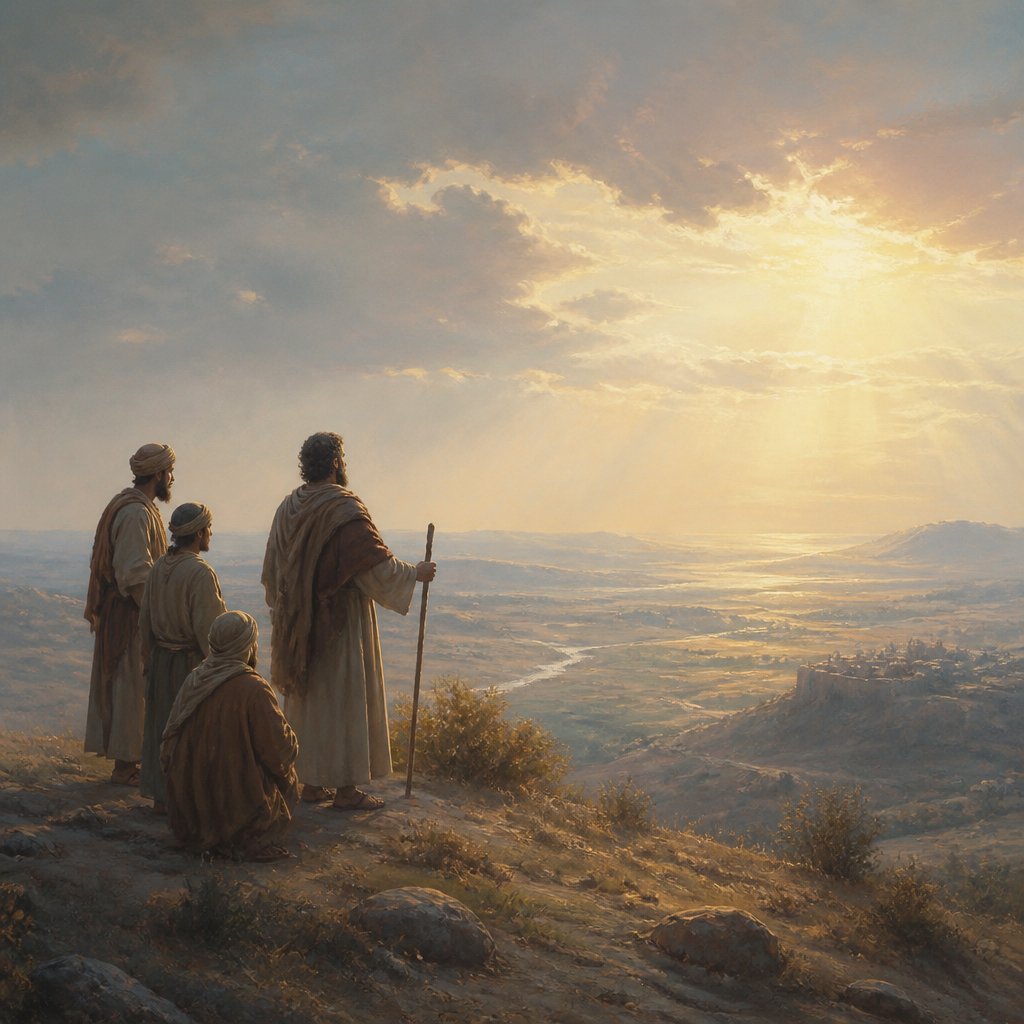
The Bible verse Habakkuk 1:5 from the King James Version (KJV) reads, "Behold ye among the heathen, and regard, and wonder marvellously: for I will work a work in your days, which ye will not believe, though it be told you." This verse is found in the Old Testament prophetic book of Habakkuk, which is named after the prophet who authored it.
Habakkuk was a prophet who ministered in the southern kingdom of Judah during the seventh century B.C. At this time, Judah was experiencing moral and spiritual decay, and this book is concerned with the prophet's conversations with God regarding the impending Babylonian invasion and the suffering and injustice that would accompany it.
The verse Habakkuk 1:5 is a powerful statement from God to the prophet Habakkuk and the people of Judah. It begins with the command, "Behold ye among the heathen, and regard, and wonder marvellously." This exhortation is a call to pay attention, to observe with wonder and amazement, and to take heed of what is about to be revealed. The phrase "among the heathen" refers to the nations surrounding Judah, and it serves to emphasize the magnitude of the event that is about to unfold.
The verse continues with God declaring, "for I will work a work in your days." This statement indicates that God is about to act in a significant way within the lifetime of the people of Judah. The use of the word "work" suggests that God's actions will be intentional, purposeful, and impactful. God assures the people that He is in control and is actively involved in their world, even in the midst of uncertainty and difficulty.
The verse concludes with the statement, "which ye will not believe, though it be told you." Here, God forewarns the people that the work He is about to do will be so incredible and beyond their understanding that they would struggle to believe it, even when it is narrated to them. This signifies the profound and unexpected nature of God's plan and the difficulty the people will have in comprehending it.
One of the central themes of Habakkuk 1:5 is the sovereignty of God. The verse portrays God as being in complete control of human history and events. It demonstrates that God's plans and purposes are beyond human comprehension and that His actions are not bound by human limitations. This theme serves to provide comfort and assurance to the people of Judah, reminding them that even in the face of impending turmoil and destruction, God is still in charge.
Another important theme in this verse is the idea of faith and trust in God. The people of Judah were being called to trust in God's promises and His providential care, even when the circumstances seemed bleak and incomprehensible. The verse implies that God's ways are higher than human ways, and that His ultimate purpose and plan will ultimately bring about redemption and restoration, even if it is not immediately evident.
In terms of context, Habakkuk 1:5 is situated within the broader dialogue between the prophet and God as they grapple with the impending Babylonian invasion. This verse serves as a precursor to the revelation of God's plan to use the Babylonians as a means of judgment against Judah, a concept that Habakkuk struggles to reconcile with his understanding of God's justice and righteousness.
Symbolically, the verse can be seen as a foreshadowing of the salvation and redemption that will ultimately come through the work of God, despite the immediate circumstances of suffering and destruction. It symbolizes the unfathomable ways in which God works in the world, often using unexpected and unconventional means to bring about His purposes.
In conclusion, Habakkuk 1:5 is a profound and enigmatic verse that conveys the themes of God's sovereignty, faith and trust in Him, and the mysterious ways in which He works in the world. It provides a message of hope and reassurance to the people of Judah, while also challenging them to remain steadfast in their faith, even in the midst of uncertainty and difficulty. This verse continues to speak to believers today, reminding us that God's plans are beyond our understanding, and that we can place our trust in His ultimate purposes.
Get our apps


Artwork for Habakkuk 1:5

Habakkuk 1:5 - "¶ Behold ye among the heathen, and regard, and wonder marvellously: for I will work a work in your days, which ye will not believe, though it be told you."
"¶ Behold ye among the heathen, and regard, and wonder marvellously: for I will work a work in your days, which ye will not believe, though it be told you." - Habakkuk 1:5

Habakkuk 1:1 - "The burden which Habakkuk the prophet did see."

"The burden which Habakkuk the prophet did see." - Habakkuk 1:1

Habakkuk 3:1 - "A prayer of Habakkuk the prophet upon Shigionoth."

"A prayer of Habakkuk the prophet upon Shigionoth." - Habakkuk 3:1

"A prayer of Habakkuk the prophet upon Shigionoth." - Habakkuk 3:1

Habakkuk 2:1-3

Habakkuk 3:5 - "Before him went the pestilence, and burning coals went forth at his feet."

Habakkuk 1:7 - "They are terrible and dreadful: their judgment and their dignity shall proceed of themselves."

Habakkuk 1:17 - "Shall they therefore empty their net, and not spare continually to slay the nations?"

Habakkuk 1:14 - "And makest men as the fishes of the sea, as the creeping things, that have no ruler over them?"

Habakkuk 1:16 - "Therefore they sacrifice unto their net, and burn incense unto their drag; because by them their portion is fat, and their meat plenteous."

Habakkuk 1:11 - "Then shall his mind change, and he shall pass over, and offend, imputing this his power unto his god."

"They are terrible and dreadful: their judgment and their dignity shall proceed of themselves." - Habakkuk 1:7
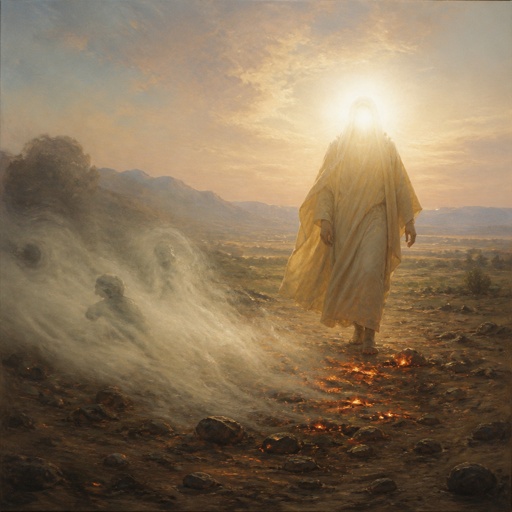
"Before him went the pestilence, and burning coals went forth at his feet." - Habakkuk 3:5

Habakkuk 1:6 - "For, lo, I raise up the Chaldeans, that bitter and hasty nation, which shall march through the breadth of the land, to possess the dwellingplaces that are not their's."

Habakkuk 1:9 - "They shall come all for violence: their faces shall sup up as the east wind, and they shall gather the captivity as the sand."

Habakkuk 1:15 - "They take up all of them with the angle, they catch them in their net, and gather them in their drag: therefore they rejoice and are glad."

Habakkuk 2:5 - "¶ Yea also, because he transgresseth by wine, he is a proud man, neither keepeth at home, who enlargeth his desire as hell, and is as death, and cannot be satisfied, but gathereth unto him all nations, and heapeth unto him all people:"

"I will stand upon my watch, and set me upon the tower, and will watch to see what he will say unto me, and what I shall answer when I am reproved." - Habakkuk 2:1

Habakkuk 1:4 - "Therefore the law is slacked, and judgment doth never go forth: for the wicked doth compass about the righteous; therefore wrong judgment proceedeth."

Habakkuk 1:10 - "And they shall scoff at the kings, and the princes shall be a scorn unto them: they shall deride every strong hold; for they shall heap dust, and take it."

Habakkuk 1:3 - "Why dost thou shew me iniquity, and cause me to behold grievance? for spoiling and violence are before me: and there are that raise up strife and contention."
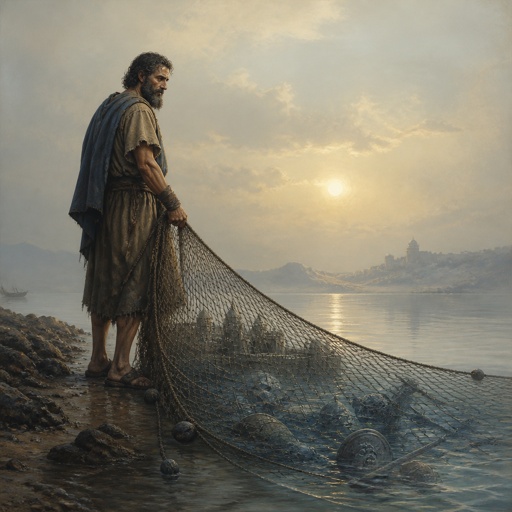
"Shall they therefore empty their net, and not spare continually to slay the nations?" - Habakkuk 1:17
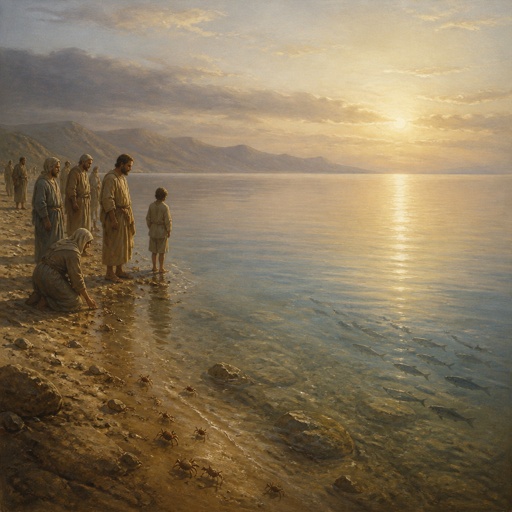
"And makest men as the fishes of the sea, as the creeping things, that have no ruler over them?" - Habakkuk 1:14

Habakkuk 1:2 - "O LORD, how long shall I cry, and thou wilt not hear! even cry out unto thee of violence, and thou wilt not save!"
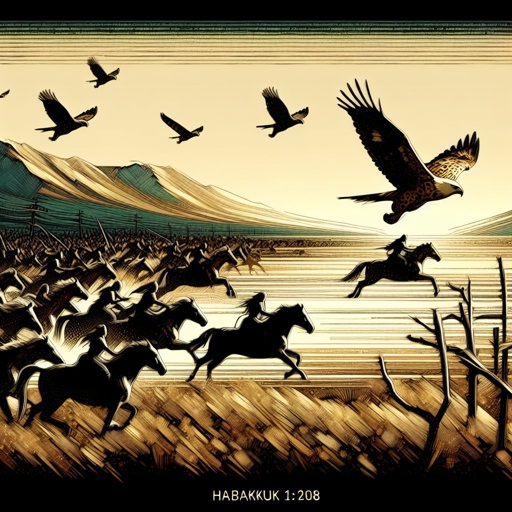
Habakkuk 1:8 - "Their horses also are swifter than the leopards, and are more fierce than the evening wolves: and their horsemen shall spread themselves, and their horsemen shall come from far; they shall fly as the eagle that hasteth to eat."

Habakkuk 2:1 - "I will stand upon my watch, and set me upon the tower, and will watch to see what he will say unto me, and what I shall answer when I am reproved."
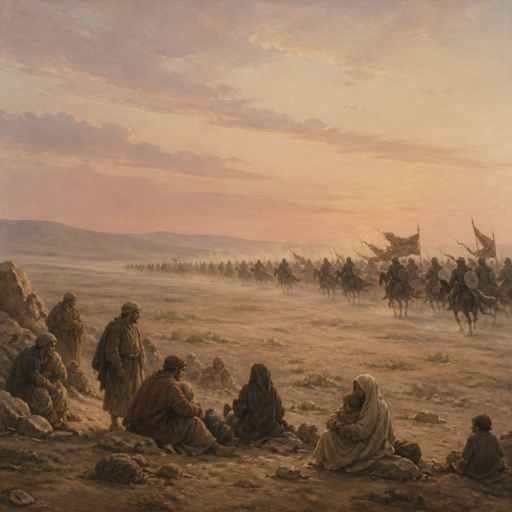
"They shall come all for violence: their faces shall sup up as the east wind, and they shall gather the captivity as the sand." - Habakkuk 1:9