What does Hebrews 12:2 mean?
“Looking unto Jesus the author and finisher of our faith; who for the joy that was set before him endured the cross, despising the shame, and is set down at the right hand of the throne of God.” — Hebrews 12:2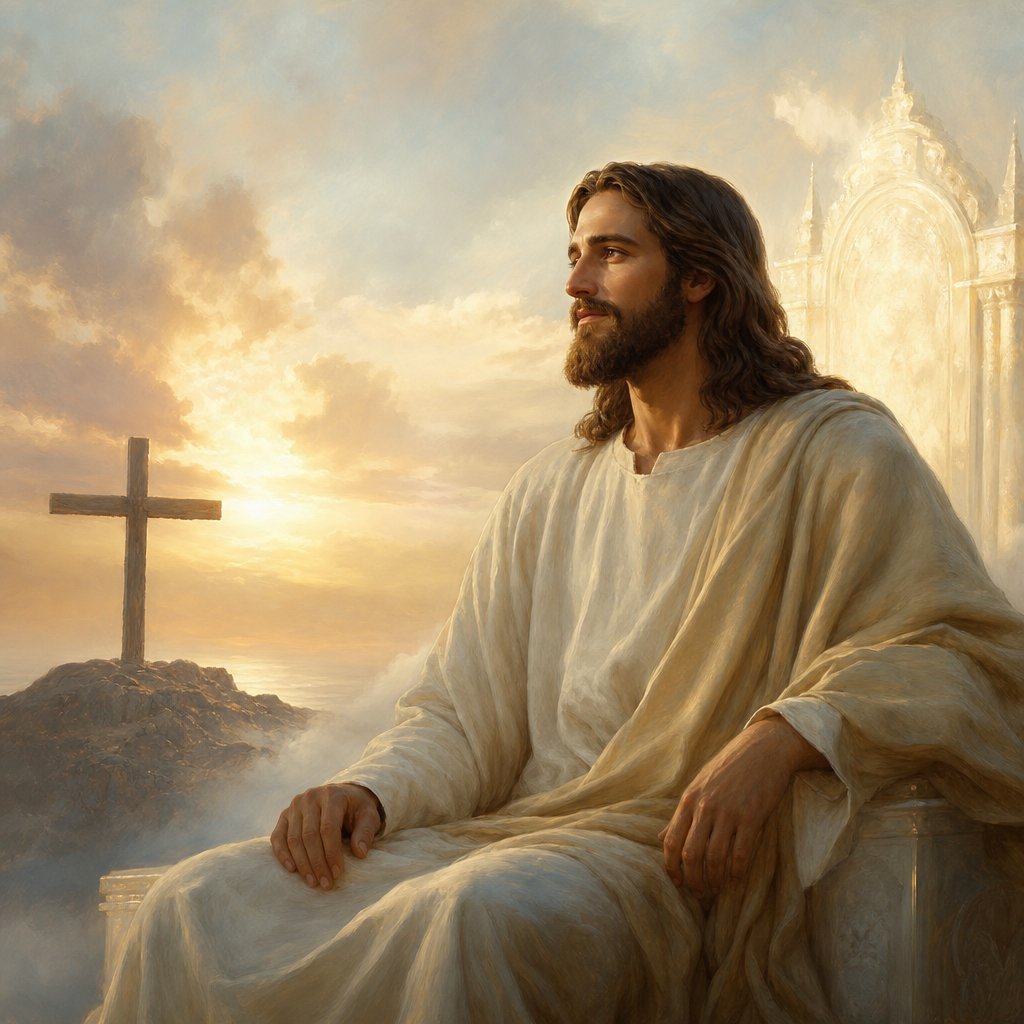
Hebrews 12:2 in the King James Version reads, “Looking unto Jesus the author and finisher of our faith; who for the joy that was set before him endured the cross, despising the shame, and is set down at the right hand of the throne of God.” Its meaning is best felt by hearing it as the heartbeat of the passage that surrounds it. Hebrews 12 is written as an exhortation to perseverance, and the verse immediately before it speaks of believers running “with patience the race that is set before us.” In that setting, Hebrews 12:2 gives the controlling direction for how the race is to be run: not by staring at the pain, not by measuring ourselves against other runners, and not by being captivated by the threats or enticements along the course, but by “looking unto Jesus.” The phrase is more than a casual glance; it carries the sense of fixing the gaze, turning the eyes away from competing objects, and making Christ the steady point of reference for endurance. The verse therefore functions like a spiritual orientation: it tells the reader where to look so that the heart does not lose courage.
The first title given to Christ here is “the author…of our faith.” In the flow of Hebrews, faith is not merely a human achievement but something God initiates and sustains. To call Jesus the “author” is to say he is the beginner, the origin, the one who stands at the fountainhead of true faith. He is not simply an example of faith among many; he is the source from which the believer’s faith is born and the one in whom faith finds its proper object. The second title, “and finisher of our faith,” completes the thought: what he begins, he brings to completion. This does not only speak to the fact that Jesus completed his own earthly course, but that he carries faith through to its intended end in those who trust him. Hebrews has already emphasized Christ’s priestly work and the certainty of God’s promises; here, the same assurance is pressed into the believer’s struggle. The race does not rest on human stamina alone, because the one who begins faith also perfects it, bringing it to maturity and its final goal.
The verse then moves from who Jesus is to what Jesus did: “who for the joy that was set before him endured the cross.” The cross is presented not as a tragic accident but as an endurance, a deliberate bearing of suffering. The word “endured” places Christ’s suffering in the category of steadfast perseverance, which is exactly what Hebrews is urging upon its readers. Yet the endurance of Jesus is framed by “the joy that was set before him.” Joy here is not shallow happiness in pain; it is the forward-looking certainty of what lay on the other side of obedience—the accomplishment of God’s will, the redemption secured, the glory to follow, and the outcome that suffering could not steal. In context, that “joy…set before him” becomes a pattern for believers: present affliction is interpreted in light of a promised end. Hebrews repeatedly calls its readers to hold to what is unseen but sure; Jesus himself is shown as one who walked through suffering with a settled vision of the outcome.
Next, Hebrews 12:2 adds, “despising the shame.” The cross in the ancient world was not only physical agony; it was public disgrace. Shame was part of its design: humiliation, scorn, exposure, rejection. To say Jesus “despised the shame” does not mean he felt nothing; it means he regarded it as something not worth governing his obedience, something he would not allow to determine his course. The shame was real, but it was not ultimate. This is crucial in Hebrews, because the letter addresses believers tempted to draw back under pressure, and pressure often arrives through shame: the fear of being reproached, misunderstood, marginalized, or made to look foolish. By presenting Jesus as one who treated shame as a lesser thing when compared with the will of God and the joy beyond, the verse teaches that shame loses its power when set against a greater verdict and a greater reward.
Finally, the verse ends with exaltation: “and is set down at the right hand of the throne of God.” This is the outcome of the endurance—resurrection glory and royal authority. In Hebrews, the image of Christ seated at God’s right hand is repeated to emphasize both the finished nature of his sacrificial work and his present reign. A seated priest-king contrasts with the continual standing of priests whose work is never done; the seating declares completion and acceptance. It also declares supremacy: the place “at the right hand” is the place of honor, power, and nearness to the throne. In the logic of Hebrews 12:2, that enthronement is not merely information about Jesus; it is part of the encouragement to the runner. The one to whom believers look is not only the crucified one but the exalted one. The path of endurance is not a path into meaninglessness; it is a path that is joined to Christ’s own pattern—suffering endured, shame overcome, joy realized, and glory secured.
Symbolically and thematically, the verse gathers several of Hebrews’ major concerns into one concentrated picture. It joins the imagery of a race with the person of Jesus as the focal point, showing that perseverance is sustained by vision. It connects suffering with purpose through the phrase “for the joy that was set before him,” teaching that Christian endurance is not stoicism but hope-driven obedience. It confronts the power of shame by showing it as something Christ refused to treat as decisive. And it anchors everything in Christ’s present position “at the right hand of the throne of God,” so the believer’s effort is framed by the certainty of Christ’s completed work and reigning authority. In short, Hebrews 12:2 calls the reader to run by fixing the heart on Jesus, trusting that the faith he started he will finish, and drawing courage from the pattern and triumph of the cross that led to the throne.
Get our apps


Artwork for Hebrews 12:2
Hebrews 12:2 - "Looking unto Jesus the author and finisher of our faith; who for the joy that was set before him endured the cross, despising the shame, and is set down at the right hand of the throne of God."
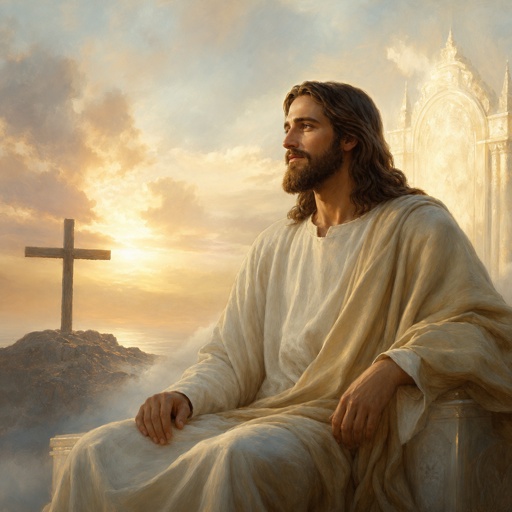
"Looking unto Jesus the author and finisher of our faith; who for the joy that was set before him endured the cross, despising the shame, and is set down at the right hand of the throne of God." - Hebrews 12:2
Hebrews 2:12 - "Saying, I will declare thy name unto my brethren, in the midst of the church will I sing praise unto thee."

Hebrews 12:8

Hebrews 12:12 - "Wherefore lift up the hands which hang down, and the feeble knees;"

Hebrews 12:29 - "For our God is a consuming fire."

Hebrews 7:12 - "For the priesthood being changed, there is made of necessity a change also of the law."

Hebrews 12:21 - "And so terrible was the sight, that Moses said, I exceedingly fear and quake:)"

Hebrews 12:4 - "Ye have not yet resisted unto blood, striving against sin."

Hebrews 4:12 – "For the word of God is alive and active. Sharper than any double-edged sword."

"For our God is a consuming fire." - Hebrews 12:29

Hebrews 8:12 - "For I will be merciful to their unrighteousness, and their sins and their iniquities will I remember no more."

Hebrews 4:12 – "For the word of God is alive and active. Sharper than any double-edged sword."
!["For our God [is] a consuming fire." - Hebrews 12:29](https://media.bible.art/d7477ab1-fc4c-4821-93d4-74621f3df94b-thumbnail.jpg)
"For our God [is] a consuming fire." - Hebrews 12:29
!["For the word of God [is] quick, and powerful, and sharper than any twoedged sword, piercing even to the dividing asunder of soul and spirit, and of the joints and marrow, and [is] a discerner of the thoughts and intents of the heart." - Hebrews 4:12](https://media.bible.art/0705b859-7ae8-4ac8-9dce-49043e2ec43b-thumbnail.jpg)
"For the word of God [is] quick, and powerful, and sharper than any twoedged sword, piercing even to the dividing asunder of soul and spirit, and of the joints and marrow, and [is] a discerner of the thoughts and intents of the heart." - Hebrews 4:12

Hebrews 12:6 - "For whom the Lord loveth he chasteneth, and scourgeth every son whom he receiveth."

Hebrews 6:12 - "That ye be not slothful, but followers of them who through faith and patience inherit the promises."

"Wherefore lift up the hands which hang down, and the feeble knees;" - Hebrews 12:12
!["For the word of God [is] quick, and powerful, and sharper than any twoedged sword, piercing even to the dividing asunder of soul and spirit, and of the joints and marrow, and [is] a discerner of the thoughts and intents of the heart." - Hebrews 4:12](https://media.bible.art/adaff66c-0dbd-4c9b-b464-740ce2459397-thumbnail.jpg)
"For the word of God [is] quick, and powerful, and sharper than any twoedged sword, piercing even to the dividing asunder of soul and spirit, and of the joints and marrow, and [is] a discerner of the thoughts and intents of the heart." - Hebrews 4:12

Hebrews 12:14 - "Follow peace with all men, and holiness, without which no man shall see the Lord:"

Hebrews 12:24 - "And to Jesus the mediator of the new covenant, and to the blood of sprinkling, that speaketh better things than that of Abel."

Hebrews 12:16 - "Lest there be any fornicator, or profane person, as Esau, who for one morsel of meat sold his birthright."

Hebrews 3:12 - "Take heed, brethren, lest there be in any of you an evil heart of unbelief, in departing from the living God."

Hebrews 12:18 - "For ye are not come unto the mount that might be touched, and that burned with fire, nor unto blackness, and darkness, and tempest,"
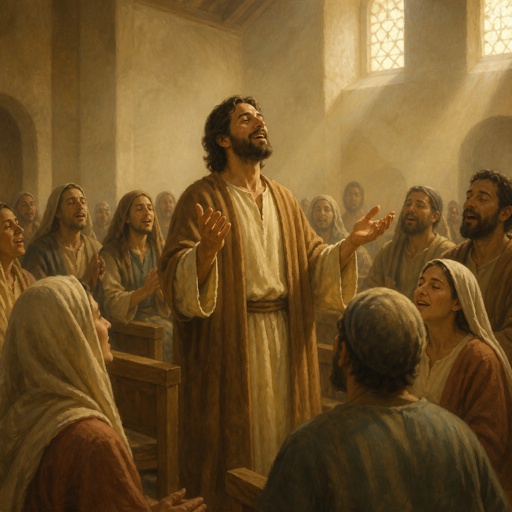
"Saying, I will declare thy name unto my brethren, in the midst of the church will I sing praise unto thee." - Hebrews 2:12

Hebrews 10:12 - "But this man, after he had offered one sacrifice for sins for ever, sat down on the right hand of God;"

Hebrews 12:13 - "And make straight paths for your feet, lest that which is lame be turned out of the way; but let it rather be healed."

Hebrews 12:22 - "But ye are come unto mount Sion, and unto the city of the living God, the heavenly Jerusalem, and to an innumerable company of angels,"

Hebrews 12:19 - "And the sound of a trumpet, and the voice of words; which voice they that heard intreated that the word should not be spoken to them any more:"

Hebrews 12:7 - "If ye endure chastening, God dealeth with you as with sons; for what son is he whom the father chasteneth not?"