What does Hebrews 5:5 mean?
“So also Christ glorified not himself to be made an high priest; but he that said unto him, Thou art my Son, to day have I begotten thee.” — Hebrews 5:5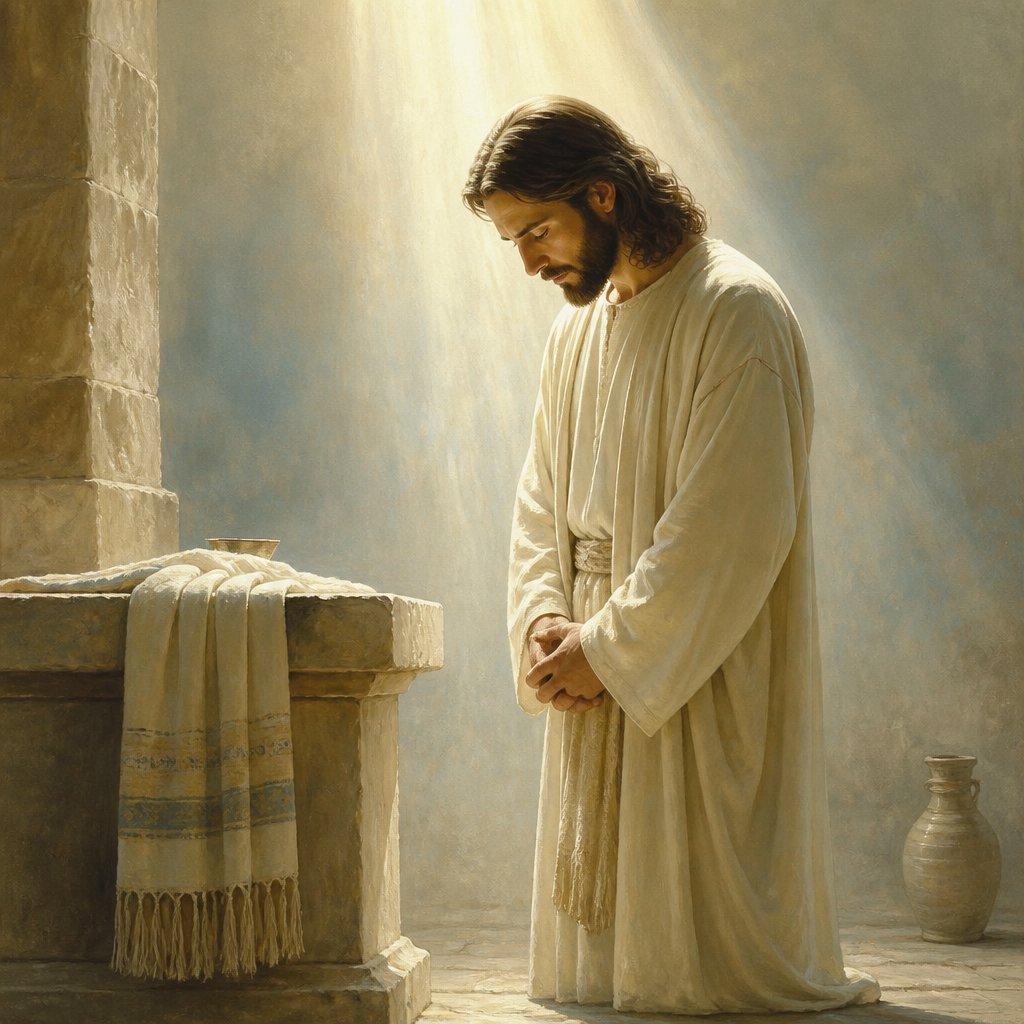
Hebrews 5:5 in the King James Version of the Bible states, "So also Christ glorified not himself to be made an high priest; but he that said unto him, Thou art my Son, today have I begotten thee." This verse is a profound and significant statement about the role of Christ as the high priest and the son of God. In this commentary, we will explore the deep and enriching meaning behind this verse, and we will look at the themes, context, and symbolism that it carries.
First and foremost, the verse from Hebrews 5:5 speaks to the humility and obedience of Christ as the high priest. It highlights that Christ did not appoint himself to this position of authority and holiness, but rather he was chosen and exalted by God himself. This ties into the broader theme of humility and servanthood that is often associated with Christ's character. Throughout the New Testament, Christ is portrayed as a humble and compassionate leader who serves others selflessly, and this verse reinforces that image by emphasizing that Christ did not seek glory for himself, but instead, he willingly accepted the will of God.
Furthermore, the verse from Hebrews 5:5 also speaks to the divine nature of Christ as the son of God. The reference to "Thou art my Son, today have I begotten thee" is a direct allusion to Psalm 2:7, which is a Messianic prophecy that speaks to the eternal kingship of God's anointed. By quoting this Old Testament passage, the author of Hebrews is affirming the divinity and exalted status of Christ as the son of God. This is a central tenet of Christian theology, and this verse serves as a powerful testament to the belief in Christ's divine nature.
In terms of context, the broader passage in which Hebrews 5:5 is found emphasizes the qualifications and role of the high priest. The author of Hebrews expounds on the idea that Christ is the ultimate and perfect high priest who mediates between God and humanity. The verse preceding Hebrews 5:5 speaks about Christ's suffering and his obedience to God, and the verse following it continues to elaborate on Christ's priestly role and his eternal salvation for those who obey him. Therefore, within the broader context of the chapter, Hebrews 5:5 serves as a pivotal statement that underscores Christ's unique and supreme position as the high priest.
Symbolically, Hebrews 5:5 represents the union of divinity and humanity in Christ. The reference to Christ as "my Son" speaks to his divine origin and his eternal relationship with God, while the mention of him being "begotten" signifies his human birth and incarnation. This duality of Christ as both fully divine and fully human is a fundamental aspect of Christian faith, and this verse encapsulates that paradox beautifully.
In conclusion, Hebrews 5:5 is a rich and profound statement that encapsulates key themes of humility, divinity, and Christ's priestly role. It serves as a reminder of Christ's obedience to God and his exalted status as the son of God. Within the broader context of the chapter, this verse reinforces the author's teachings about Christ's unique and essential role as the high priest. Symbolically, Hebrews 5:5 points to the dual nature of Christ as both human and divine. Overall, this verse is a powerful affirmation of Christ's identity and his significance in Christian faith.
Get our apps


Artwork for Hebrews 5:5

Hebrews 5:5 - "So also Christ glorified not himself to be made an high priest; but he that said unto him, Thou art my Son, to day have I begotten thee."
"So also Christ glorified not himself to be made an high priest; but he that said unto him, Thou art my Son, to day have I begotten thee." - Hebrews 5:5

Hebrews 8:5

Hebrews 8:1-5

Hebrews 10:5-10

Hebrews 10:5-10

Hebrews 4:5 - "And in this place again, If they shall enter into my rest."

Hebrews 5:10 - "Called of God an high priest after the order of Melchisedec."

Hebrews 6:5 - "And have tasted the good word of God, and the powers of the world to come,"

Hebrews 5:13 - "For every one that useth milk is unskilful in the word of righteousness: for he is a babe."

Hebrews 5:4 - "And no man taketh this honour unto himself, but he that is called of God, as was Aaron."

Hebrews 5:3 - "And by reason hereof he ought, as for the people, so also for himself, to offer for sins."

Philippians 3:5 - "Circumcised the eighth day, of the stock of Israel, of the tribe of Benjamin, an Hebrew of the Hebrews; as touching the law, a Pharisee;"

Hebrews 2:5 - "For unto the angels hath he not put in subjection the world to come, whereof we speak."

Hebrews 9:5 - "And over it the cherubims of glory shadowing the mercyseat; of which we cannot now speak particularly."

Hebrews 5:8 - "Though he were a Son, yet learned he obedience by the things which he suffered;"

Hebrews 5:6 - "As he saith also in another place, Thou art a priest for ever after the order of Melchisedec."

Hebrews 5:11 - "Of whom we have many things to say, and hard to be uttered, seeing ye are dull of hearing."

Hebrews 5:2 - "Who can have compassion on the ignorant, and on them that are out of the way; for that he himself also is compassed with infirmity."

Hebrews 5:9 - "And being made perfect, he became the author of eternal salvation unto all them that obey him;"

Hebrews 3:5 - "And Moses verily was faithful in all his house, as a servant, for a testimony of those things which were to be spoken after;"
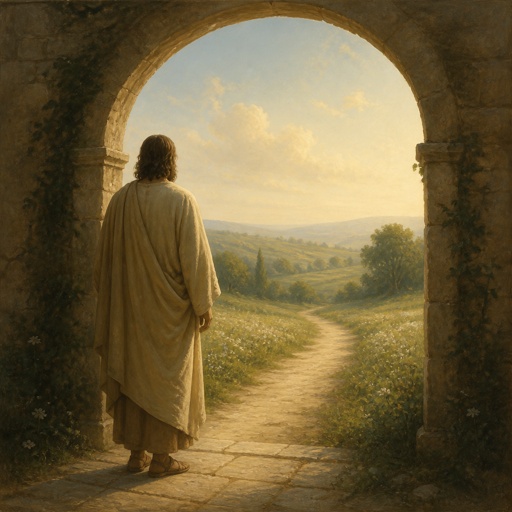
"And in this place again, If they shall enter into my rest." - Hebrews 4:5

Hebrews 10:5 - "Wherefore when he cometh into the world, he saith, Sacrifice and offering thou wouldest not, but a body hast thou prepared me:"
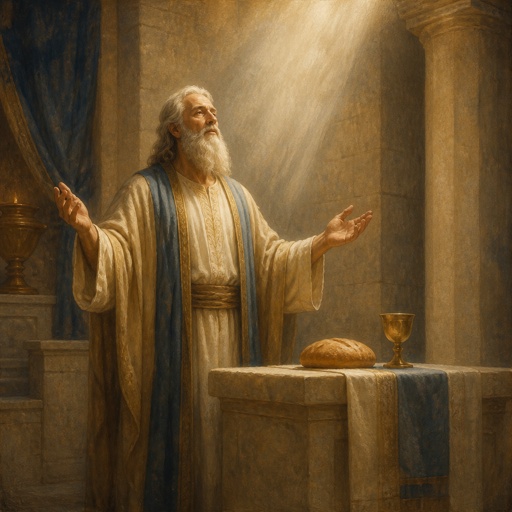
"Called of God an high priest after the order of Melchisedec." - Hebrews 5:10

Hebrews 5:14 - "But strong meat belongeth to them that are of full age, even those who by reason of use have their senses exercised to discern both good and evil."
"And have tasted the good word of God, and the powers of the world to come," - Hebrews 6:5

Hebrews 13:5 - "Let your conversation be without covetousness; and be content with such things as ye have: for he hath said, I will never leave thee, nor forsake thee."

Hebrews 5:1 - "For every high priest taken from among men is ordained for men in things pertaining to God, that he may offer both gifts and sacrifices for sins:"
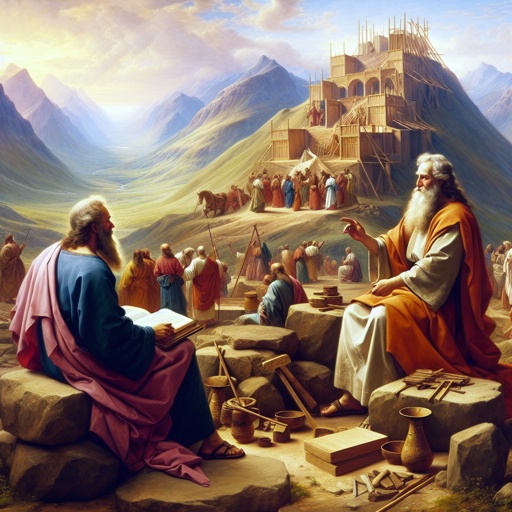
Hebrews 8:5 (KJV) 5 Who serve unto the example and shadow of heavenly things, as Moses was admonished of God when he was about to make the tabernacle: for, See, saith he, that thou make all things according to the pattern shewed to thee in the mount.
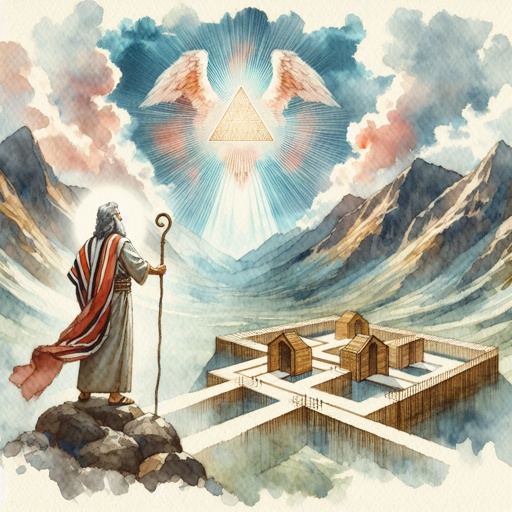
Hebrews 8:5 (KJV) 5 Who serve unto the example and shadow of heavenly things, as Moses was admonished of God when he was about to make the tabernacle: for, See, saith he, that thou make all things according to the pattern shewed to thee in the mount.