What does Hebrews 7:20 mean?
“And in asmuch as not without an oath he was made priest:” — Hebrews 7:20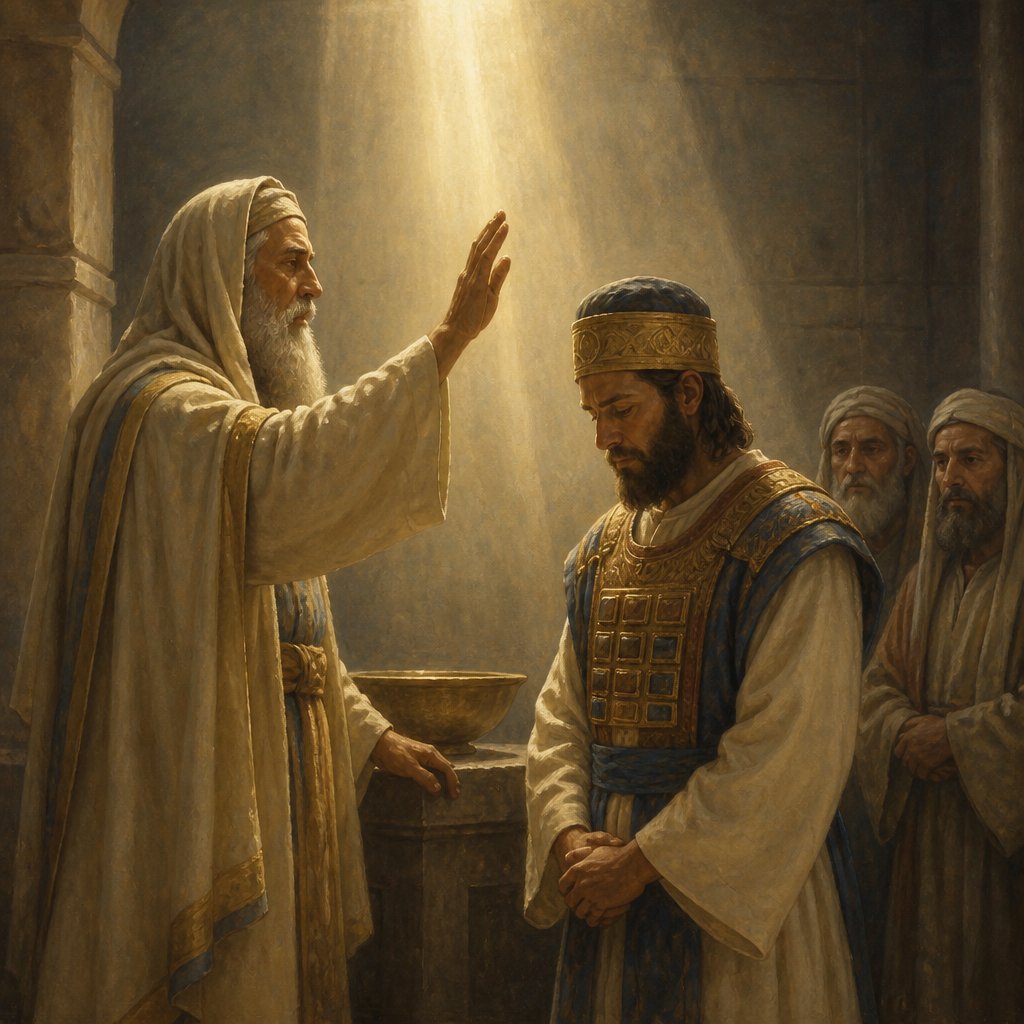
The verse Hebrews 7:20 from the King James Version of the Bible reads: "And inasmuch as not without an oath he was made priest." This verse is part of a larger passage in the book of Hebrews that discusses the priesthood of the biblical figure Melchizedek and the superiority of Jesus Christ as a high priest. In order to fully understand the meaning and significance of this verse, it is important to examine the historical and cultural context in which it was written, as well as the broader themes and symbolism present in the passage.
The book of Hebrews was written to a group of Jewish Christians who were struggling with their faith and were facing persecution for their beliefs. The author of Hebrews sought to encourage and strengthen these believers by demonstrating the superiority of Jesus Christ and the new covenant that he established. This verse is part of a larger argument in the book that compares the priesthood of Melchizedek to the priesthood of Jesus, showing how Jesus fulfills and surpasses the Old Testament system of priestly mediation.
The verse alludes to the oath that God made to establish Jesus as a high priest in the order of Melchizedek. In the Old Testament, priests were often appointed and ordained through a formal ceremony and the taking of an oath, which signified their authority and legitimacy. According to the author of Hebrews, Jesus' priesthood is superior to the Levitical priesthood because it was established by God with an oath, indicating the unchangeable nature of his priestly office.
One of the key themes in this passage is the contrast between the old and new covenants, particularly in the context of the priesthood. The Old Testament system of priesthood, established through the tribe of Levi and the lineage of Aaron, was provisional and temporary. It required continual sacrifices and offerings for the forgiveness of sins, and it was ultimately unable to bring about lasting reconciliation between God and humanity. In contrast, Jesus' priesthood, as a high priest in the order of Melchizedek, is eternal and unchangeable. He offered himself as a sacrifice once and for all, securing eternal salvation for those who believe in him.
Symbolism plays an important role in the book of Hebrews, and this verse is no exception. The oath mentioned in this verse symbolizes the divine authority and confirmation of Jesus' priesthood. In ancient Near Eastern cultures, an oath was a solemn and binding promise, often made in the presence of a higher authority or deity. By establishing Jesus as a high priest with an oath, God is demonstrating the certainty and permanence of his priestly ministry.
Furthermore, the reference to Melchizedek, a mysterious figure from the book of Genesis, holds symbolic significance. Melchizedek was both a king and a priest, and he blessed Abraham, who in turn paid tithes to him. The author of Hebrews uses Melchizedek as a type or foreshadowing of Christ, highlighting the superiority of Jesus' priesthood over the Levitical priesthood. By drawing parallels between Jesus and Melchizedek, the author emphasizes the eternal and transcendent nature of Jesus' priesthood, as well as his unique role as both king and priest.
In conclusion, Hebrews 7:20 from the King James Version of the Bible is a verse that carries deep theological and symbolic meaning. It speaks to the unchangeable and eternal nature of Jesus' priesthood, as well as the superiority of the new covenant over the old covenant. By understanding the historical and cultural context, as well as the broader themes and symbolism present in the passage, we can gain a deeper appreciation for the significance of this verse in the larger narrative of salvation history.
Get our apps


Artwork for Hebrews 7:20

Hebrews 7:20 - "And inasmuch as not without an oath he was made priest:"
"And inasmuch as not without an oath he was made priest:" - Hebrews 7:20

Hebrews 10:20

Hebrews 7:7 - "And without all contradiction the less is blessed of the better."

hebrew 13:20

Hebrews 11:20 - "By faith Isaac blessed Jacob and Esau concerning things to come."

Hebrews 9:20 - "Saying, This is the blood of the testament which God hath enjoined unto you."

"And without all contradiction the less is blessed of the better." - Hebrews 7:7

Hebrews 10:20 - "By a new and living way, which he hath consecrated for us, through the veil, that is to say, his flesh;"

Hebrews 6:20 - "Whither the forerunner is for us entered, even Jesus, made an high priest for ever after the order of Melchisedec."

Hebrews 7:12 - "For the priesthood being changed, there is made of necessity a change also of the law."

Hebrews 7:24 - "But this man, because he continueth ever, hath an unchangeable priesthood."

Hebrews 7:22 - "By so much was Jesus made a surety of a better testament."

Hebrews 7:17 - "For he testifieth, Thou art a priest for ever after the order of Melchisedec."

Hebrews 7:10 - "For he was yet in the loins of his father, when Melchisedec met him."

Hebrews 7:18 - "For there is verily a disannulling of the commandment going before for the weakness and unprofitableness thereof."

Hebrews 7:16 - "Who is made, not after the law of a carnal commandment, but after the power of an endless life."
Hebrews 3:7 - "Wherefore (as the Holy Ghost saith, To day if ye will hear his voice,"
Hebrews 12:20 - "(For they could not endure that which was commanded, And if so much as a beast touch the mountain, it shall be stoned, or thrust through with a dart:"

Hebrews 8:7 - "For if that first covenant had been faultless, then should no place have been sought for the second."

Hebrews 7:15 - "And it is yet far more evident: for that after the similitude of Melchisedec there ariseth another priest,"
Hebrews 7:23 - "And they truly were many priests, because they were not suffered to continue by reason of death:"

Hebrews 7:8 - "And here men that die receive tithes; but there he receiveth them, of whom it is witnessed that he liveth."

Hebrews 13:20 - "Now the God of peace, that brought again from the dead our Lord Jesus, that great shepherd of the sheep, through the blood of the everlasting covenant,"

Hebrews 1:7 - "And of the angels he saith, Who maketh his angels spirits, and his ministers a flame of fire."

Hebrews 10:7 - "Then said I, Lo, I come (in the volume of the book it is written of me,) to do thy will, O God."

Hebrews 7:14 - "For it is evident that our Lord sprang out of Juda; of which tribe Moses spake nothing concerning priesthood."

Hebrews 7:13 - "For he of whom these things are spoken pertaineth to another tribe, of which no man gave attendance at the altar."

Hebrews 7:9 - "And as I may so say, Levi also, who receiveth tithes, payed tithes in Abraham."
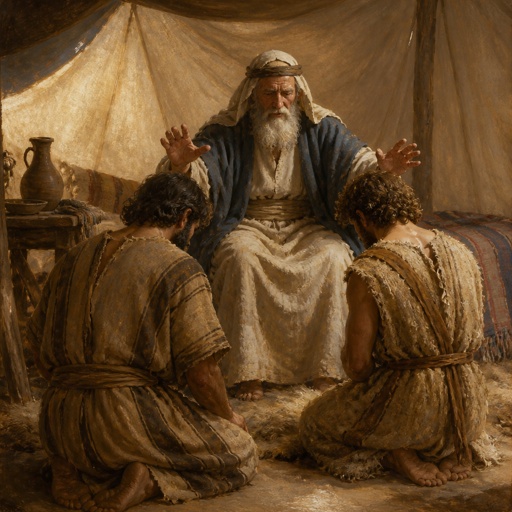
"By faith Isaac blessed Jacob and Esau concerning things to come." - Hebrews 11:20