What does Hebrews 9:7 mean?
“But into the second went the high priest alone once every year, not without blood, which he offered for himself, and for the errors of the people:” — Hebrews 9:7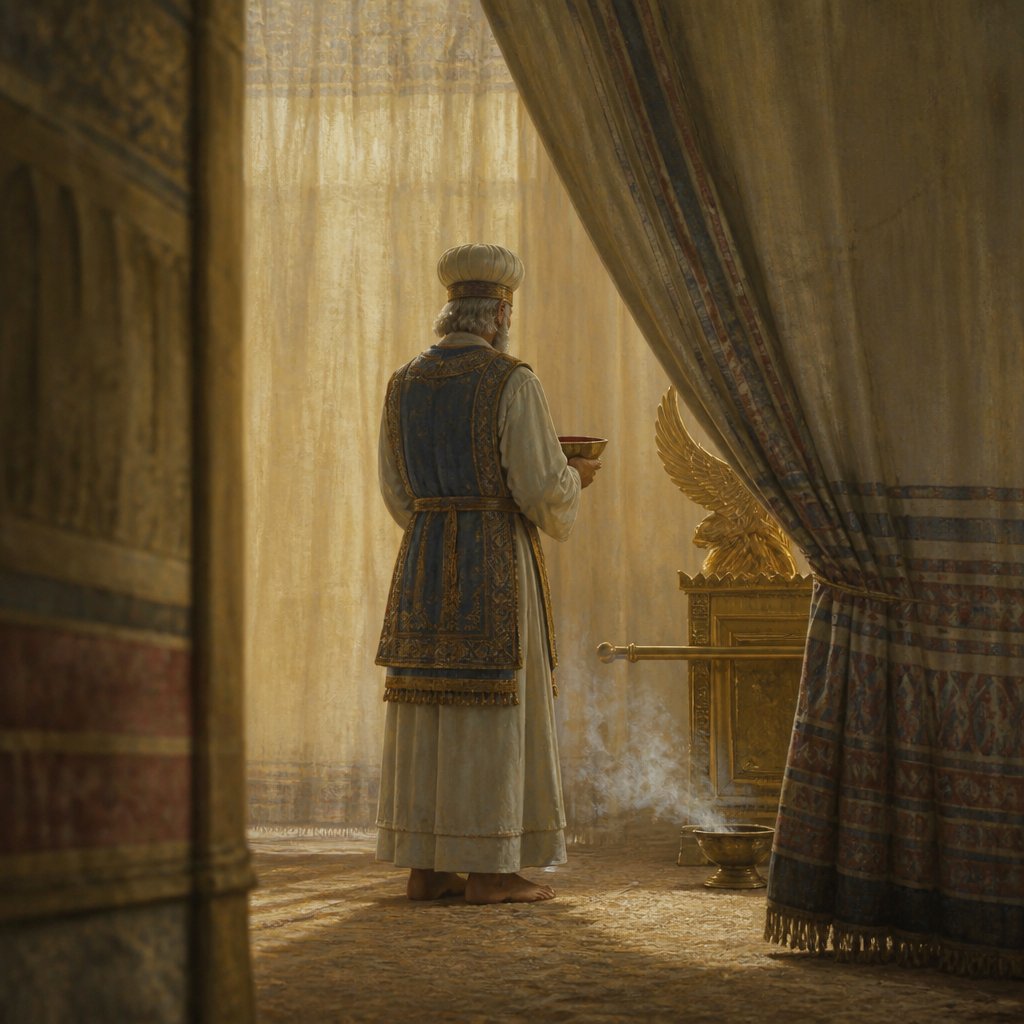
Hebrews 9:7 from the King James Version of the Bible states, "But into the second went the high priest alone once every year, not without blood, which he offered for himself, and for the errors of the people." This verse is from the book of Hebrews, which is a letter written to Jewish Christians who were trying to navigate their new faith in Jesus Christ while maintaining their Jewish traditions and customs.
The verse is situated within a larger passage that discusses the rituals and practices of the Jewish high priests, particularly in the context of the Day of Atonement. The Day of Atonement was the most sacred day in the Jewish calendar, and it was a day set aside for the high priest to make atonement for the sins of the people.
The author of Hebrews is drawing a comparison between the practices of the Jewish high priests and the work of Jesus Christ as the ultimate High Priest. In the Old Testament, the high priest would enter the Most Holy Place in the temple once a year, on the Day of Atonement, to make atonement for the sins of the people. This act required the sacrifice of a spotless animal, and the blood of the animal was sprinkled on the mercy seat in the Most Holy Place as a symbol of purification and atonement for the sins of the people.
The author of Hebrews emphasizes that the high priest entered the Most Holy Place alone, and he did so "not without blood." This signifies the gravity and holiness of the act of atonement. The blood of the sacrificed animal was a central aspect of the atoning process, as it served as a symbol of the life given for the forgiveness of sins. Furthermore, the high priest also had to offer sacrifices for his own sins before making atonement for the people, highlighting the imperfect and temporary nature of the Old Testament sacrificial system.
The significance of this verse lies in its portrayal of the high priest as a mediator between the people and God, as well as a symbol of the need for atonement and forgiveness of sins. The repetition of this ritual year after year underscores the inadequacy of the sacrificial system in providing lasting forgiveness and reconciliation with God. This sets the stage for the author of Hebrews to introduce Jesus Christ as the ultimate High Priest, whose sacrifice is eternally effective in atoning for the sins of the people.
The themes of atonement, sacrifice, and the priesthood are central to the interpretation of this verse. It underscores the necessity of blood as a means of atonement for sins, as well as the temporary nature of the Old Testament sacrificial system. The verse also points to the exclusive role of the high priest in the atoning process, highlighting the restrictive nature of the Old Testament priesthood.
In the broader context of the book of Hebrews, this verse serves as a bridge between the Old Testament sacrificial system and the new covenant made possible through the sacrifice of Jesus Christ. The author of Hebrews goes on to explain how Jesus, as the ultimate High Priest, offered himself as a perfect and permanent sacrifice for the sins of humanity, thus rendering the Old Testament sacrificial system obsolete. This verse thus sets the stage for a deeper exploration of the role of Jesus Christ as the ultimate mediator and provider of atonement for the sins of the people.
In conclusion, Hebrews 9:7 from the King James Version of the Bible highlights the limitations of the Old Testament sacrificial system and points to the ultimate atonement made possible through Jesus Christ. It emphasizes the role of the high priest as a mediator and the necessity of blood in the atoning process, setting the stage for the revelation of Jesus as the ultimate High Priest and sacrificial lamb whose blood provides lasting forgiveness and reconciliation with God.
Get our apps


Artwork for Hebrews 9:7

Hebrews 9:7 - "But into the second went the high priest alone once every year, not without blood, which he offered for himself, and for the errors of the people:"
"But into the second went the high priest alone once every year, not without blood, which he offered for himself, and for the errors of the people:" - Hebrews 9:7

Hebrews 7:9 - "And as I may so say, Levi also, who receiveth tithes, payed tithes in Abraham."
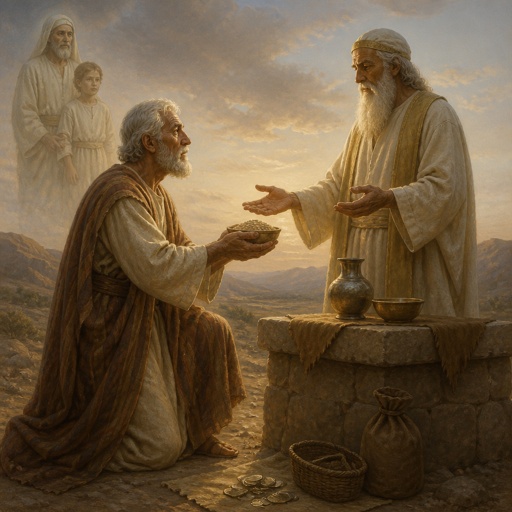
"And as I may so say, Levi also, who receiveth tithes, payed tithes in Abraham." - Hebrews 7:9

Hebrews 7:7 - "And without all contradiction the less is blessed of the better."

Hebrews 4:9 - "There remaineth therefore a rest to the people of God."

Hebrews 9:16 - "For where a testament is, there must also of necessity be the death of the testator."

Hebrews 7:20 - "And inasmuch as not without an oath he was made priest:"

Hebrews 9:18 - "Whereupon neither the first testament was dedicated without blood."

Hebrews 9:27 - "And as it is appointed unto men once to die, but after this the judgment:"

"And without all contradiction the less is blessed of the better." - Hebrews 7:7

Hebrews 7:12 - "For the priesthood being changed, there is made of necessity a change also of the law."

Hebrews 7:24 - "But this man, because he continueth ever, hath an unchangeable priesthood."

Hebrews 7:22 - "By so much was Jesus made a surety of a better testament."

Hebrews 9:3 - "And after the second veil, the tabernacle which is called the Holiest of all;"

Hebrews 9:9 - "Which was a figure for the time then present, in which were offered both gifts and sacrifices, that could not make him that did the service perfect, as pertaining to the conscience;"

Hebrews 9:13 - "For if the blood of bulls and of goats, and the ashes of an heifer sprinkling the unclean, sanctifieth to the purifying of the flesh:"

Hebrews 7:17 - "For he testifieth, Thou art a priest for ever after the order of Melchisedec."

Hebrews 7:10 - "For he was yet in the loins of his father, when Melchisedec met him."

Hebrews 7:18 - "For there is verily a disannulling of the commandment going before for the weakness and unprofitableness thereof."

Hebrews 9:20 - "Saying, This is the blood of the testament which God hath enjoined unto you."

Hebrews 9:21 - "Moreover he sprinkled with blood both the tabernacle, and all the vessels of the ministry."

Hebrews 7:16 - "Who is made, not after the law of a carnal commandment, but after the power of an endless life."

Hebrews 9:17 - "For a testament is of force after men are dead: otherwise it is of no strength at all while the testator liveth."
Hebrews 3:7 - "Wherefore (as the Holy Ghost saith, To day if ye will hear his voice,"

Hebrews 9:2 - "For there was a tabernacle made; the first, wherein was the candlestick, and the table, and the shewbread; which is called the sanctuary."

Hebrews 9:1 - "Then verily the first covenant had also ordinances of divine service, and a worldly sanctuary."

Hebrews 9:22 - "And almost all things are by the law purged with blood; and without shedding of blood is no remission."

Hebrews 3:9 - "When your fathers tempted me, proved me, and saw my works forty years."

Hebrews 8:7 - "For if that first covenant had been faultless, then should no place have been sought for the second."