What does Hebrews 9:8 mean?
“The Holy Ghost this signifying, that the way into the holiest of all was not yet made manifest, while as the first tabernacle was yet standing:” — Hebrews 9:8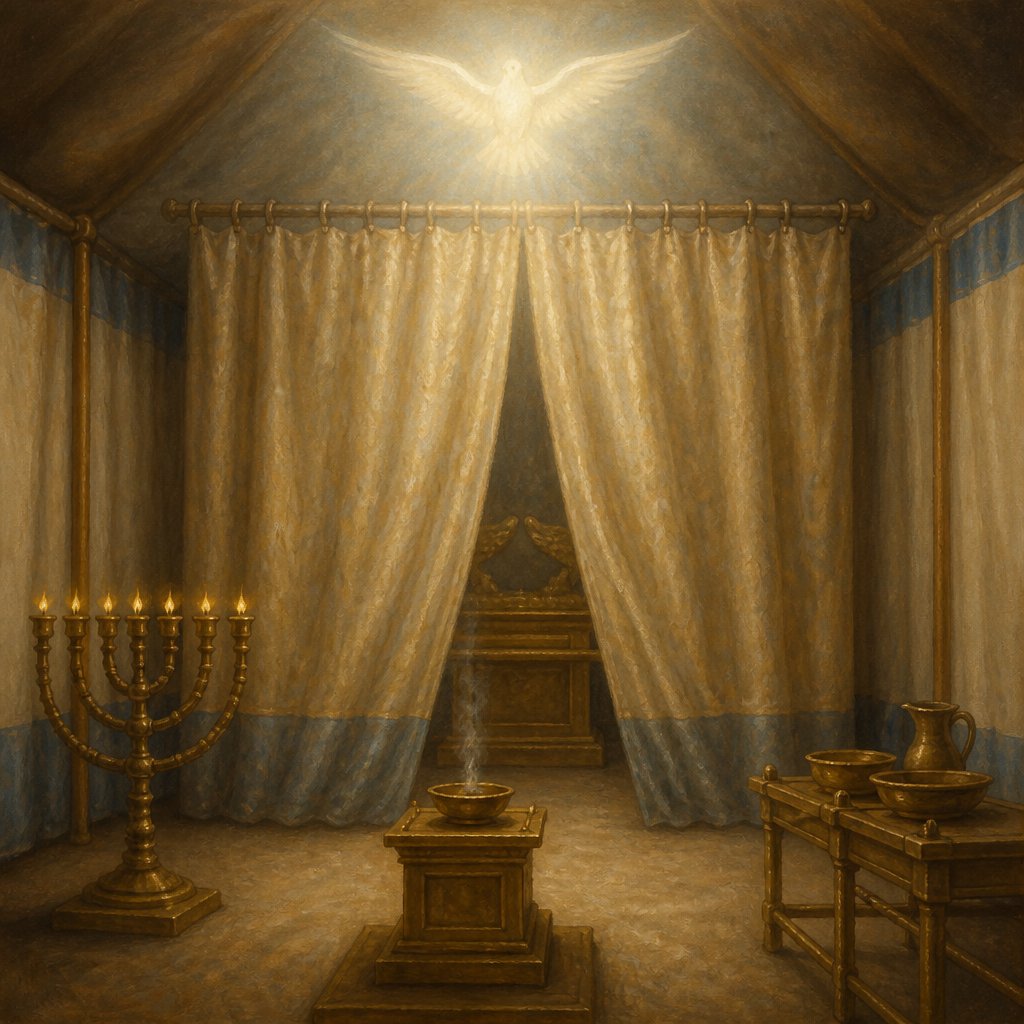
Hebrews 9:8 (KJV) reads, "The Holy Ghost this signifying, that the way into the holiest of all was not yet made manifest, while as the first tabernacle was yet standing."
The book of Hebrews was written by an anonymous author, most likely a Jewish Christian, to Jewish Christians who were struggling with their faith and considering returning to Judaism. The book seeks to demonstrate the superiority of Christ and the new covenant over the old covenant and to encourage the recipients to remain steadfast in their faith. This verse specifically addresses the way into the holiest of all, referring to the presence of God in the Most Holy Place of the temple, and the limitations of the old covenant in providing access to God.
The verse begins by stating, "The Holy Ghost this signifying," indicating that the Holy Spirit is the source of the revelation being communicated. The Holy Spirit is being emphasized as the one who gives understanding and insight into spiritual truths. In this context, the Holy Spirit is revealing the significance of the old covenant rituals and the limitations of the first tabernacle in providing access to God.
The verse then declares that "the way into the holiest of all was not yet made manifest." This refers to the fact that under the old covenant, the way to God's presence in the Most Holy Place was not fully revealed or accessible to the people. The access to God was restricted to the Jewish high priest who could only enter the Most Holy Place once a year on the Day of Atonement to make atonement for the sins of the people (Leviticus 16:2).
The reason for this limitation is stated in the latter part of the verse, "while as the first tabernacle was yet standing." The first tabernacle symbolizes the whole system of worship under the old covenant, which included the tabernacle, the priesthood, and the sacrificial system. The writer of Hebrews is highlighting the temporary and provisional nature of the old covenant, as symbolized by the first tabernacle, in contrast to the permanent and ultimate access to God provided by Christ under the new covenant.
The verse serves as a contrast between the old and the new covenants, emphasizing the inadequacy of the former and the sufficiency of the latter. The old covenant, with its system of rituals and sacrifices, was a shadow and a foreshadowing of the ultimate access to God provided by Christ's atoning sacrifice on the cross. The limitations of the old covenant are evident in its inability to grant direct and unrestricted access to God, as seen in the restricted access to the Most Holy Place.
The significance of this verse lies in its portrayal of the superiority of Christ and the new covenant in providing full and unrestricted access to God. Through His sacrificial death, Christ has removed the barrier of sin and granted believers direct access to God's presence. This access is not limited to a specific place or time but is available to all who come to God through faith in Christ.
In conclusion, Hebrews 9:8 emphasizes the limitations of the old covenant in providing access to God and the superiority of Christ and the new covenant in granting unrestricted access to God's presence. The verse serves as a reminder to believers of the sufficiency of Christ's atoning sacrifice and the privilege of intimate communion with God. It encourages believers to place their faith in Christ and to embrace the new covenant as the ultimate means of access to God.
Get our apps


Artwork for Hebrews 9:8

Hebrews 9:8 - "The Holy Ghost this signifying, that the way into the holiest of all was not yet made manifest, while as the first tabernacle was yet standing:"
"The Holy Ghost this signifying, that the way into the holiest of all was not yet made manifest, while as the first tabernacle was yet standing:" - Hebrews 9:8

Hebrews 5:8-9 - "Though he were a Son, yet learned he obedience by the things which he suffered; And being made perfect, he became the author of eternal salvation unto all them that obey him."

Hebrews 8:9 - "Not according to the covenant that I made with their fathers in the day when I took them by the hand to lead them out of the land of Egypt; because they continued not in my covenant, and I regarded them not, saith the Lord."

Hebrews 12:8

Hebrews 8:5

Hebrews 8:1-5

Hebrews 4:9 - "There remaineth therefore a rest to the people of God."

Hebrews 13:8 - "Jesus Christ the same yesterday, and to day, and for ever."

Hebrews 9:16 - "For where a testament is, there must also of necessity be the death of the testator."

Hebrews 3:8 - "Harden not your hearts, as in the provocation, in the day of temptation in the wilderness:"

Hebrews 9:18 - "Whereupon neither the first testament was dedicated without blood."

Hebrews 9:27 - "And as it is appointed unto men once to die, but after this the judgment:"

The Plague of Boils - Exodus 9:8-12.

Hebrews 9:3 - "And after the second veil, the tabernacle which is called the Holiest of all;"

Hebrews 8:12 - "For I will be merciful to their unrighteousness, and their sins and their iniquities will I remember no more."

Hebrews 8:2 - "A minister of the sanctuary, and of the true tabernacle, which the Lord pitched, and not man."

Hebrews 9:9 - "Which was a figure for the time then present, in which were offered both gifts and sacrifices, that could not make him that did the service perfect, as pertaining to the conscience;"

Hebrews 9:13 - "For if the blood of bulls and of goats, and the ashes of an heifer sprinkling the unclean, sanctifieth to the purifying of the flesh:"

Hebrews 9:20 - "Saying, This is the blood of the testament which God hath enjoined unto you."

Hebrews 9:21 - "Moreover he sprinkled with blood both the tabernacle, and all the vessels of the ministry."

Hebrews 9:17 - "For a testament is of force after men are dead: otherwise it is of no strength at all while the testator liveth."

Hebrews 8:7 - "For if that first covenant had been faultless, then should no place have been sought for the second."

Hebrews 6:8 - "But that which beareth thorns and briers is rejected, and is nigh unto cursing; whose end is to be burned."

Hebrews 9:2 - "For there was a tabernacle made; the first, wherein was the candlestick, and the table, and the shewbread; which is called the sanctuary."

Hebrews 9:1 - "Then verily the first covenant had also ordinances of divine service, and a worldly sanctuary."

Hebrews 9:22 - "And almost all things are by the law purged with blood; and without shedding of blood is no remission."

Hebrews 7:8 - "And here men that die receive tithes; but there he receiveth them, of whom it is witnessed that he liveth."

Hebrews 3:9 - "When your fathers tempted me, proved me, and saw my works forty years."

Hebrews 8:8 - "For finding fault with them, he saith, Behold, the days come, saith the Lord, when I will make a new covenant with the house of Israel and with the house of Judah:"