What does Hebrews 9:9 mean?
“Which was a figure for the time then present, in which were offered both gifts and sacrifices, that could not make him that did the service perfect, as pertaining to the conscience;” — Hebrews 9:9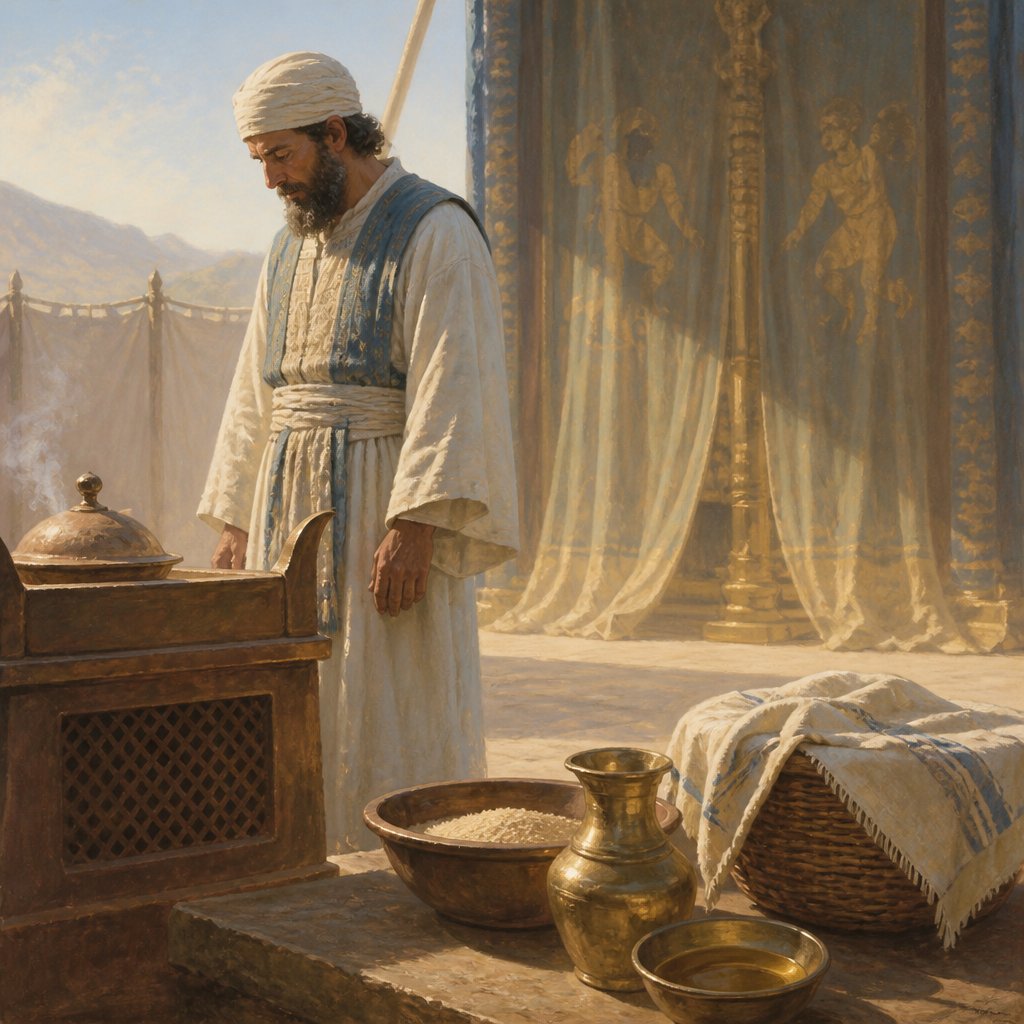
Hebrews 9:9 (KJV) states, "Which was a figure for the time then present, in which were offered both gifts and sacrifices, that could not make him that did the service perfect, as pertaining to the conscience." This verse is part of the larger discourse on the old and new covenants in the Book of Hebrews, which contrasts the inadequacy of the old sacrificial system with the perfect and complete sacrifice of Jesus Christ under the new covenant.
The author of Hebrews is addressing a Jewish Christian audience who were struggling with their faith and the temptation to revert back to the Mosaic law and Old Testament practices. In this verse, the author is emphasizing the limitations and imperfections of the old sacrificial system, while pointing to the superior and complete atonement through the sacrifice of Jesus Christ.
The verse begins with "Which was a figure for the time then present," indicating that the sacrifices and offerings in the Old Testament were merely a shadow or foreshadowing of the ultimate sacrifice of Christ. The rituals and ceremonies of the Mosaic law were symbolic and temporary, pointing to the future fulfillment in Jesus. The author is highlighting the transitional nature of the old covenant, which was meant to serve as a temporary solution until the coming of Christ.
The verse continues, "in which were offered both gifts and sacrifices, that could not make him that did the service perfect, as pertaining to the conscience." Here, the author is emphasizing the insufficiency of the old sacrificial system to cleanse the conscience and perfect the worshiper. The offerings and sacrifices under the old covenant could only provide external purification and temporary forgiveness of sins, but they could not truly cleanse the conscience or remove the guilt and shame associated with sin.
The imagery of gifts and sacrifices in this verse symbolizes the ongoing rituals and offerings required by the Mosaic law, as well as the inability of these practices to bring about true inner transformation. The author is highlighting the contrast between the external rituals of the old covenant and the internal transformation brought about by the sacrifice of Christ under the new covenant.
The underlying theme of Hebrews 9:9 is the superiority of Christ's sacrifice over the old sacrificial system. The verse serves as a reminder to the Jewish Christians that the old covenant could not bring about true and lasting forgiveness of sins or inner transformation. Instead, it was only a temporary and imperfect solution until the coming of Christ.
Furthermore, the verse speaks to the universal human experience of guilt and the longing for true forgiveness and freedom from sin. The old sacrificial system could not provide this ultimate release from guilt and shame, but the sacrifice of Christ fulfills this deep human need for redemption and restoration.
In conclusion, Hebrews 9:9 from the King James Version of the Bible conveys the limitations and imperfections of the old sacrificial system, while pointing to the superior and perfect sacrifice of Jesus Christ under the new covenant. The verse underscores the transitional nature of the old covenant and the universal human longing for true forgiveness and inner transformation. It serves as a powerful reminder of the sufficiency and completeness of Christ's sacrifice for the redemption of humanity.
Get our apps


Artwork for Hebrews 9:9

Hebrews 9:9 - "Which was a figure for the time then present, in which were offered both gifts and sacrifices, that could not make him that did the service perfect, as pertaining to the conscience;"
"Which was a figure for the time then present, in which were offered both gifts and sacrifices, that could not make him that did the service perfect, as pertaining to the conscience;" - Hebrews 9:9

Hebrews 4:9 - "There remaineth therefore a rest to the people of God."

Hebrews 9:16 - "For where a testament is, there must also of necessity be the death of the testator."

Hebrews 9:18 - "Whereupon neither the first testament was dedicated without blood."

Hebrews 9:27 - "And as it is appointed unto men once to die, but after this the judgment:"

Hebrews 9:3 - "And after the second veil, the tabernacle which is called the Holiest of all;"

Hebrews 9:13 - "For if the blood of bulls and of goats, and the ashes of an heifer sprinkling the unclean, sanctifieth to the purifying of the flesh:"

Hebrews 9:20 - "Saying, This is the blood of the testament which God hath enjoined unto you."

Hebrews 9:21 - "Moreover he sprinkled with blood both the tabernacle, and all the vessels of the ministry."

Hebrews 9:17 - "For a testament is of force after men are dead: otherwise it is of no strength at all while the testator liveth."

Hebrews 9:2 - "For there was a tabernacle made; the first, wherein was the candlestick, and the table, and the shewbread; which is called the sanctuary."

Hebrews 9:1 - "Then verily the first covenant had also ordinances of divine service, and a worldly sanctuary."

Hebrews 9:22 - "And almost all things are by the law purged with blood; and without shedding of blood is no remission."

Hebrews 3:9 - "When your fathers tempted me, proved me, and saw my works forty years."

Hebrews 9:5 - "And over it the cherubims of glory shadowing the mercyseat; of which we cannot now speak particularly."
"There remaineth therefore a rest to the people of God." - Hebrews 4:9

Hebrews 6:9 - "But, beloved, we are persuaded better things of you, and things that accompany salvation, though we thus speak."

Hebrews 7:9 - "And as I may so say, Levi also, who receiveth tithes, payed tithes in Abraham."

Hebrews 9:8 - "The Holy Ghost this signifying, that the way into the holiest of all was not yet made manifest, while as the first tabernacle was yet standing:"

Hebrews 9:6 - "Now when these things were thus ordained, the priests went always into the first tabernacle, accomplishing the service of God."

Hebrews 9:10 - "Which stood only in meats and drinks, and divers washings, and carnal ordinances, imposed on them until the time of reformation."

Hebrews 9:23 - "It was therefore necessary that the patterns of things in the heavens should be purified with these; but the heavenly things themselves with better sacrifices than these."

Hebrews 5:9 - "And being made perfect, he became the author of eternal salvation unto all them that obey him;"
"For where a testament is, there must also of necessity be the death of the testator." - Hebrews 9:16
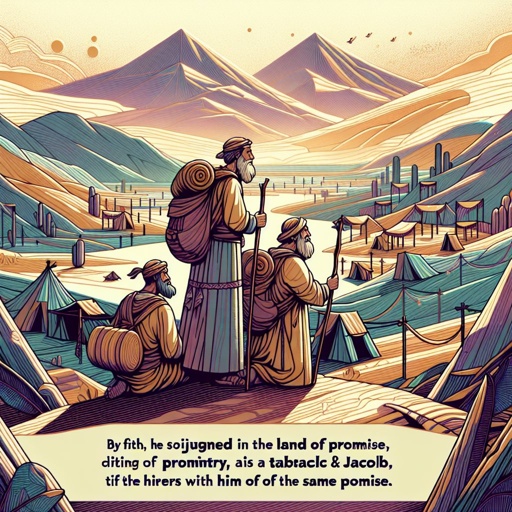
Hebrews 11:9 - "By faith he sojourned in the land of promise, as in a strange country, dwelling in tabernacles with Isaac and Jacob, the heirs with him of the same promise:"
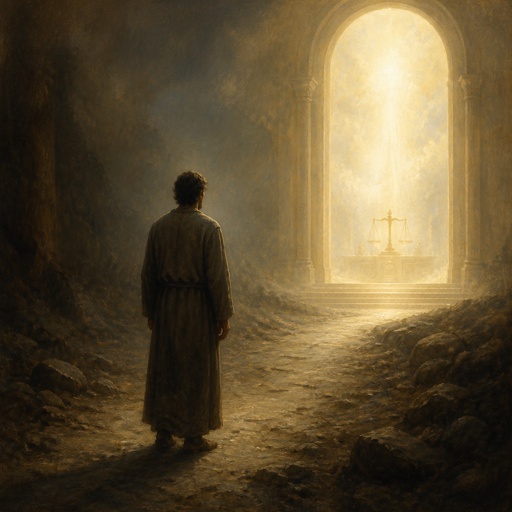
"And as it is appointed unto men once to die, but after this the judgment:" - Hebrews 9:27
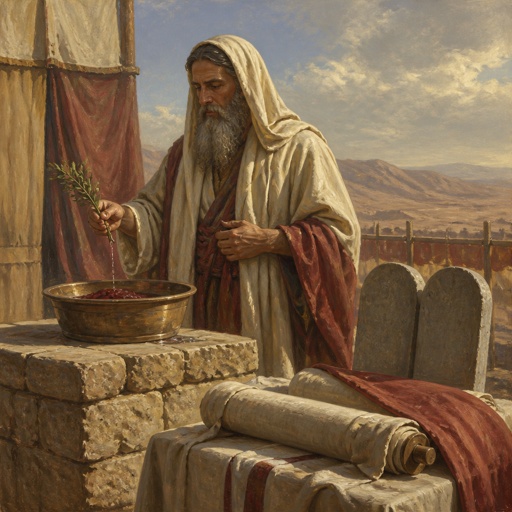
"Whereupon neither the first testament was dedicated without blood." - Hebrews 9:18

Hebrews 9:12 - "Neither by the blood of goats and calves, but by his own blood he entered in once into the holy place, having obtained eternal redemption for us."

Hebrews 10:9 - "Then said he, Lo, I come to do thy will, O God. He taketh away the first, that he may establish the second."