What does Hosea 7:1 mean?
“When I would have healed Israel, then the iniquity of Ephraim was discovered, and the wickedness of Samaria: for they commit falsehood; and the thief cometh in, and the troop of robbers spoileth without.” — Hosea 7:1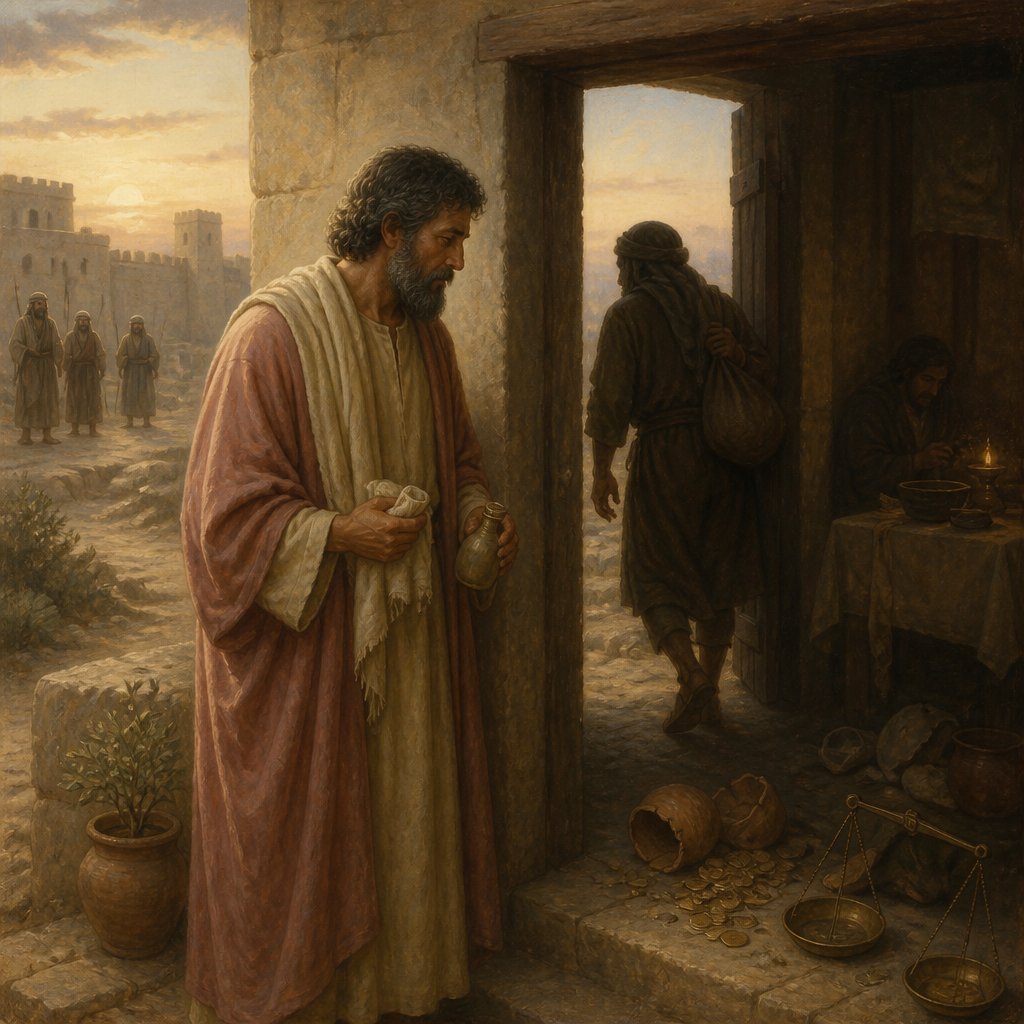
Hosea 7:1 (KJV) - "When I would have healed Israel, then the iniquity of Ephraim was discovered, and the wickedness of Samaria: for they commit falsehood; and the thief cometh in, and the troop of robbers spoileth without."
The Book of Hosea is one of the books of the Minor Prophets in the Old Testament, and it revolves around the prophet Hosea and his relationship with his unfaithful wife Gomer. This verse specifically comes in the midst of Hosea's prophecies and warnings to the Israelites about the consequences of their sinful behavior and their unfaithfulness to God.
The verse begins with the phrase "When I would have healed Israel," which indicates God's desire and intention to bring healing and restoration to the nation of Israel. This shows God's mercy and compassion, as he is willing to forgive and heal his people despite their continuous disobedience and rebellion. However, the verse goes on to say that the iniquity of Ephraim was discovered and the wickedness of Samaria was revealed. This implies that instead of turning to God for repentance and forgiveness, the people of Israel continued to sin and rebel against him, leading to the exposure of their wickedness and iniquity.
The verse then lists some of their transgressions, such as committing falsehood, thievery, and robbery. This paints a picture of a society that is steeped in dishonesty, lawlessness, and moral decay. The people of Israel have strayed far from God's commandments and have instead embraced a lifestyle of deceit and immorality. Their actions not only reflect their own spiritual bankruptcy but also contribute to the deterioration of their community and society as a whole.
One of the key themes of this verse is the idea of spiritual healing and restoration. Despite the people's unfaithfulness, God continues to extend his offer of forgiveness and reconciliation. However, their refusal to repent and turn away from their sinful ways only leads to further destruction and devastation. This serves as a powerful reminder of the consequences of turning away from God and pursuing a life of sin. It also highlights the importance of genuine repentance and obedience in order to receive God's grace and mercy.
Another prominent theme is the concept of moral decay and societal breakdown. The sins mentioned in the verse – falsehood, theft, and robbery – are not just individual transgressions but also reflect the overall state of the nation. The pervasive dishonesty and lawlessness have led to a breakdown of trust and integrity within the community, as well as the rampant theft and robbery that erode the social fabric. This serves as a cautionary tale about the destructive nature of sin and its impact on both individuals and society as a whole.
The context of this verse is important in understanding its significance within the broader narrative of the Book of Hosea. The prophet Hosea was called by God to marry Gomer, a woman who would later become unfaithful to him, symbolizing the unfaithfulness of Israel towards God. Hosea's personal experiences with his wife serve as a powerful allegory for God's relationship with his people, highlighting the themes of forgiveness, redemption, and the consequences of sin.
In addition to its thematic significance, this verse also holds symbolic meaning. The iniquity of Ephraim and the wickedness of Samaria represent the spiritual and moral corruption of the entire nation. Ephraim and Samaria were two of the major regions within Israel, and their transgressions epitomize the collective disobedience and rebellion of the entire nation. The mention of falsehood, theft, and robbery serves as a vivid portrayal of the moral decay and societal breakdown that has taken hold within Israel.
In conclusion, Hosea 7:1 is a powerful and poignant reminder of the consequences of spiritual unfaithfulness and the destructive nature of sin. It serves as a call to repentance and obedience, as well as a warning about the lasting impact of moral and societal decay. The verse also highlights the boundless mercy and desire for restoration that God offers, despite the people's continual disobedience. Overall, it presents a timeless message about the importance of remaining faithful to God and the dire consequences of straying from his path.
Get our apps


Artwork for Hosea 7:1

Hosea 7:1 - "When I would have healed Israel, then the iniquity of Ephraim was discovered, and the wickedness of Samaria: for they commit falsehood; and the thief cometh in, and the troop of robbers spoileth without."
"When I would have healed Israel, then the iniquity of Ephraim was discovered, and the wickedness of Samaria: for they commit falsehood; and the thief cometh in, and the troop of robbers spoileth without." - Hosea 7:1

Hosea 1:7 - "But I will have mercy upon the house of Judah, and will save them by the LORD their God, and will not save them by bow, nor by sword, nor by battle, by horses, nor by horsemen."

Hosea 7:3 - "They make the king glad with their wickedness, and the princes with their lies."

Hosea 10:7 - "As for Samaria, her king is cut off as the foam upon the water."
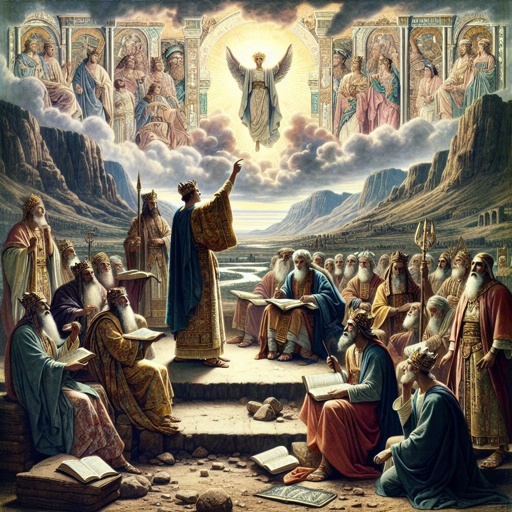
Hosea 1:1 - "The word of the LORD that came unto Hosea, the son of Beeri, in the days of Uzziah, Jotham, Ahaz, and Hezekiah, kings of Judah, and in the days of Jeroboam the son of Joash, king of Israel."

Hosea 7:7 - "They are all hot as an oven, and have devoured their judges; all their kings are fallen: there is none among them that calleth unto me."

Hosea 1:2 - "The beginning of the word of the LORD by Hosea. And the LORD said to Hosea, Go, take unto thee a wife of whoredoms and children of whoredoms: for the land hath committed great whoredom, departing from the LORD."

Hosea 13:7 - "Therefore I will be unto them as a lion: as a leopard by the way will I observe them:"

Hosea 6:7 - "But they like men have transgressed the covenant: there have they dealt treacherously against me."

Hosea 7:8 - "Ephraim, he hath mixed himself among the people; Ephraim is a cake not turned."

Hosea 1:2

Hosea 3:1

Hosea 7:11 - "¶ Ephraim also is like a silly dove without heart: they call to Egypt, they go to Assyria."

Hosea 1:2

Hosea 4:7 - "As they were increased, so they sinned against me: therefore will I change their glory into shame."

Hosea 7:15 - "Though I have bound and strengthened their arms, yet do they imagine mischief against me."

Hosea 3:1-5

Hosea 7:10 - "And the pride of Israel testifieth to his face: and they do not return to the LORD their God, nor seek him for all this."
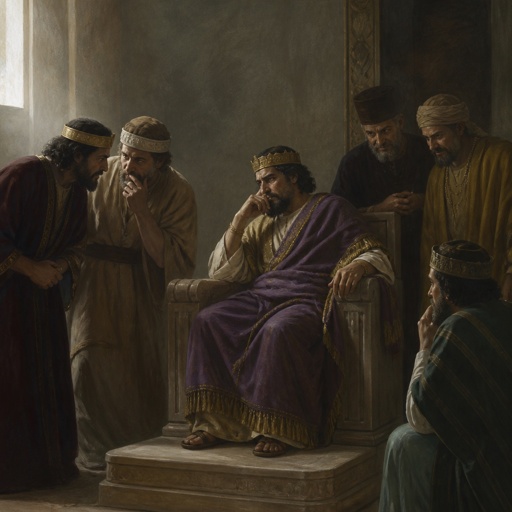
"They make the king glad with their wickedness, and the princes with their lies." - Hosea 7:3

Hosea 5:7 - "They have dealt treacherously against the LORD: for they have begotten strange children: now shall a month devour them with their portions."

Hosea 7:9 - "Strangers have devoured his strength, and he knoweth it not: yea, gray hairs are here and there upon him, yet he knoweth not."

Hosea 7:5 - "In the day of our king the princes have made him sick with bottles of wine; he stretched out his hand with scorners."

Hosea 7:4 - "They are all adulterers, as an oven heated by the baker, who ceaseth from raising after he hath kneaded the dough, until it be leavened."

Hosea 7:6 - "For they have made ready their heart like an oven, whiles they lie in wait: their baker sleepeth all the night; in the morning it burneth as a flaming fire."
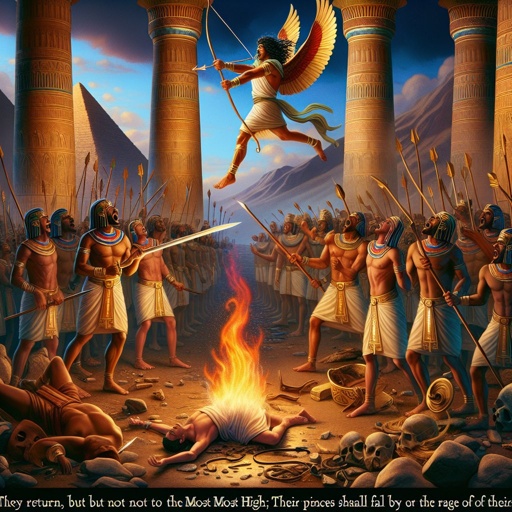
Hosea 7:16 - "They return, but not to the most High: they are like a deceitful bow: their princes shall fall by the sword for the rage of their tongue: this shall be their derision in the land of Egypt."
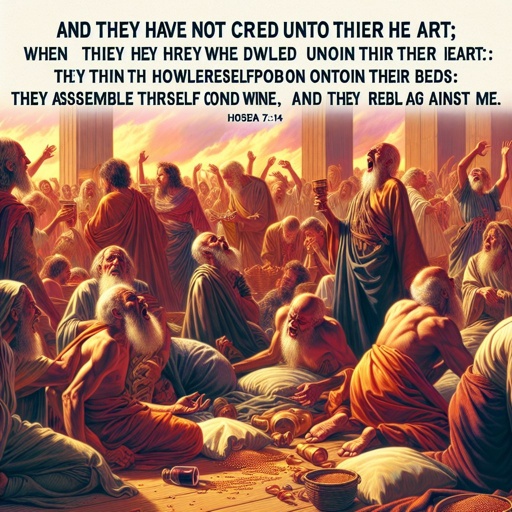
Hosea 7:14 - "And they have not cried unto me with their heart, when they howled upon their beds: they assemble themselves for corn and wine, and they rebel against me."
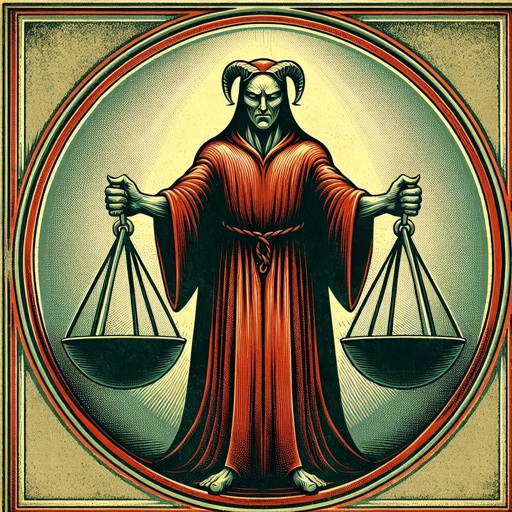
Hosea 12:7 - "¶ He is a merchant, the balances of deceit are in his hand: he loveth to oppress." The image should not depict explicit or offensive content but be symbolic.

Hosea 11:7 - "And my people are bent to backsliding from me: though they called them to the most High, none at all would exalt him."

Hosea 7:2 - "And they consider not in their hearts that I remember all their wickedness: now their own doings have beset them about; they are before my face."