What does Isaiah 1:4 mean?
“Ah sinful nation, a people laden with iniquity, a seed of evildoers, children that are corrupters: they have forsaken the LORD, they have provoked the Holy One of Israel unto anger, they are gone away backward.” — Isaiah 1:4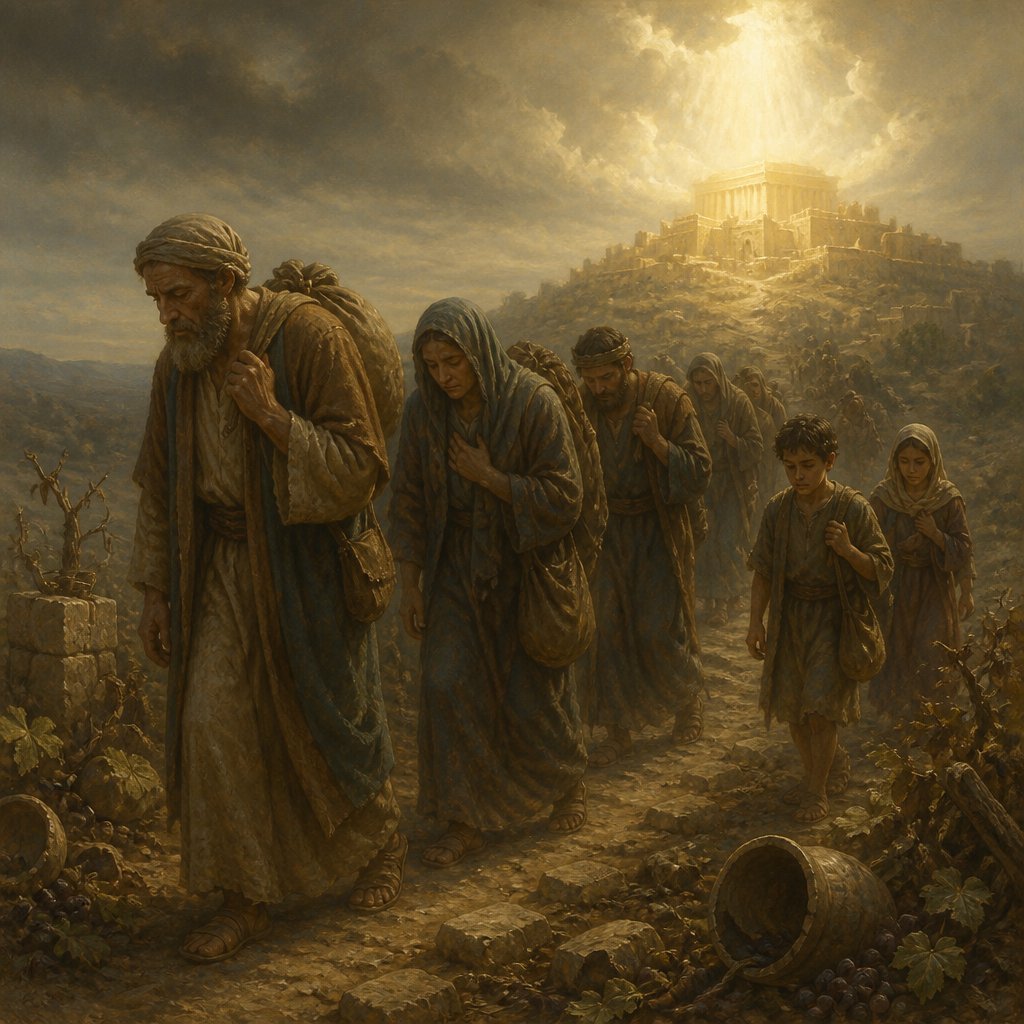
Isaiah 1:4 (KJV) states: "Ah sinful nation, a people laden with iniquity, a seed of evildoers, children that are corrupters: they have forsaken the Lord, they have provoked the Holy One of Israel unto anger, they are gone away backward."
This verse is the beginning of a stern rebuke from the prophet Isaiah to the people of Judah. The book of Isaiah is one of the major prophetic books in the Bible, and it contains strong messages of judgment and hope. In this verse, Isaiah starts by addressing the sinful nature of the nation of Judah. He uses strong language to emphasize the gravity of their sins and the consequences that will follow if they do not repent and turn back to God.
The verse begins with "Ah sinful nation," which sets the tone for the rest of the passage. The word "Ah" is a cry of distress or lamentation, indicating the prophet's deep sorrow and disappointment over the spiritual state of the people. He then describes them as "a people laden with iniquity," meaning that they were burdened and weighed down by their sinful actions. This imagery conveys the idea that the people's sins were not simply individual transgressions, but a collective and pervasive problem that affected the entire nation.
Isaiah goes on to characterize the people as "a seed of evildoers, children that are corrupters," highlighting the generational nature of their sin. This suggests that the problem of sin was not limited to a particular group or class of individuals, but had infected the very foundation of their society. The use of the word "corrupters" implies that the people were actively promoting and spreading wickedness, rather than seeking to remedy it.
The prophet then explains the root cause of their sinful state: "they have forsaken the Lord, they have provoked the Holy One of Israel unto anger, they are gone away backward." This indictment points to the people's unfaithfulness and rebellion against God. Despite having been chosen as God's own people, they had turned their backs on Him and provoked His anger through their disobedience and idolatry. Their departure from God is described as "gone away backward," indicating a deliberate and willful rejection of His ways.
The themes present in this verse are numerous, but the central one is the consequences of sin and the call to repentance. Isaiah's message serves as a warning to the people of Judah, urging them to recognize the seriousness of their actions and the need to turn back to God. The verse also emphasizes the spiritual and moral decay that occurs when a society abandons its foundational principles and turns away from God. It serves as a timeless reminder of the destructive nature of sin and the importance of remaining faithful to God.
In the larger context of the book of Isaiah, this verse sets the stage for the rest of the prophetic message. It introduces the idea of God's judgment on sinful nations, as well as the hope of restoration and redemption for those who repent. Throughout the book, Isaiah continues to challenge the people to confront their sin, seek justice, and return to a right relationship with God.
Symbolically, this verse represents the enduring truth of human nature and the perennial struggle between righteousness and sin. It serves as a cautionary tale for all generations, reminding us of the destructive power of sin and the need for repentance and spiritual renewal. The imagery of a sinful nation burdened with iniquity can be seen as a reflection of the universal human condition, highlighting the need for divine intervention and forgiveness.
In conclusion, Isaiah 1:4 (KJV) is a powerful and sobering declaration of the spiritual state of the nation of Judah. It illustrates the devastating consequences of sin and the urgent call to repentance and restoration. The verse encapsulates the recurring themes of judgment, repentance, and restoration found throughout the book of Isaiah, and it continues to resonate as a timeless reminder of God's unwavering standards and the need for faithful obedience.
Get our apps


Artwork for Isaiah 1:4

Isaiah 1:4 - "Ah sinful nation, a people laden with iniquity, a seed of evildoers, children that are corrupters: they have forsaken the LORD, they have provoked the Holy One of Israel unto anger, they are gone away backward."
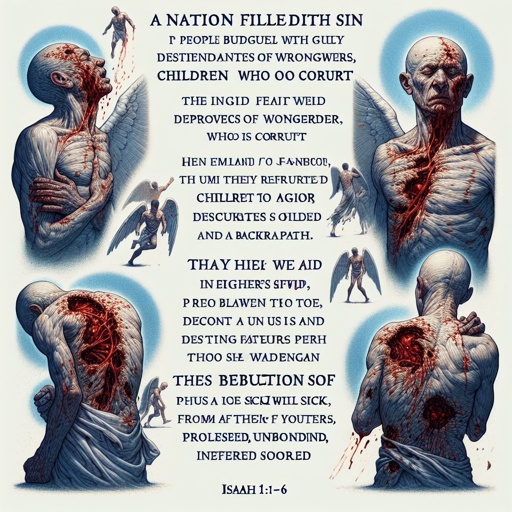
Isaiah 1:4-6 - "Alas, sinful nation, People laden with iniquity, Brood of evildoers, Children who are corrupters! They have forsaken the Lord, They have provoked to anger The Holy One of Israel, They have turned away backward. Why should you be stricken again? You will revolt more and more. The whole head is sick, And the whole heart faints. From the sole of the foot even to the head, There is no soundness in it, But wounds and bruises and putrefying sores; They have not been closed or bound up, Or soothed with ointment."
"Ah sinful nation, a people laden with iniquity, a seed of evildoers, children that are corrupters: they have forsaken the LORD, they have provoked the Holy One of Israel unto anger, they are gone away backward." - Isaiah 1:4

"Alas, sinful nation, People laden with iniquity, Brood of evildoers, Children who are corrupters! They have forsaken the Lord, They have provoked to anger The Holy One of Israel, They have turned away backward. Why should you be stricken again? You will revolt more and more. The whole head is sick, And the whole heart faints. From the sole of the foot even to the head, There is no soundness in it, But wounds and bruises and putrefying sores; They have not been closed or bound up, Or soothed with ointment." - Isaiah 1:4-6

Isaiah 40:4

Isaiah 9:1-4
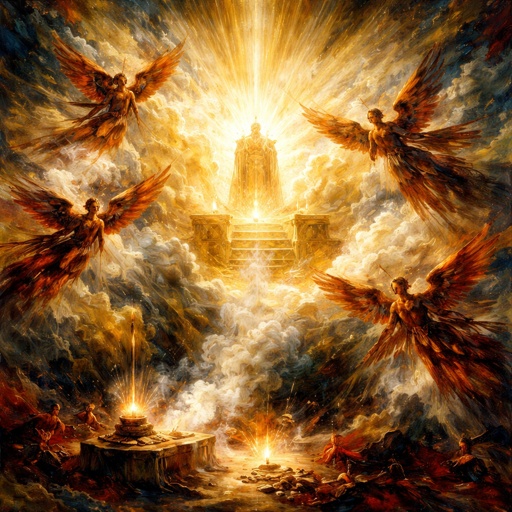
Isaiah 6:1-4. Do not depict God's face.
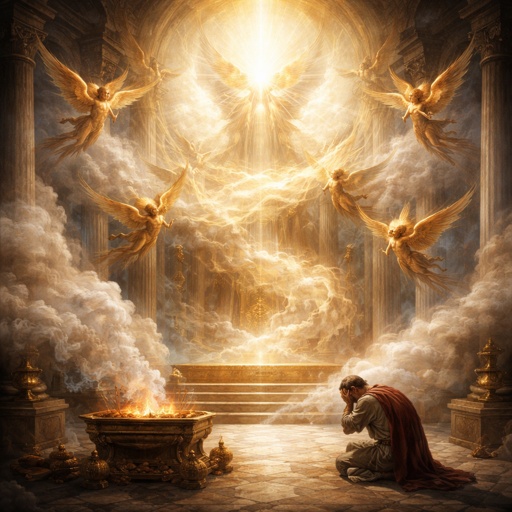
Isaiah 6:1-4. Do not depict God's face.
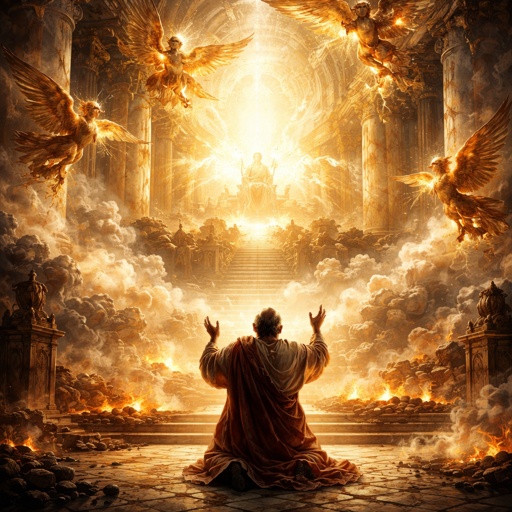
Isaiah 6:1-4. Do not depict God's face.

Isaiah 38:4 - "¶ Then came the word of the LORD to Isaiah, saying,"
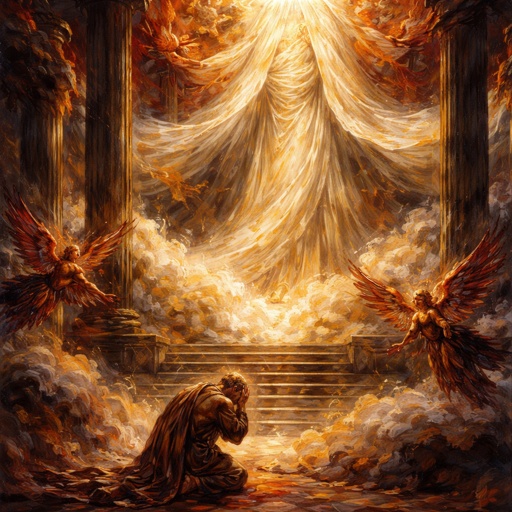
Isaiah 6:1-4. Only seeing the robe of God and not his upper body or face.
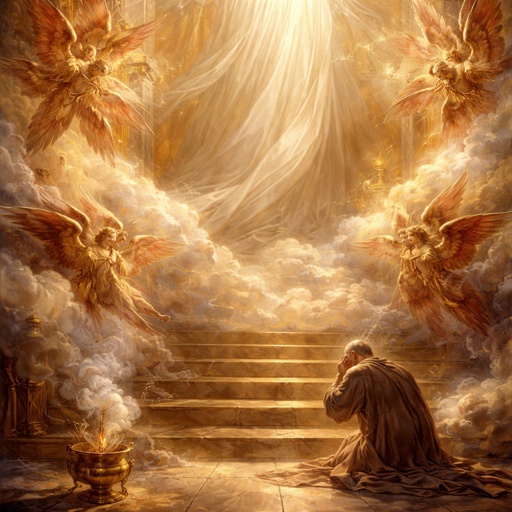
Isaiah 6:1-4. Only seeing the robe of God and not his upper body or face.
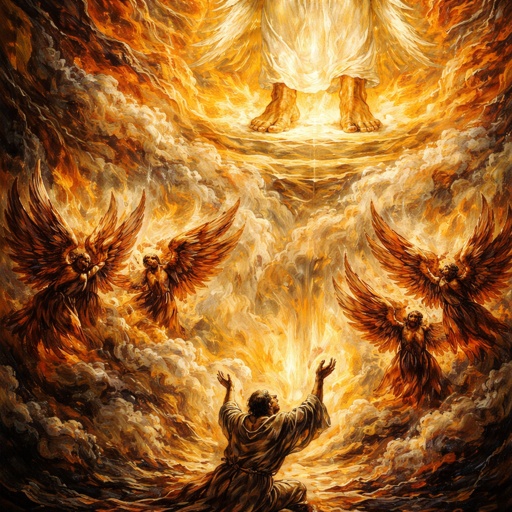
Isaiah 6:1-4. Only seeing the feet of God and not his upper body or face.
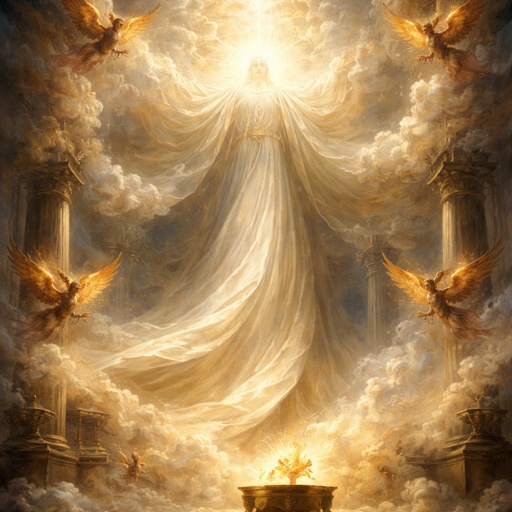
Isaiah 6:1-4. Only seeing the robe of God and not his upper body or face.

Isaiah 6:1-4. Only seeing the robe of God and not his upper body or face.

Isaiah 6:1-4. Only seeing the feet of God and not his upper body or face.

Isaiah 29:4

Isaiah 6:1-4. Only seeing the robe of God and not his upper body or face. Wings of angels should be covering their faces.

Isaiah 29:4

"¶ Then came the word of the LORD to Isaiah, saying," - Isaiah 38:4

Isaiah 6:4-7
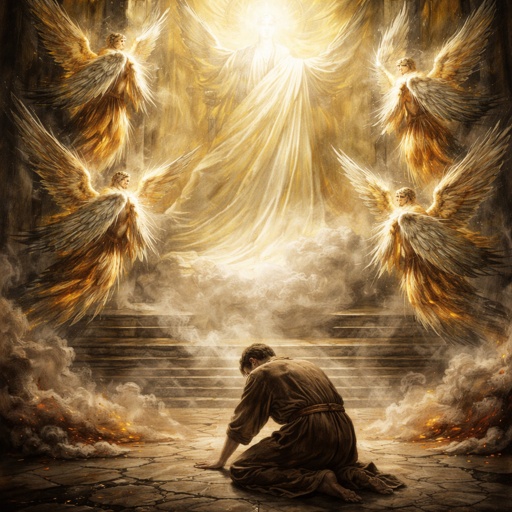
Isaiah 6:1-4. Only seeing the robe of God and not his upper body or face. The seraphim should be covering their faces with their wings, with two wings they fly, and with two wings they cover their feet. Make sure the angels faces are covered with their wings. Also have Isaiah kneeling down and humbled before this scene

Isaiah 4:1 - "And in that day seven women shall take hold of one man, saying, We will eat our own bread, and wear our own apparel: only let us be called by thy name, to take away our reproach."

Isaiah 6:1-4. Only seeing the robe of God and not his upper body or face. The seraphim should be covering their faces with their wings, with two wings they fly, and with two wings they cover their feet
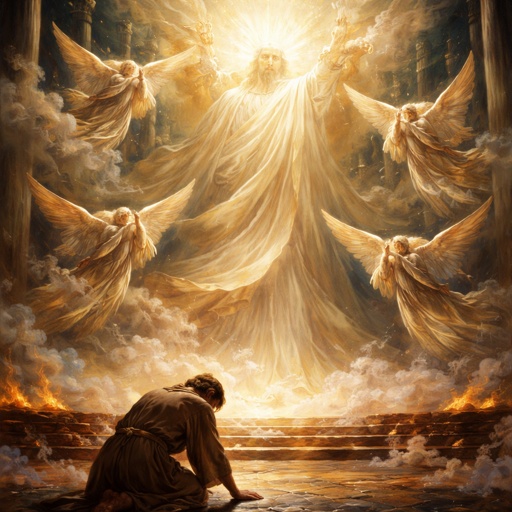
Isaiah 6:1-4. Only seeing the robe of God and not his upper body or face. The seraphim should be covering their faces with their wings, with two wings they fly, and with two wings they cover their feet. Make sure the angels faces are covered with their wings. Also have Isaiah kneeling down and humbled before this scene. Make sure the angels faces are covered

Isaiah 30:4 - "For his princes were at Zoan, and his ambassadors came to Hanes."

Isaiah 44:4 - "And they shall spring up as among the grass, as willows by the water courses."

Isaiah 26:4 - "Trust ye in the LORD for ever: for in the LORD JEHOVAH is everlasting strength:"

Isaiah 63:4 - "For the day of vengeance is in mine heart, and the year of my redeemed is come."

Isaiah 2:1 - "The word that Isaiah the son of Amoz saw concerning Judah and Jerusalem."