
Isaiah 1:4-6 from the King James Version (KJV) of the Bible reads:
"Ah sinful nation, a people laden with iniquity, a seed of evildoers, children that are corrupters: they have forsaken the LORD, they have provoked the Holy One of Israel unto anger, they are gone away backward. Why should ye be stricken any more? ye will revolt more and more: the whole head is sick, and the whole heart faint. From the sole of the foot even unto the head there is no soundness in it; but wounds, and bruises, and putrifying sores: they have not been closed, neither bound up, neither mollified with ointment."
This passage from the book of Isaiah is a powerful and vivid portrayal of God's judgment against the sinful nation of Israel. It is a poignant and deeply introspective reflection on the moral and spiritual decay of the people, and serves as a call to repentance and a warning of the dire consequences of turning away from God.
In the verses preceding this passage, Isaiah addresses the people of Israel on behalf of God, calling them to hear his voice and lamenting the rebellion and unfaithfulness of the nation. In verse 4, he begins with the powerful and sorrowful exclamation, "Ah sinful nation, a people laden with iniquity." This opening sets the tone for the entire passage, as it lays bare the depth of the spiritual degradation and moral corruption of the people.
The imagery used in this passage is striking and evocative. The people are described as a "seed of evildoers" and "children that are corrupters," reflecting the pervasive nature of sin and wickedness among them. They are depicted as having forsaken the Lord and provoked the Holy One of Israel to anger, signaling a complete turning away from their God and the source of their salvation.
The language used in verse 5 is particularly impactful, as it reveals the extent of the people's spiritual sickness. The whole head is sick, and the whole heart faint. The metaphor of a sick body is employed to convey the moral and spiritual decay that has afflicted the nation. From head to foot, there is no soundness, only wounds, bruises, and putrefying sores. This visceral imagery highlights the severity of the people's moral sickness and underscores the urgency of their need for spiritual healing and redemption.
In verse 6, the lament continues as it emphasizes the futility of their condition. The wounds and sores are left untreated, not closed, bound up, or mollified with ointment. This serves as a stark indictment of the people's stubbornness and refusal to acknowledge their need for repentance and reconciliation with God.
The overarching theme of this passage is one of judgment and warning, as it paints a harrowing picture of the consequences of turning away from God and embracing sin and wickedness. It is a poignant and sobering call to repentance, as it lays bare the spiritual and moral decay of the people and underscores the urgency of their need for spiritual healing and restoration.
The historical context of this passage is important for a full understanding of its significance. The book of Isaiah was written during a time of great political turmoil and spiritual apostasy in Israel. The nation was facing the imminent threat of invasion and captivity by foreign powers, and the people had turned away from God, embracing idolatry and immorality. In this context, the words of Isaiah take on added poignancy and urgency, as they serve as a powerful call to repentance and a warning of the dire consequences of the people's unfaithfulness.
Symbolically, this passage serves as a powerful metaphor for the universal condition of humanity. The spiritual sickness and moral decay of the nation of Israel are emblematic of the fallen nature of all humanity, as we all have sinned and fallen short of the glory of God. The vivid and visceral imagery used in this passage serves as a vivid reminder of the profound effects of sin and the desperate need for redemption and spiritual healing.
In conclusion, Isaiah 1:4-6 from the King James Version of the Bible is a profound and evocative reflection on the moral and spiritual decay of the nation of Israel. It serves as a powerful call to repentance and a warning of the dire consequences of turning away from God. The visceral imagery and poignant language used in this passage underscore the urgency of the people's need for spiritual healing and restoration, and serve as a poignant reminder of the universal condition of humanity and our desperate need for redemption.
Get our apps


Artwork for Isaiah 1:4-6
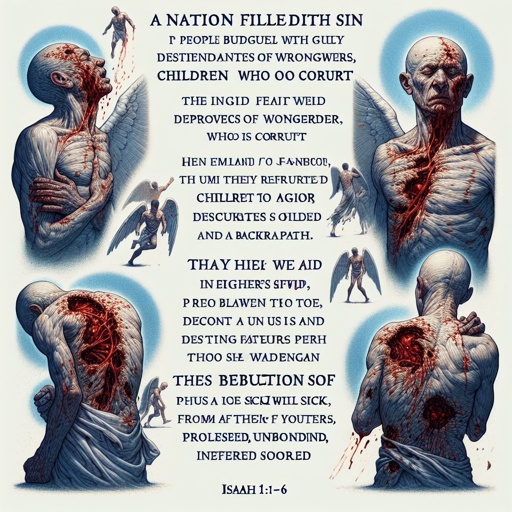
Isaiah 1:4-6 - "Alas, sinful nation, People laden with iniquity, Brood of evildoers, Children who are corrupters! They have forsaken the Lord, They have provoked to anger The Holy One of Israel, They have turned away backward. Why should you be stricken again? You will revolt more and more. The whole head is sick, And the whole heart faints. From the sole of the foot even to the head, There is no soundness in it, But wounds and bruises and putrefying sores; They have not been closed or bound up, Or soothed with ointment."

"Alas, sinful nation, People laden with iniquity, Brood of evildoers, Children who are corrupters! They have forsaken the Lord, They have provoked to anger The Holy One of Israel, They have turned away backward. Why should you be stricken again? You will revolt more and more. The whole head is sick, And the whole heart faints. From the sole of the foot even to the head, There is no soundness in it, But wounds and bruises and putrefying sores; They have not been closed or bound up, Or soothed with ointment." - Isaiah 1:4-6

Isaiah 6:1-4. Do not depict God's face.

Isaiah 6:1-4. Do not depict God's face.

Isaiah 6:1-4. Do not depict God's face.
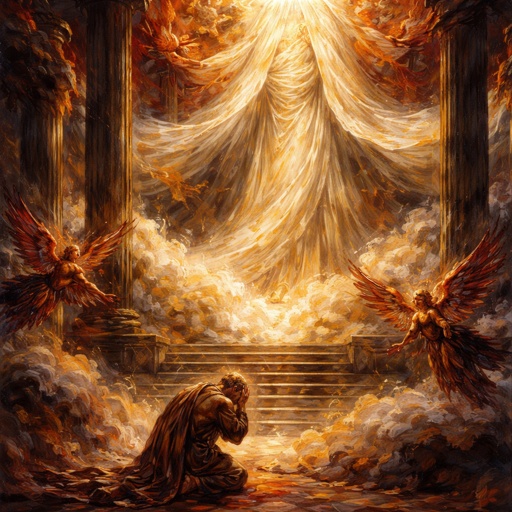
Isaiah 6:1-4. Only seeing the robe of God and not his upper body or face.
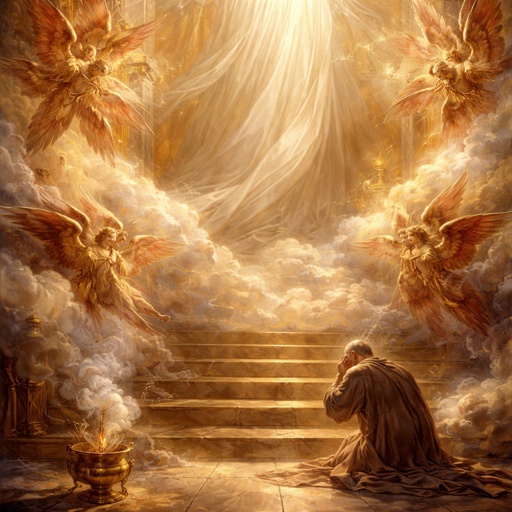
Isaiah 6:1-4. Only seeing the robe of God and not his upper body or face.
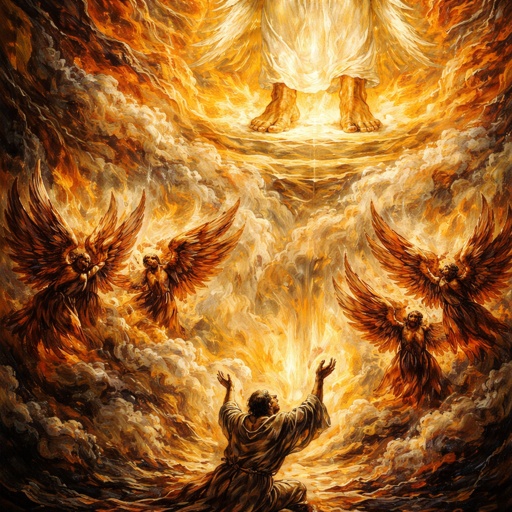
Isaiah 6:1-4. Only seeing the feet of God and not his upper body or face.

Isaiah 6:1-4. Only seeing the robe of God and not his upper body or face.

Isaiah 6:1-4. Only seeing the robe of God and not his upper body or face.

Isaiah 6:1-4. Only seeing the feet of God and not his upper body or face.

Isaiah 6:4-7

Isaiah 6:1-5

Isaiah 6:1-5

Isaiah 6:1-4. Only seeing the robe of God and not his upper body or face. Wings of angels should be covering their faces.

Isaiah 6:1-5

Isaiah 6:1-5

Isaiah 6:1

Isaiah 6:4 - "And the posts of the door moved at the voice of him that cried, and the house was filled with smoke."

Isaiah 40:4

Isaiah 6:1-3

Isaiah 6:1-3

Isaiah 6:1-3

Isaiah 6:1-4. Only seeing the robe of God and not his upper body or face. The seraphim should be covering their faces with their wings, with two wings they fly, and with two wings they cover their feet

Isaiah 9:1-4

Isaiah 4:6 - "And there shall be a tabernacle for a shadow in the daytime from the heat, and for a place of refuge, and for a covert from storm and from rain."

Isaiah 6 chapter 1 to 10

Isaiah 6:1-4. Only seeing the robe of God and not his upper body or face. The seraphim should be covering their faces with their wings, with two wings they fly, and with two wings they cover their feet. Make sure the angels faces are covered with their wings. Also have Isaiah kneeling down and humbled before this scene

1 Corinthians 13:4-6

1 Corinthians 13:4-6