What does Isaiah 14:9 mean?
“Hell from beneath is moved for thee to meet thee at thy coming: it stirreth up the dead for thee, even all the chief ones of the earth; it hath raised up from their thrones all the kings of the nations.” — Isaiah 14:9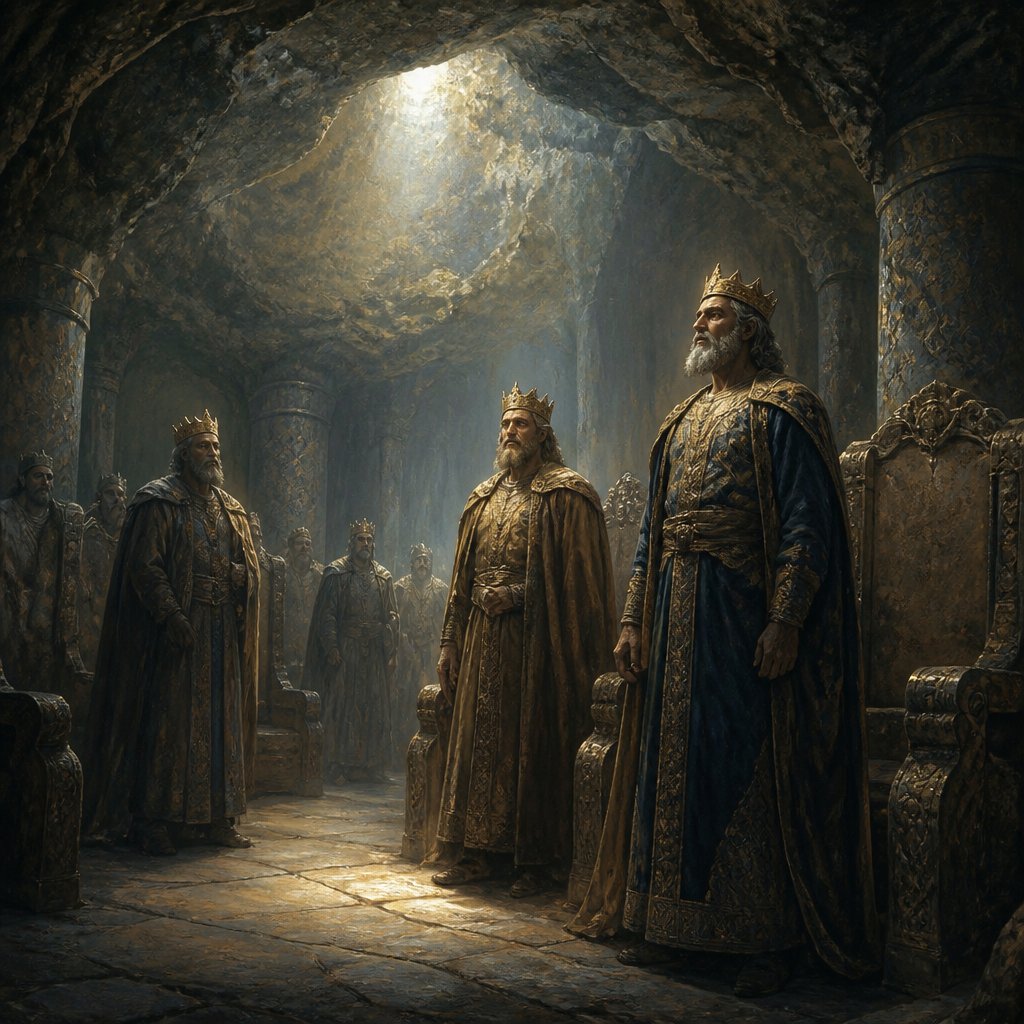
Isaiah 14:9 in the King James Version reads: "Hell from beneath is moved for thee to meet thee at thy coming: it stirreth up the dead for thee, even all the chief ones of the earth; it hath raised up from their thrones all the kings of the nations."
This verse is a part of the famous prophecy delivered by the prophet Isaiah against the king of Babylon. In this particular section of the prophecy, Isaiah depicts the reaction of the netherworld to the fall of the Babylonian king. The imagery used in this verse is rich and vivid, and it serves to convey a sense of the magnitude of the king's downfall and the impact it has even in the afterlife.
The theme of judgment and divine retribution is central to this verse, as well as to the entire prophecy against the king of Babylon. The Babylonian king, who is often associated with the biblical figure of the devil or Satan, is portrayed as a figure of great pride and arrogance, one who exalted himself above all others and sought to be like the Most High. However, his pride and wickedness ultimately lead to his downfall, and the prophecy in Isaiah serves as a powerful reminder of the consequences of such hubris.
The context of this verse is important for understanding its full significance. The prophecy against the king of Babylon is generally considered to be symbolic of the downfall of any earthly power that exalts itself above God. In this sense, it can be interpreted as a warning against the sin of pride and the dangers of seeking power and glory for oneself rather than acknowledging and submitting to the authority of God.
The imagery of Hell being moved and the dead being stirred up serves as a powerful metaphor for the upheaval and chaos that accompanies the downfall of the Babylonian king. It depicts a world in turmoil, with even the great and powerful figures of the earth being brought low and stripped of their authority. This imagery serves to reinforce the theme of divine judgment and the idea that no one, no matter how powerful or mighty, is immune to the consequences of their actions.
The symbolism in this verse is also significant. Hell, in this context, represents the realm of the dead and the place of punishment for the wicked. Its movement and agitation indicate a disturbance in the natural order of things, as well as a response to the king's downfall. The raising of the dead and the kings of the nations from their thrones speaks to the universal impact of the king's downfall and the extent to which it disrupts the established order of things.
Overall, Isaiah 14:9 is a powerful and evocative verse that serves as a potent reminder of the consequences of pride and the ultimate authority of God. Its imagery and symbolism convey a sense of the magnitude of the Babylonian king's downfall and the universal impact of his actions. It serves as a warning against the sin of pride and the dangers of seeking power for oneself, and it underscores the theme of divine judgment and retribution. As such, it remains a poignant and relevant message for believers today.
Get our apps


Artwork for Isaiah 14:9

Isaiah 14:9 - "Hell from beneath is moved for thee to meet thee at thy coming: it stirreth up the dead for thee, even all the chief ones of the earth; it hath raised up from their thrones all the kings of the nations."
"Hell from beneath is moved for thee to meet thee at thy coming: it stirreth up the dead for thee, even all the chief ones of the earth; it hath raised up from their thrones all the kings of the nations." - Isaiah 14:9

Isaiah 9:14 - "Therefore the LORD will cut off from Israel head and tail, branch and rush, in one day."
"Therefore the LORD will cut off from Israel head and tail, branch and rush, in one day." - Isaiah 9:14

Isaiah 14:12

isaiah 5:14

Isaiah 14:25

Isaiah 14:14 - "I will ascend above the heights of the clouds; I will be like the most High."

Isaiah 9:6

Isaiah 9:6

Isaiah 9:6

Isaiah 9:6

Isaiah 50:7–9

Isaiah 11:1-9

Isaiah 11:1-9

Isaiah 9:1-4

Isaiah 11:1-9

Isaiah 14:28 - "In the year that king Ahaz died was this burden."

Isaiah 9:9 - "And all the people shall know, even Ephraim and the inhabitant of Samaria, that say in the pride and stoutness of heart,"

Zechariah 14:9

Isaiah 14:7 - "The whole earth is at rest, and is quiet: they break forth into singing."

Isaiah 14:5 - "The LORD hath broken the staff of the wicked, and the sceptre of the rulers."
Rev 9:14

Isaiah 10:9 - "Is not Calno as Carchemish? is not Hamath as Arpad? is not Samaria as Damascus?"

Isaiah 23:14 - "Howl, ye ships of Tarshish: for your strength is laid waste."

Isaiah 14:15 - "Yet thou shalt be brought down to hell, to the sides of the pit."

Isaiah 2:14 - "And upon all the high mountains, and upon all the hills that are lifted up,"

Genesis 18:9-14

Luke 18:9-14

Luke 18: 9-14