What does Isaiah 16:11 mean?
“Wherefore my bowels shall sound like an harp for Moab, and mine inward parts for Kir-haresh.” — Isaiah 16:11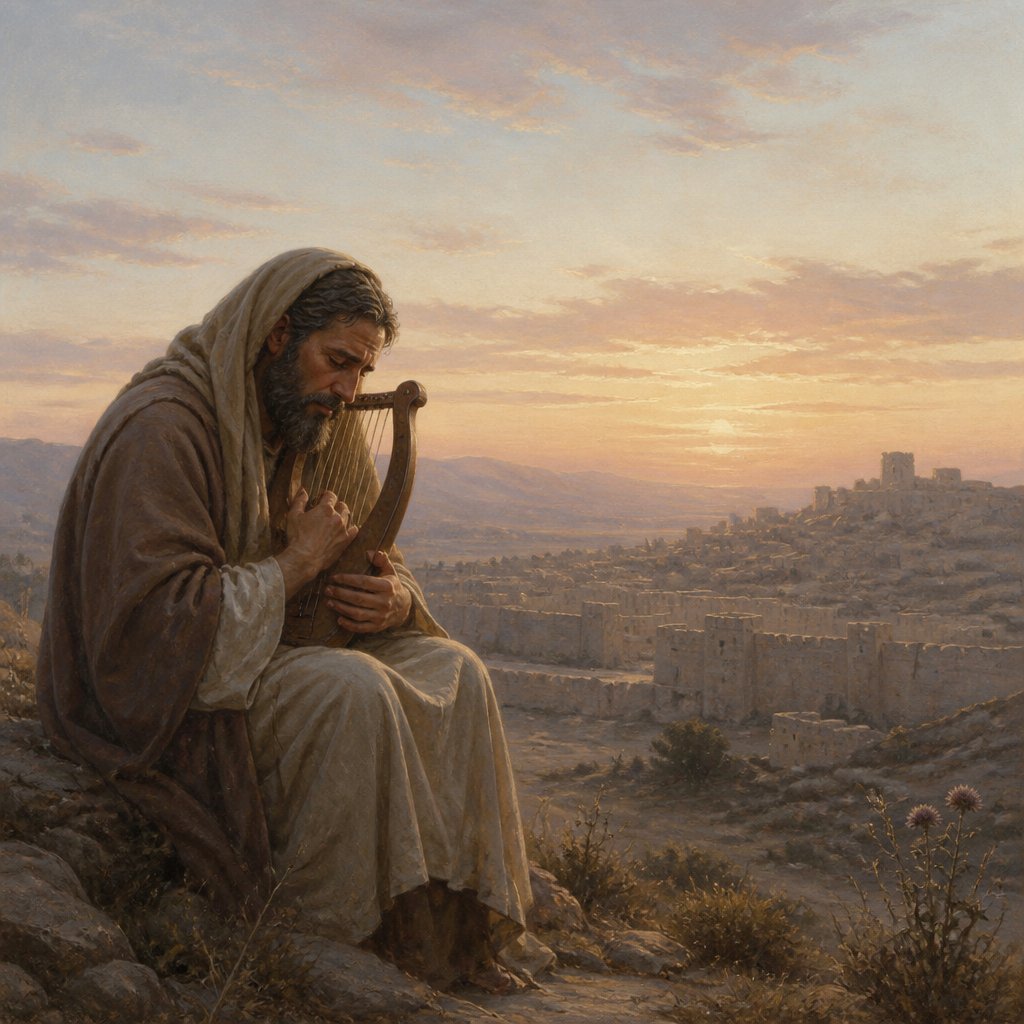
Isaiah 16:11 in the King James Version (KJV) reads: "Wherefore my bowels shall sound like an harp for Moab, and mine inward parts for Kirharesh."
This verse is part of a larger passage in the book of Isaiah that prophesies against the nation of Moab. In this particular verse, the speaker (presumably the prophet Isaiah speaking on behalf of God) describes the deep grief and anguish he feels for Moab, using vivid and emotional imagery.
The use of the word "bowels" in this verse is meant to convey a sense of profound emotional distress and sympathy. In the Hebrew culture, the bowels were associated with the seat of emotions and feelings, so the comparison of the speaker's bowels to a harp is a powerful metaphor for the intensity of his sorrow. The phrase "shall sound like an harp" suggests that the speaker's internal anguish is so overwhelming that it is like the mournful music of a harp, a symbol of lamentation and mourning in ancient Jewish culture.
The mention of Moab and Kirharesh in this verse is significant as well. Moab was a neighboring nation to ancient Israel, and the two nations had a complex and often adversarial relationship. In this passage, Moab is depicted as being in a state of distress and devastation, and the prophet's expression of deep sorrow for Moab reflects God's compassion for all people, even those who are considered enemies or outsiders.
The mention of Kirharesh, a city in Moab, serves to further emphasize the specific focus on Moab's suffering and the prophet's empathy for this nation. The inclusion of these specific names adds a layer of historical and geographical context to the verse, grounding it in a specific time and place.
In a broader sense, this verse reflects the theme of compassion and empathy that runs throughout the book of Isaiah and the entire Bible. The prophet Isaiah was known for speaking out against injustice and calling for social and moral righteousness, and this verse is an example of his deep concern for the welfare of all people, regardless of their nationality or political affiliation. It serves as a reminder that God's love and compassion extend to all, and that even in times of judgment and hardship, there is room for empathy and understanding.
Symbolically, the imagery of the bowels sounding like a harp serves as a reminder of the depth and complexity of human emotions, and the power of empathy to connect us with the suffering of others. The use of such vivid and evocative language in this verse also underscores the poetic and artistic qualities of the book of Isaiah, and the power of language to convey deep emotional truths. Ultimately, this verse invites us to reflect on our own capacity for compassion and understanding, and to consider how we might respond with empathy to the suffering of others, even those who may be considered our enemies.
Get our apps


Artwork for Isaiah 16:11

Isaiah 16:11 - "Wherefore my bowels shall sound like an harp for Moab, and mine inward parts for Kir-haresh."
"Wherefore my bowels shall sound like an harp for Moab, and mine inward parts for Kir-haresh." - Isaiah 16:11

Isaiah 11:16 - "And there shall be an highway for the remnant of his people, which shall be left, from Assyria; like as it was to Israel in the day that he came up out of the land of Egypt."

Zechariah 1:1-6

Isaiah 11

Isaiah 11:1

Isaiah 55:11

Isaiah 11:1-9

Isaiah 11:1-9

Isaiah 11:1-9

Apocalipsis 11, 19; 12, 1-6. 10

Hebrews 11:16

Genesis 16:11

Psalm 16:11

Psalm 16:11

Hebrews 11:16

Isaiah 8:16 - "Bind up the testimony, seal the law among my disciples."

Isaiah 32:16 - "Then judgment shall dwell in the wilderness, and righteousness remain in the fruitful field."

Isaiah 40:16 - "And Lebanon is not sufficient to burn, nor the beasts thereof sufficient for a burnt offering."

Numbers 11:16-26

"And there shall be an highway for the remnant of his people, which shall be left, from Assyria; like as it was to Israel in the day that he came up out of the land of Egypt." - Isaiah 11:16

Isaiah 2:16 - "And upon all the ships of Tarshish, and upon all pleasant pictures."

2 Kings 20:16 - "And Isaiah said unto Hezekiah, Hear the word of the LORD."

Isaiah 9:16 - "For the leaders of this people cause them to err; and they that are led of them are destroyed."

Isaiah 16:13 - "This is the word that the LORD hath spoken concerning Moab since that time."

Isaiah 28:11 - "For with stammering lips and another tongue will he speak to this people."

Isaiah 5:16 - "But the LORD of hosts shall be exalted in judgment, and God that is holy shall be sanctified in righteousness."

Isaiah 43:11 - "I, even I, am the LORD; and beside me there is no saviour."

Exodus 16:11 - "¶ And the LORD spake unto Moses, saying,"

John 16:11 - "Of judgment, because the prince of this world is judged."