What does Isaiah 36:2 mean?
“And the king of Assyria sent Rabshakeh from Lachish to Jerusalem unto king Hezekiah with a great army. And he stood by the conduit of the upper pool in the highway of the fuller’s field.” — Isaiah 36:2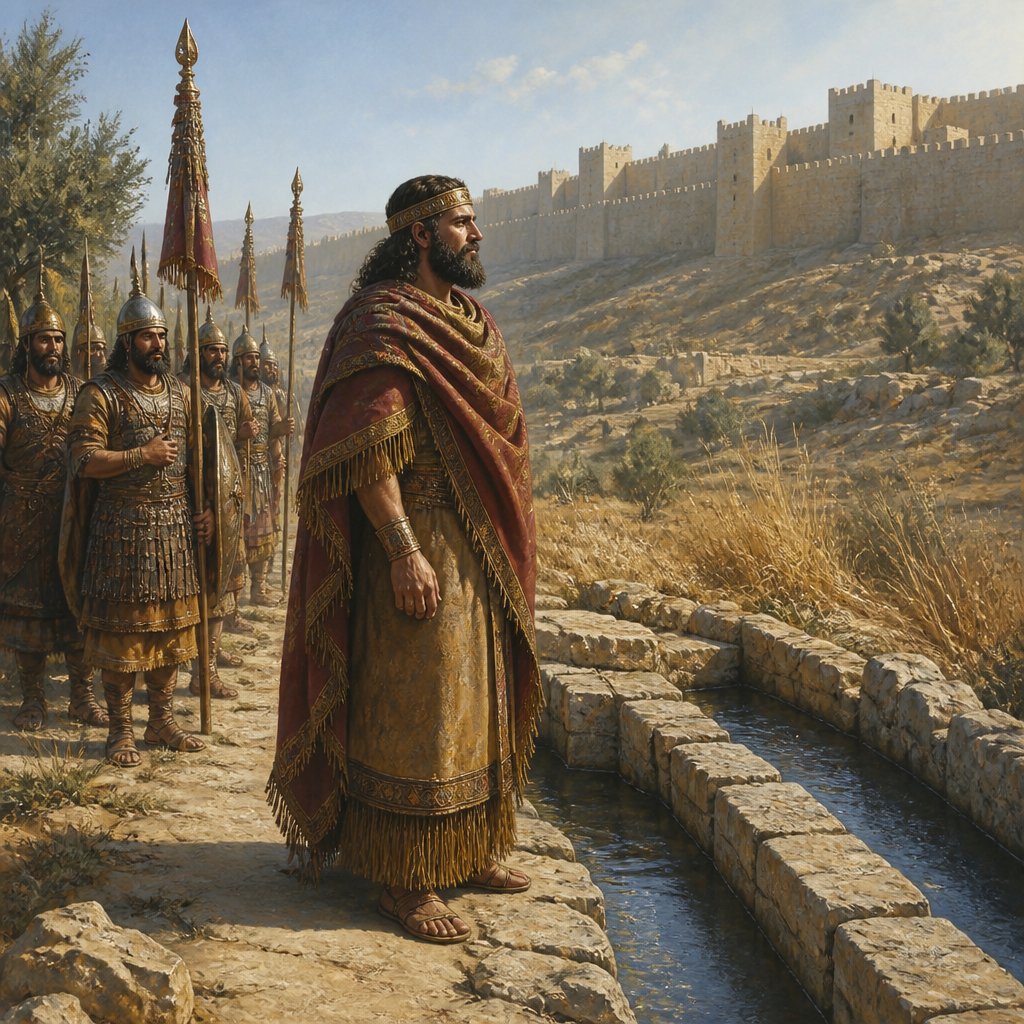
Isaiah 36:2 (KJV) says, "And the king of Assyria sent Rabshakeh from Lachish to Jerusalem unto king Hezekiah with a great army. And he stood by the conduit of the upper pool in the highway of the fuller's field." This verse is a part of the larger passage in the book of Isaiah that describes the Assyrian invasion of Judah and the message that they brought to King Hezekiah.
The historical context of this verse is important for understanding its significance. At this time in history, the Assyrian Empire was one of the most powerful and feared empires in the world. They had already conquered the northern kingdom of Israel and were now setting their sights on the southern kingdom of Judah. King Hezekiah, who reigned in Judah during this time, faced a significant threat to his kingdom from the advancing Assyrian army.
In this verse, we see that the king of Assyria sent Rabshakeh, a high-ranking official, to Jerusalem with a great army. The presence of the army at the gates of Jerusalem would have struck fear into the hearts of the people. The placement of Rabshakeh by the conduit of the upper pool in the highway of the fuller's field was a strategic move to position himself in a place where he could be seen and heard by the people of Jerusalem.
The themes present in this verse are those of military power, intimidation, and the threat of invasion. The Assyrian army was a force to be reckoned with, and their presence at the gates of Jerusalem was a clear display of their military might. The people of Judah would have felt a sense of unease and vulnerability in the face of such a formidable enemy.
The symbolism in this verse is also worth noting. The placement of Rabshakeh by the conduit of the upper pool in the highway of the fuller's field is symbolic of the Assyrian's attempt to gain access to the resources and infrastructure of Judah. The conduit of the upper pool was a source of water for the city, and the fuller's field was likely a place where cloth was washed and dyed. By positioning himself in this location, Rabshakeh was not only making a statement of military power, but also threatening the basic necessities of life for the people of Jerusalem.
In the larger context of the book of Isaiah, this verse serves as a prelude to the message that Rabshakeh delivers to King Hezekiah and the people of Jerusalem. Rabshakeh attempts to undermine King Hezekiah's leadership and sow doubt and fear among the people. However, Isaiah's prophecy assures King Hezekiah that the Lord will deliver them from the Assyrian threat.
From a Christian perspective, this verse also serves as a reminder of the importance of placing our trust in God in the face of overwhelming odds. The Assyrian army may have seemed unbeatable, but King Hezekiah's faith in the Lord ultimately led to the deliverance of Judah from their enemies.
In conclusion, Isaiah 36:2 is a verse that captures a pivotal moment in the history of Judah and the Assyrian invasion. It is a powerful reminder of the themes of military power, intimidation, and the faithfulness of God in the face of adversity. Understanding the historical context, themes, and symbolism of this verse enriches our understanding of the larger narrative of the Bible and the enduring messages it imparts.
Get our apps


Artwork for Isaiah 36:2

Isaiah 36:2 - "And the king of Assyria sent Rabshakeh from Lachish to Jerusalem unto king Hezekiah with a great army. And he stood by the conduit of the upper pool in the highway of the fuller's field."
"And the king of Assyria sent Rabshakeh from Lachish to Jerusalem unto king Hezekiah with a great army. And he stood by the conduit of the upper pool in the highway of the fuller's field." - Isaiah 36:2

Isaiah 36:21 - "But they held their peace, and answered him not a word: for the king's commandment was, saying, Answer him not."

Isaiah 36:14 - "Thus saith the king, Let not Hezekiah deceive you: for he shall not be able to deliver you."

Isaiah 36:19 - "Where are the gods of Hamath and Arphad? where are the gods of Sepharvaim? and have they delivered Samaria out of my hand?"

Isaiah 36:13 - "Then Rabshakeh stood, and cried with a loud voice in the Jews' language, and said, Hear ye the words of the great king, the king of Assyria."

Isaiah 36:3 - "Then came forth unto him Eliakim, Hilkiah's son, which was over the house, and Shebna the scribe, and Joah, Asaph's son, the recorder."

Isaiah 36:17 - "Until I come and take you away to a land like your own land, a land of corn and wine, a land of bread and vineyards."

Isaiah 36:20 - "Who are they among all the gods of these lands, that have delivered their land out of my hand, that the LORD should deliver Jerusalem out of my hand?"

Isaiah 36:15 - "Neither let Hezekiah make you trust in the LORD, saying, The LORD will surely deliver us: this city shall not be delivered into the hand of the king of Assyria."

2 Chronicles 36:22

Isaiah 36:9 - "How then wilt thou turn away the face of one captain of the least of my master's servants, and put thy trust on Egypt for chariots and for horsemen?"

Isaiah 36:4 - "¶ And Rabshakeh said unto them, Say ye now to Hezekiah, Thus saith the great king, the king of Assyria, What confidence is this wherein thou trustest?"

Isaiah 36:10 - "And am I now come up without the LORD against this land to destroy it? the LORD said unto me, Go up against this land, and destroy it."

Isaiah 36:1 - "Now it came to pass in the fourteenth year of king Hezekiah, that Sennacherib king of Assyria came up against all the defenced cities of Judah, and took them."

Isaiah 36:22 - "¶ Then came Eliakim, the son of Hilkiah, that was over the household, and Shebna the scribe, and Joah, the son of Asaph, the recorder, to Hezekiah with their clothes rent, and told him the words of Rabshakeh."

Isaiah 36:18 - "Beware lest Hezekiah persuade you, saying, The LORD will deliver us. Hath any of the gods of the nations delivered his land out of the hand of the king of Assyria?"

Isaiah 37:36 - "Then the angel of the LORD went forth, and smote in the camp of the Assyrians a hundred and fourscore and five thousand: and when they arose early in the morning, behold, they were all dead corpses."

Isaiah 36:5 - "I say, sayest thou, (but they are but vain words) I have counsel and strength for war: now on whom dost thou trust, that thou rebellest against me?"

2 kings 9:34-36

Isaiah 36:6 - "Lo, thou trustest in the staff of this broken reed, on Egypt; whereon if a man lean, it will go into his hand, and pierce it: so is Pharaoh king of Egypt to all that trust in him."

2 Samuel 23:36 - "Igal the son of Nathan of Zobah, Bani the Gadite,"

1 Chronicles 2:36 - "And Attai begat Nathan, and Nathan begat Zabad,"

Daniel 2:36 - "¶ This is the dream; and we will tell the interpretation thereof before the king."

"But they held their peace, and answered him not a word: for the king's commandment was, saying, Answer him not." - Isaiah 36:21

Isaiah 36:11 - "¶ Then said Eliakim and Shebna and Joah unto Rabshakeh, Speak, I pray thee, unto thy servants in the Syrian language; for we understand it: and speak not to us in the Jews' language, in the ears of the people that are on the wall."

2 Chronicles 36:2 - "Jehoahaz was twenty and three years old when he began to reign, and he reigned three months in Jerusalem."

Ezra 2:36 - "¶ The priests: the children of Jedaiah, of the house of Jeshua, nine hundred seventy and three."
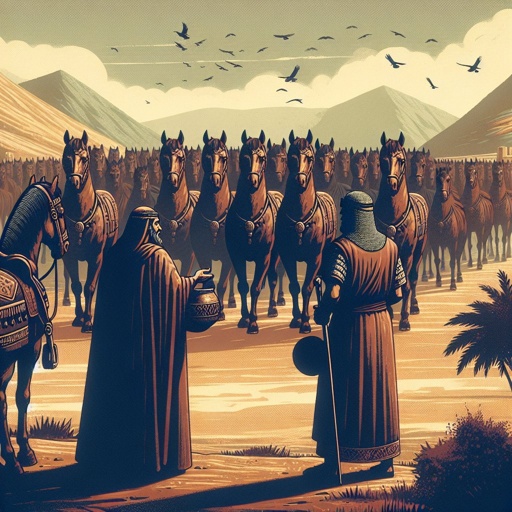
Isaiah 36:8 - "Now therefore give pledges, I pray thee, to my master the king of Assyria, and I will give thee two thousand horses, if thou be able on thy part to set riders upon them."

2 Kings 10:36 - "And the time that Jehu reigned over Israel in Samaria was twenty and eight years."