What does Isaiah 48:3 mean?
“I have declared the former things from the beginning; and they went forth out of my mouth, and I shewed them; I did them suddenly, and they came to pass.” — Isaiah 48:3
Isaiah 48:3 in the King James Version of the Bible reads, "I have declared the former things from the beginning; and they went forth out of my mouth, and I shewed them; I did them suddenly, and they came to pass."
This verse is taken from the Book of Isaiah, which is a prophetic book in the Old Testament. The prophet Isaiah lived in the eighth century BC and his words are filled with themes of judgment, salvation, and the coming of the Messiah. In the context of Isaiah 48, the prophet is speaking to the people of Israel, reminding them of God's faithfulness and the consequences of their disobedience.
The verse itself is a declaration from God, affirming His wisdom and sovereignty over all things. The phrase "I have declared the former things from the beginning" emphasizes God's omniscience and foreknowledge. It is a reminder to the people that God has always been in control and has been revealing His plans from the very beginning. This speaks to the theme of God's faithfulness and constancy throughout history.
The next part of the verse, "and they went forth out of my mouth, and I shewed them," emphasizes the power of God's word. In the Bible, God often speaks things into being, such as in the creation account in Genesis. This statement reaffirms the authority of God's word and the reliability of His promises. It also speaks to the theme of God's sovereignty and control over all things.
The phrase "I did them suddenly, and they came to pass" highlights the immediacy and effectiveness of God's actions. When God speaks, things happen. This reinforces the idea that God's plans and promises will surely come to fruition, and no one can thwart His purposes. It also serves as a warning to the people of Israel that they cannot escape the consequences of their actions and disobedience.
Overall, this verse carries the overarching theme of God's sovereignty and faithfulness. It serves as a reminder to the people of Israel that God has been in control from the beginning and will continue to fulfill His plans for them. It also carries a message of warning, reminding them that their actions have consequences and they should not take God's patience and mercy for granted.
In terms of symbolism, the verse can be seen as a representation of the power of God's word. The idea that God's declarations come to pass emphasizes the authority and reliability of His word. This is a consistent theme throughout the Bible, and it underscores the importance of trusting in God's promises and obeying His commands.
In conclusion, Isaiah 48:3 is a powerful declaration of God's sovereignty, faithfulness, and the effectiveness of His word. It serves as a reminder to the people of Israel, and to all believers, of the unchanging nature of God and the consequences of disobedience. It is a call to trust in God's promises and take His word seriously. This verse continues to have relevance for believers today, as it encourages us to have faith in God's plans and to live in obedience to His word.
Get our apps


Artwork for Isaiah 48:3

Isaiah 48:3 - "I have declared the former things from the beginning; and they went forth out of my mouth, and I shewed them; I did them suddenly, and they came to pass."
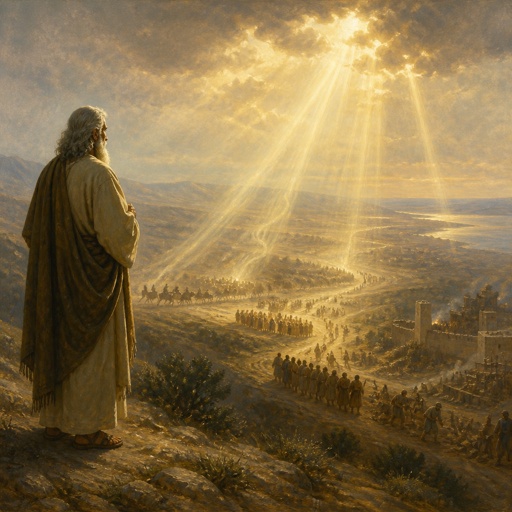
"I have declared the former things from the beginning; and they went forth out of my mouth, and I shewed them; I did them suddenly, and they came to pass." - Isaiah 48:3

Isaiah 48

Isaiah 48

Isaiah 48

Isaiah 48

Isaiah 48:5

Isaiah 48:5

Isaiah 48:5

Isaiah 48:5

Isaiah 48:22 - "There is no peace, saith the LORD, unto the wicked."

Psalms 48:3 - "God is known in her palaces for a refuge."

"There is no peace, saith the LORD, unto the wicked." - Isaiah 48:22

Isaiah 48:10 - "Behold, I have refined thee, but not with silver; I have chosen thee in the furnace of affliction."

Isaiah 48:4 - "Because I knew that thou art obstinate, and thy neck is an iron sinew, and thy brow brass;"

Isaiah 48:2 - "For they call themselves of the holy city, and stay themselves upon the God of Israel; The LORD of hosts is his name."

Jeremiah 48:3 - "A voice of crying shall be from Horonaim, spoiling and great destruction."

Isaiah 48:18 - "O that thou hadst hearkened to my commandments! then had thy peace been as a river, and thy righteousness as the waves of the sea:"

Isaiah 48:9 - "¶ For my name's sake will I defer mine anger, and for my praise will I refrain for thee, that I cut thee not off."

Lamentations 3:48 - "Mine eye runneth down with rivers of water for the destruction of the daughter of my people."

Isaiah 48:12 - "¶ Hearken unto me, O Jacob and Israel, my called; I am he; I am the first, I also am the last."

Ezekiel 48:3 - "And by the border of Asher, from the east side even unto the west side, a portion for Naphtali."

Isaiah 48:7 - "They are created now, and not from the beginning; even before the day when thou heardest them not; lest thou shouldest say, Behold, I knew them."
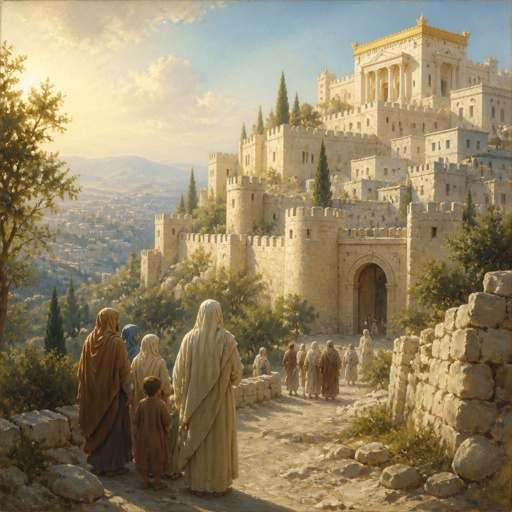
"God is known in her palaces for a refuge." - Psalms 48:3

Isaiah 48:15 - "I, even I, have spoken; yea, I have called him: I have brought him, and he shall make his way prosperous."

Isaiah 48:11 - "For mine own sake, even for mine own sake, will I do it: for how should my name be polluted? and I will not give my glory unto another."

Isaiah 48:13 - "Mine hand also hath laid the foundation of the earth, and my right hand hath spanned the heavens: when I call unto them, they stand up together."

Isaiah 48:21 - "And they thirsted not when he led them through the deserts: he caused the waters to flow out of the rock for them: he clave the rock also, and the waters gushed out."

Numbers 3:48 - "And thou shalt give the money, wherewith the odd number of them is to be redeemed, unto Aaron and to his sons."

Isaiah 48:5 A highly conceptual and symbolic representation of Isaiah 48:5. Visualize a vast, ancient timepiece or scroll that is simultaneously unrolling into the present moment. The scroll is emanating a brilliant, glowing light which is eclipsing shadowed, shattered fragments of carved wood and broken metal idols scattered at the base of the image. The style should be highly detailed, luminous, and inspired by Baroque painting, emphasizing dramatic contrast (chiaroscuro) between the divine light and the darkness of human-made deities.