What does Isaiah 49:13 mean?
“Sing, O heavens; and be joyful, O earth; and break forth into singing, O mountains: for the LORD hath comforted his people, and will have mercy upon his afflicted.” — Isaiah 49:13
Isaiah 49:13 in the KJV reads, “Sing, O heavens; and be joyful, O earth; and break forth into singing, O mountains: for the LORD hath comforted his people, and will have mercy upon his afflicted.” In its plain sense the verse is a summons to universal praise, but it is also a carefully shaped declaration of what God has done and what God will do: the whole creation is called to rejoice because the LORD’s purpose toward “his people” is comfort and mercy, especially toward those who are “afflicted.”
In context, Isaiah 49 belongs to the portion of Isaiah that speaks hope to a people under the shadow of exile and loss. The chapter opens with the voice of the LORD’s servant, one called and formed for God’s purpose, and it moves outward into promises that the LORD will not abandon Zion, will restore and gather, and will make his salvation known. Verse 13 functions like a climactic shout in the middle of these promises. It is not merely an emotional encouragement; it is a prophetic announcement that the LORD’s saving intent is so certain that heaven and earth are commanded to respond as though the deliverance were already fully seen.
The verse’s first feature is its scope. “Sing, O heavens; and be joyful, O earth; and break forth into singing, O mountains” expands the audience beyond Israel to the entire created order. This kind of language is common in Isaiah when God’s acts are portrayed as cosmic in significance. The heavens, earth, and mountains are not literally moral agents, but they are treated as witnesses and participants, as if creation itself must give voice to what it “sees” God doing. Symbolically, the heavens and the earth frame everything that exists, and the mountains represent what seems most fixed and immovable. When even the mountains “break forth into singing,” the image suggests that the LORD’s comfort is not a minor adjustment in human circumstances; it is a reversal so great that the most stable features of the world are pictured as erupting in praise.
The command to sing is grounded in a twofold statement about God’s character and action: “for the LORD hath comforted his people, and will have mercy upon his afflicted.” “Hath comforted” speaks with the certainty of accomplished action, while “will have mercy” speaks of continuing, forward-moving compassion. The pairing is important. Comfort in Isaiah is not mere soothing words; it is relief grounded in God’s covenant faithfulness, the restoration of what has been broken, and the assurance that God has not cast off his own. Mercy, in turn, addresses the condition of those who are “afflicted,” those pressed down by suffering, oppression, judgment, displacement, or shame. The verse does not deny affliction; it names it directly. Yet it insists that affliction will not be the final word over God’s people, because the LORD’s mercy will meet them in that low place.
The phrase “his people” is also significant. The comfort announced here is personal and relational, not abstract. The LORD is not described as comforting “a nation” or “the righteous” in general terms, but “his people,” language that evokes belonging and ownership in the best sense: they are the people bound to him, and he to them. This is why the verse can call for celebration from the cosmos. If the LORD has acted to comfort those who are his, then the act reveals his faithfulness and glory in a way that deserves public, universal acknowledgement.
Isaiah 49:13 also sits in a dramatic flow within the chapter. Immediately after it, Zion voices a complaint: “But Zion said, The LORD hath forsaken me, and my Lord hath forgotten me.” That placement shows that verse 13 is not written from the standpoint of human feelings but from the standpoint of divine promise. The heavens and the earth are told to sing, even while Zion still struggles to believe. In other words, the verse is a divine interpretation of events: God’s mercy is more stable than Zion’s perceptions, and God’s comfort is declared before Zion can fully embrace it. The praise of creation stands as a rebuke to despair and an invitation to faith; if the heavens and earth are summoned to joy because the LORD “hath comforted,” then Zion is being gently pressured to reframe its sorrow in light of God’s pledged compassion.
Seen this way, Isaiah 49:13 carries several themes at once: the certainty of God’s redemption, the tenderness of God’s mercy toward the afflicted, and the vastness of the LORD’s saving work that reaches beyond private consolation into cosmic celebration. It presents comfort not as a temporary mood but as the fruit of God’s steadfast commitment to restore, to gather, and to show mercy. The symbolism of a singing creation underscores that when the LORD comforts his people, it is an act worthy of the loudest praise imaginable, because it reveals who the LORD is: the One who does not forget, who does not forsake, and who turns affliction into an occasion for mercy.
Get our apps


Artwork for Isaiah 49:13

Isaiah 49:13 - "¶ Sing, O heavens; and be joyful, O earth; and break forth into singing, O mountains: for the LORD hath comforted his people, and will have mercy upon his afflicted."

"Sing, O heavens; and be joyful, O earth; and break forth into singing, O mountains: for the LORD hath comforted his people, and will have mercy upon his afflicted." - Isaiah 49:13

"¶ Sing, O heavens; and be joyful, O earth; and break forth into singing, O mountains: for the LORD hath comforted his people, and will have mercy upon his afflicted." - Isaiah 49:13

Isaiah 49 1-7

Isaiah 49:24 - "¶ Shall the prey be taken from the mighty, or the lawful captive delivered?"

Acts 13:49 - "And the word of the Lord was published throughout all the region."

Isaiah 49:11 - "And I will make all my mountains a way, and my highways shall be exalted."

Psalms 49:13 - "This their way is their folly: yet their posterity approve their sayings. Selah."

Isaiah 49:14 - "But Zion said, The LORD hath forsaken me, and my Lord hath forgotten me."

Isaiah 49:3 - "And said unto me, Thou art my servant, O Israel, in whom I will be glorified."

Isaiah 49:12 - "Behold, these shall come from far: and, lo, these from the north and from the west; and these from the land of Sinim."

Isaiah 49:17 - "Thy children shall make haste; thy destroyers and they that made thee waste shall go forth of thee."

Isaiah 49:16 - "Behold, I have graven thee upon the palms of my hands; thy walls are continually before me."

Matthew 13:49 - "So shall it be at the end of the world: the angels shall come forth, and sever the wicked from among the just,"

Isaiah 49:9 - "That thou mayest say to the prisoners, Go forth; to them that are in darkness, Shew yourselves. They shall feed in the ways, and their pastures shall be in all high places."

"And the word of the Lord was published throughout all the region." - Acts 13:49

Genesis 49:13 - "¶ Zebulun shall dwell at the haven of the sea; and he shall be for an haven of ships; and his border shall be unto Zidon."

"¶ Shall the prey be taken from the mighty, or the lawful captive delivered?" - Isaiah 49:24

"This their way is their folly: yet their posterity approve their sayings. Selah." - Psalms 49:13

Isaiah 49:15 - "Can a woman forget her sucking child, that she should not have compassion on the son of her womb? yea, they may forget, yet will I not forget thee."
!["Behold, I have graven thee upon the palms of [my] hands; thy walls [are] continually before me." - Isaiah 49:16](https://media.bible.art/b07c325d-8129-47ec-bf44-63ea459287ab-thumbnail.jpg)
"Behold, I have graven thee upon the palms of [my] hands; thy walls [are] continually before me." - Isaiah 49:16

Leviticus 13:49 - "And if the plague be greenish or reddish in the garment, or in the skin, either in the warp, or in the woof, or in any thing of skin; it is a plague of leprosy, and shall be shewed unto the priest:"

Isaiah 49:19 - "For thy waste and thy desolate places, and the land of thy destruction, shall even now be too narrow by reason of the inhabitants, and they that swallowed thee up shall be far away."

Isaiah 49:25 - "But thus saith the LORD, Even the captives of the mighty shall be taken away, and the prey of the terrible shall be delivered: for I will contend with him that contendeth with thee, and I will save thy children."

"And I will make all my mountains a way, and my highways shall be exalted." - Isaiah 49:11

Isaiah 49:4 - "Then I said, I have laboured in vain, I have spent my strength for nought, and in vain: yet surely my judgment is with the LORD, and my work with my God."

Jeremiah 49:13 - "For I have sworn by myself, saith the LORD, that Bozrah shall become a desolation, a reproach, a waste, and a curse; and all the cities thereof shall be perpetual wastes."
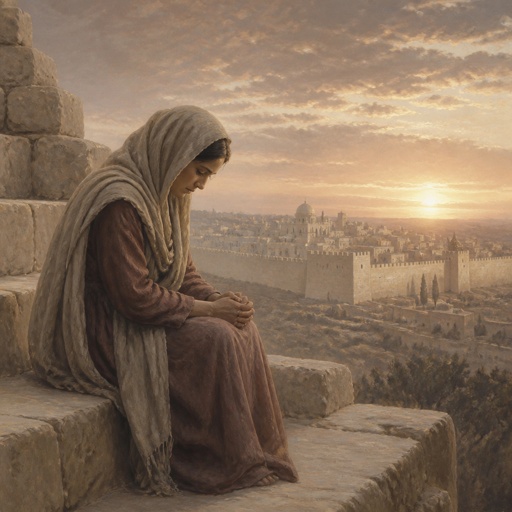
"But Zion said, The LORD hath forsaken me, and my Lord hath forgotten me." - Isaiah 49:14

Isaiah 49:10 - "They shall not hunger nor thirst; neither shall the heat nor sun smite them: for he that hath mercy on them shall lead them, even by the springs of water shall he guide them."

Isaiah 49:20 - "The children which thou shalt have, after thou hast lost the other, shall say again in thine ears, The place is too strait for me: give place to me that I may dwell."