What does Isaiah 49:23 mean?
“And kings shall be thy nursing fathers, and their queens thy nursing mothers: they shall bow down to thee with their face toward the earth, and lick up the dust of thy feet; and thou shalt know that I am the LORD: for they shall not be ashamed that wait for me.” — Isaiah 49:23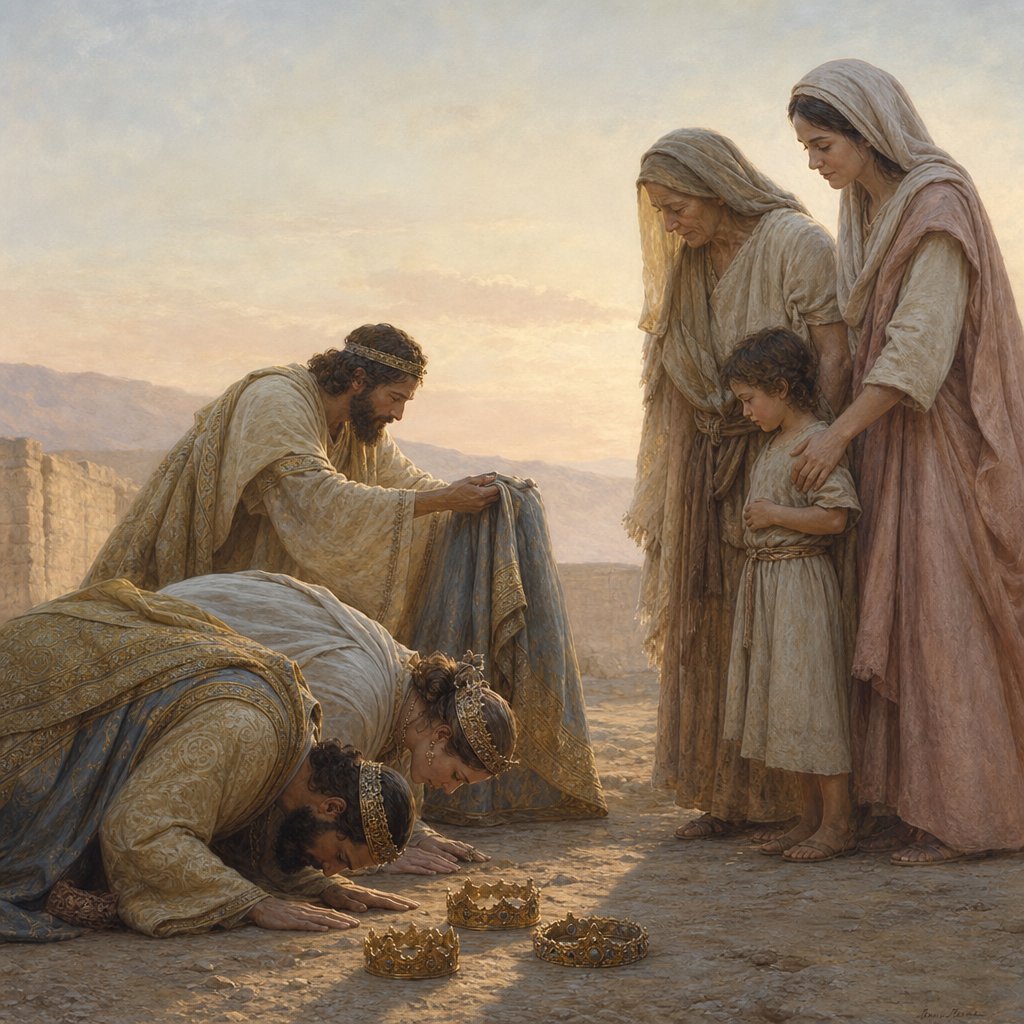
Isaiah 49:23 in the KJV reads, “And kings shall be thy nursing fathers, and their queens thy nursing mothers: they shall bow down to thee with their face toward the earth, and lick up the dust of thy feet; and thou shalt know that I am the LORD: for they shall not be ashamed that wait for me.”
In its setting, this verse belongs to a portion of Isaiah where the LORD speaks comfort to Zion, the covenant people who feel abandoned and diminished. Just before, Zion laments, “The LORD hath forsaken me, and my Lord hath forgotten me.” The LORD answers by declaring that he cannot forget, that he will restore, gather, and enlarge his people, and that what looked like irreversible loss will be turned into public vindication. Isaiah 49:23 is therefore not a detached proverb about royalty; it is a climactic promise within a restoration oracle. It paints, in vivid courtly imagery, a reversal of Zion’s humiliation: the same nations and powers that once towered over her will become instruments of her preservation and will acknowledge that her restoration is the LORD’s work.
The phrase “kings shall be thy nursing fathers, and their queens thy nursing mothers” uses domestic, intimate symbolism to communicate protection, provision, and sustained care. Nursing is the language of nurture, not merely political tolerance. Zion is portrayed as a mother of children who are returning from far away, yet here the rulers of the world are depicted as acting in a parental role toward Zion, ensuring her children are supported and safe. The point is not that Israel becomes the biological child of the nations, but that the nations’ highest authorities will, by God’s ordering, devote themselves to Zion’s welfare. This is a striking inversion: those who normally receive service become servants, and those who normally command are shown assisting. It signals the LORD’s sovereign ability to bend the strongest human institutions toward the care of his people.
The next images intensify the theme of reversal and public acknowledgement: “they shall bow down to thee with their face toward the earth, and lick up the dust of thy feet.” In the ancient world, prostration was a posture of submission and homage. To be “with their face toward the earth” emphasizes total lowering, the surrender of pride. “Lick up the dust” is not meant to degrade for degradation’s sake so much as to portray the complete collapse of hostile arrogance. Dust in Scripture often carries associations of lowliness and mortality; to be at someone’s feet in the dust is to confess that the one formerly despised has been honored by God. The verse thus declares that Zion’s restoration will not be private or ambiguous. It will be so evident that even those who once opposed or disregarded her will be compelled to recognize the LORD’s hand in it.
At the heart of the verse is the divine purpose clause: “and thou shalt know that I am the LORD.” Isaiah regularly uses this language to mark moments when God’s acts in history become unmistakable revelations of who he is. The promise is not merely national survival; it is renewed knowledge of God through experienced deliverance. Zion’s faith is strengthened not by abstract argument but by God’s concrete faithfulness. The humiliation-to-honor movement is designed to teach Zion, in her lived reality, that the LORD governs kings and queens as easily as he governs the poor, that he can turn geopolitical forces into instruments of covenant mercy, and that his word stands even when circumstances seem to deny it.
The final line gathers the whole message into a spiritual theme that reaches beyond the immediate historical picture: “for they shall not be ashamed that wait for me.” Waiting in Isaiah is not passive idleness; it is a posture of faithful expectancy when fulfillment is delayed. Shame, in this context, is the disgrace of hoping in God and being disappointed, the public confusion of trusting a promise that proves empty. The LORD declares that such shame will not be the portion of those who wait for him. The restoration will vindicate their trust. Even when Zion feels forgotten, the end will demonstrate that waiting was not folly but wisdom. The verse thus links outward reversal (nations honoring Zion) with inward vindication (the faithful not put to shame), tying political imagery to a deeply spiritual assurance.
Symbolically, the verse presents a portrait of God’s kingdom order breaking into human hierarchies. Kings and queens represent the summit of worldly power, yet they are shown nurturing and bowing. Zion represents a people who, by ordinary measures, could not compel such honor. The symbolism therefore underscores the LORD’s sovereignty: he can elevate the lowly, abase the proud, and make the course of nations serve his redemptive purposes. The nursing imagery speaks to preservation and growth; the prostration imagery speaks to recognition and surrender; the “know that I am the LORD” speaks to revelation; and the “not be ashamed that wait for me” speaks to perseverance rewarded.
Taken together, Isaiah 49:23 signifies that God’s restoration of his people will be both tender and triumphant: tender in that he provides nurture through unlikely hands, triumphant in that he brings public acknowledgment from the highest earthly authorities, and certain in that those who continue to wait for him will find their hope honored rather than disgraced. In the KJV’s vivid language, the verse assures Zion that her future will be marked by God’s unmistakable vindication, and that the LORD who seemed absent will be known, in the end, as present, reigning, and faithful.
Get our apps


Artwork for Isaiah 49:23

Isaiah 49:23 - "And kings shall be thy nursing fathers, and their queens thy nursing mothers: they shall bow down to thee with their face toward the earth, and lick up the dust of thy feet; and thou shalt know that I am the LORD: for they shall not be ashamed that wait for me."

"And kings shall be thy nursing fathers, and their queens thy nursing mothers: they shall bow down to thee with their face toward the earth, and lick up the dust of thy feet; and thou shalt know that I am the LORD: for they shall not be ashamed that wait for me." - Isaiah 49:23
"And kings shall be thy nursing fathers, and their queens thy nursing mothers: they shall bow down to thee with their face toward the earth, and lick up the dust of thy feet; and thou shalt know that I am the LORD: for they shall not be ashamed that wait for me." - Isaiah 49:23

Isaiah 49 1-7

Isaiah 49:24 - "¶ Shall the prey be taken from the mighty, or the lawful captive delivered?"

Genesis 49:23 - "The archers have sorely grieved him, and shot at him, and hated him:"

Isaiah 49:11 - "And I will make all my mountains a way, and my highways shall be exalted."

Isaiah 49:14 - "But Zion said, The LORD hath forsaken me, and my Lord hath forgotten me."

Isaiah 49:3 - "And said unto me, Thou art my servant, O Israel, in whom I will be glorified."

Isaiah 49:12 - "Behold, these shall come from far: and, lo, these from the north and from the west; and these from the land of Sinim."

Luke 23:49 - "And all his acquaintance, and the women that followed him from Galilee, stood afar off, beholding these things."

Jeremiah 49:23 - "¶ Concerning Damascus. Hamath is confounded, and Arpad: for they have heard evil tidings: they are fainthearted; there is sorrow on the sea; it cannot be quiet."

Isaiah 49:17 - "Thy children shall make haste; thy destroyers and they that made thee waste shall go forth of thee."

Isaiah 49:16 - "Behold, I have graven thee upon the palms of my hands; thy walls are continually before me."

Isaiah 49:9 - "That thou mayest say to the prisoners, Go forth; to them that are in darkness, Shew yourselves. They shall feed in the ways, and their pastures shall be in all high places."

"¶ Shall the prey be taken from the mighty, or the lawful captive delivered?" - Isaiah 49:24

Ezekiel 23:49 - "And they shall recompense your lewdness upon you, and ye shall bear the sins of your idols: and ye shall know that I am the Lord GOD."

Isaiah 49:15 - "Can a woman forget her sucking child, that she should not have compassion on the son of her womb? yea, they may forget, yet will I not forget thee."
!["Behold, I have graven thee upon the palms of [my] hands; thy walls [are] continually before me." - Isaiah 49:16](https://media.bible.art/b07c325d-8129-47ec-bf44-63ea459287ab-thumbnail.jpg)
"Behold, I have graven thee upon the palms of [my] hands; thy walls [are] continually before me." - Isaiah 49:16

"The archers have sorely grieved him, and shot at him, and hated him:" - Genesis 49:23

Isaiah 49:13 - "¶ Sing, O heavens; and be joyful, O earth; and break forth into singing, O mountains: for the LORD hath comforted his people, and will have mercy upon his afflicted."

Isaiah 49:19 - "For thy waste and thy desolate places, and the land of thy destruction, shall even now be too narrow by reason of the inhabitants, and they that swallowed thee up shall be far away."

Isaiah 49:25 - "But thus saith the LORD, Even the captives of the mighty shall be taken away, and the prey of the terrible shall be delivered: for I will contend with him that contendeth with thee, and I will save thy children."

"And I will make all my mountains a way, and my highways shall be exalted." - Isaiah 49:11

Isaiah 49:4 - "Then I said, I have laboured in vain, I have spent my strength for nought, and in vain: yet surely my judgment is with the LORD, and my work with my God."
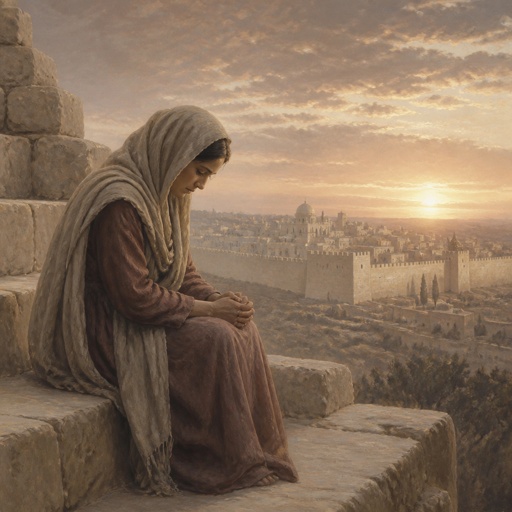
"But Zion said, The LORD hath forsaken me, and my Lord hath forgotten me." - Isaiah 49:14

Isaiah 3:23 - "The glasses, and the fine linen, and the hoods, and the vails."

Isaiah 49:10 - "They shall not hunger nor thirst; neither shall the heat nor sun smite them: for he that hath mercy on them shall lead them, even by the springs of water shall he guide them."

Isaiah 49:20 - "The children which thou shalt have, after thou hast lost the other, shall say again in thine ears, The place is too strait for me: give place to me that I may dwell."

Isaiah 49:2 - "And he hath made my mouth like a sharp sword; in the shadow of his hand hath he hid me, and made me a polished shaft; in his quiver hath he hid me;"