What does Isaiah 49:16 mean?
“Behold, I have graven thee upon the palms of my hands; thy walls are continually before me.” — Isaiah 49:16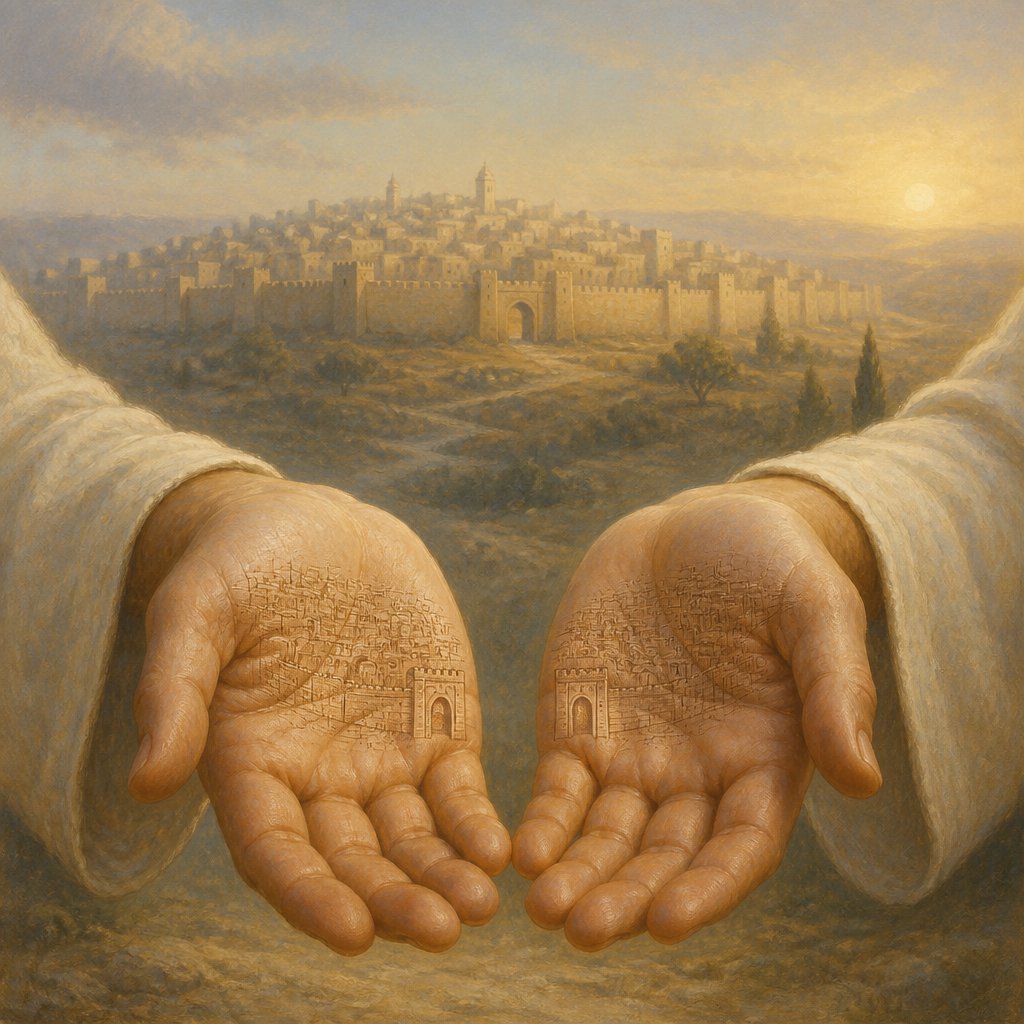
Isaiah 49:16 in the KJV reads, “Behold, I have graven thee upon the palms of my hands; thy walls are continually before me.” It comes as God’s answer to a fear that Zion speaks a few verses earlier: “The LORD hath forsaken me, and my Lord hath forgotten me” (Isaiah 49:14). The immediate context, therefore, is not a casual promise but a direct rebuttal to the complaint of abandonment. The Lord first responds with an image drawn from the strongest natural bond people recognize: “Can a woman forget her sucking child, that she should not have compassion on the son of her womb? yea, they may forget, yet will I not forget thee” (Isaiah 49:15). Verse 16 then intensifies the assurance, moving from the analogy of a mother’s compassion to God’s own covenant-keeping remembrance. The verse is meant to be heard as a decisive “Behold”—a summons to look away from circumstances and toward what God declares about His relation to His people.
The phrase “I have graven thee upon the palms of my hands” uses the language of engraving or inscribing, something cut in and made lasting. In Scripture, writing can be erased, but graving suggests permanence. The “palms” are also significant because they are always in view in ordinary life; the imagery conveys unceasing remembrance, not intermittent attention. God is not saying merely that He thinks of Zion from time to time, but that Zion is set before Him in a way as constant as one’s own hands. The verse is also a deliberate reversal of the fear in verse 14. Zion says she is forgotten; God answers that she is, in a manner of speaking, carried on His very person. The image is not meant to reduce God to human form, but to communicate divine attentiveness in terms that meet human anxiety at its deepest point.
The symbolism gathers additional weight from what Zion is. In Isaiah, “Zion” is both a place and a people, the covenant community that has experienced devastation and exile and is tempted to interpret judgment as abandonment. Earlier and later in the chapter the Lord speaks of restoration, return, and gathering: “I will bring thy seed from the east, and gather thee from the west” (Isaiah 43:5), and here specifically, “I will lift up mine hand to the Gentiles, and set up my standard to the people” (Isaiah 49:22). Isaiah 49 also identifies the “Servant” through whom this work of restoration will be accomplished: “Thou art my servant, O Israel, in whom I will be glorified” (Isaiah 49:3), and yet the Servant’s mission reaches beyond Israel: “I will also give thee for a light to the Gentiles, that thou mayest be my salvation unto the end of the earth” (Isaiah 49:6). Against that backdrop, verse 16 functions as the emotional and theological anchor: the restoration God promises is not driven by mere policy or power, but by covenant love that does not lose track of its own.
The second clause, “thy walls are continually before me,” adds another layer. “Walls” in the prophetic writings evoke a city’s identity, security, and public life. For Jerusalem, broken walls mean disgrace and vulnerability; rebuilt walls mean restoration and peace. If Zion’s walls have been torn down, then speaking of “thy walls” can sound paradoxical, but it is precisely the point: God holds the reality of Zion’s restoration in His sight. He sees what is ruined, He remembers what it was, and He keeps before Him what He intends to rebuild. The walls are “continually” before Him, implying sustained attention to Zion’s condition and future. It is also a way of saying that God’s concern is not only for individual souls in abstraction but for the whole life of His people—community, worship, order, and dwelling—everything a “city” represents in biblical thought.
Within Isaiah 49, the verse supports themes of divine faithfulness, the endurance of God’s promises through suffering, and the difference between human perception and divine reality. Zion interprets her pain as proof that she has been forgotten. The Lord answers by asserting that His remembrance is more fixed than Zion’s experience is loud. The verse also speaks to the tension between discipline and rejection. Isaiah contains strong words about judgment, yet here God insists that judgment does not cancel covenant purposes. He can chasten and still not forsake; He can wound and still heal; He can scatter and still gather. That is why the verse does not merely say, “I will remember thee,” but presents remembrance as a settled fact: “I have graven thee.”
The significance of Isaiah 49:16 in the KJV is thus the strength of its assurance. It is a proclamation that God’s relationship to His people is not fragile, not easily interrupted by circumstances, and not dependent on the people’s ability to feel secure. The engraving on the palms portrays permanent, personal, and ever-present remembrance; the continual sight of the walls portrays God’s active attention to the restoration and protection of His people. Taken in its context, the verse is not sentimental comfort detached from reality, but a covenant declaration spoken into despair, meant to reframe exile and ruin under the certainty of God’s unwavering commitment to redeem and restore.
Get our apps


Artwork for Isaiah 49:16

Isaiah 49:16 - "Behold, I have graven thee upon the palms of my hands; thy walls are continually before me."
!["Behold, I have graven thee upon the palms of [my] hands; thy walls [are] continually before me." - Isaiah 49:16](https://media.bible.art/b07c325d-8129-47ec-bf44-63ea459287ab-thumbnail.jpg)
"Behold, I have graven thee upon the palms of [my] hands; thy walls [are] continually before me." - Isaiah 49:16
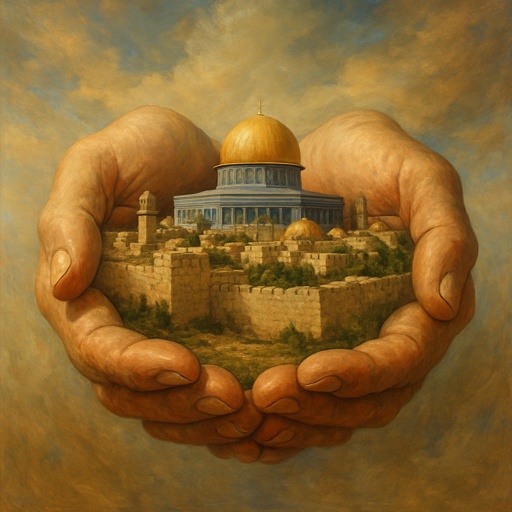
Isaiah 49:16 Behold, I have inscribed you Jerusalem on the palms of My hands; your walls are ever before Me

"Behold, I have graven thee upon the palms of my hands; thy walls are continually before me." - Isaiah 49:16

Isaiah 49 1-7

Isaiah 49:15-16 - "Can a mother forget the baby at her breast and have no compassion on the child she has borne? Though she may forget, I will not forget you! See, I have engraved you on the palms of my hands; your walls are ever before me."

Isaiah 49:24 - "¶ Shall the prey be taken from the mighty, or the lawful captive delivered?"

Isaiah 49:11 - "And I will make all my mountains a way, and my highways shall be exalted."

Genesis 49:16 - "¶ Dan shall judge his people, as one of the tribes of Israel."

Isaiah 49:14 - "But Zion said, The LORD hath forsaken me, and my Lord hath forgotten me."

Isaiah 49:3 - "And said unto me, Thou art my servant, O Israel, in whom I will be glorified."

Isaiah 49:12 - "Behold, these shall come from far: and, lo, these from the north and from the west; and these from the land of Sinim."

Isaiah 49:17 - "Thy children shall make haste; thy destroyers and they that made thee waste shall go forth of thee."

Psalms 49:16 - "Be not thou afraid when one is made rich, when the glory of his house is increased;"

Numbers 16:49 - "Now they that died in the plague were fourteen thousand and seven hundred, beside them that died about the matter of Korah."

Isaiah 49:9 - "That thou mayest say to the prisoners, Go forth; to them that are in darkness, Shew yourselves. They shall feed in the ways, and their pastures shall be in all high places."

"¶ Shall the prey be taken from the mighty, or the lawful captive delivered?" - Isaiah 49:24

Isaiah 49:15 - "Can a woman forget her sucking child, that she should not have compassion on the son of her womb? yea, they may forget, yet will I not forget thee."

Isaiah 49:13 - "¶ Sing, O heavens; and be joyful, O earth; and break forth into singing, O mountains: for the LORD hath comforted his people, and will have mercy upon his afflicted."

Isaiah 49:19 - "For thy waste and thy desolate places, and the land of thy destruction, shall even now be too narrow by reason of the inhabitants, and they that swallowed thee up shall be far away."

Psalm 49:16-17 - "Do not be overawed when others grow rich, when the splendor of their houses increases; for they will take nothing with them when they die, their splendor will not descend with them."
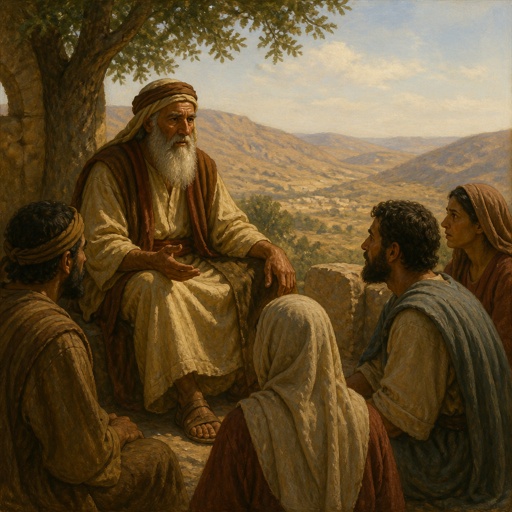
"¶ Dan shall judge his people, as one of the tribes of Israel." - Genesis 49:16

Isaiah 49:25 - "But thus saith the LORD, Even the captives of the mighty shall be taken away, and the prey of the terrible shall be delivered: for I will contend with him that contendeth with thee, and I will save thy children."

"And I will make all my mountains a way, and my highways shall be exalted." - Isaiah 49:11

Isaiah 49:4 - "Then I said, I have laboured in vain, I have spent my strength for nought, and in vain: yet surely my judgment is with the LORD, and my work with my God."
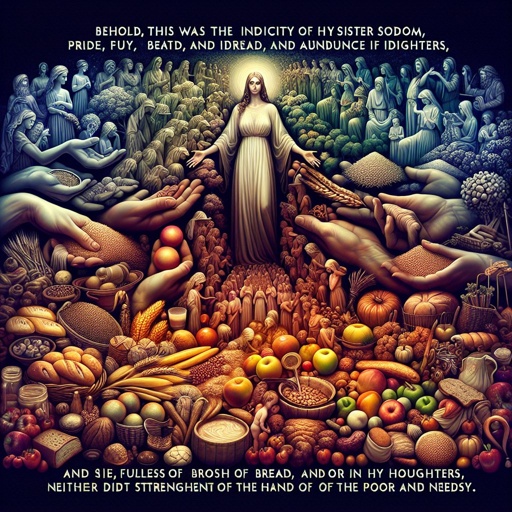
Ezekiel 16:49 - "Behold, this was the iniquity of thy sister Sodom, pride, fulness of bread, and abundance of idleness was in her and in her daughters, neither did she strengthen the hand of the poor and needy."
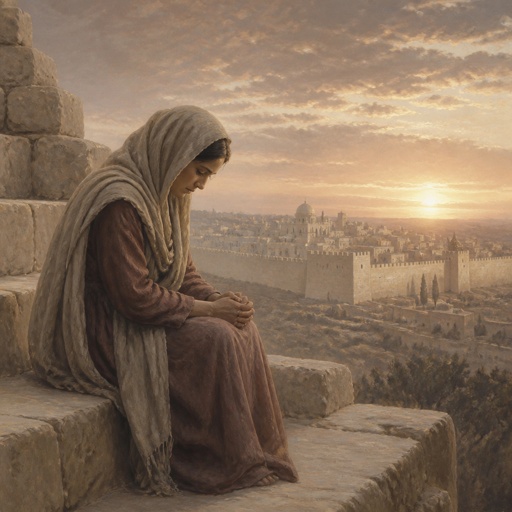
"But Zion said, The LORD hath forsaken me, and my Lord hath forgotten me." - Isaiah 49:14

Isaiah 49:10 - "They shall not hunger nor thirst; neither shall the heat nor sun smite them: for he that hath mercy on them shall lead them, even by the springs of water shall he guide them."

Isaiah 49:20 - "The children which thou shalt have, after thou hast lost the other, shall say again in thine ears, The place is too strait for me: give place to me that I may dwell."

Isaiah 49:2 - "And he hath made my mouth like a sharp sword; in the shadow of his hand hath he hid me, and made me a polished shaft; in his quiver hath he hid me;"