What does Isaiah 6:8 mean?
“Also I heard the voice of the Lord, saying, Whom shall I send, and who will go for us? Then said I, Here am I; send me.” — Isaiah 6:8
Isaiah 6:8 in the King James Bible reads, “Also I heard the voice of the Lord, saying, Whom shall I send, and who will go for us? Then said I, Here am I; send me.” Its meaning rests in the moment when Isaiah, having been brought into the overwhelming holiness of God, is not merely shown something about heaven but is drawn into a divine commission. The verse records the turning point where a vision becomes a vocation: Isaiah is not only a witness of God’s glory but a messenger entrusted with God’s word to God’s people.
The immediate context is essential. Isaiah 6 opens with Isaiah seeing “the Lord sitting upon a throne, high and lifted up,” and hearing the seraphim cry, “Holy, holy, holy, is the LORD of hosts.” The vision exposes God’s absolute purity and majesty, and it simultaneously exposes Isaiah’s unfitness. He confesses, “Woe is me! for I am undone; because I am a man of unclean lips.” In that setting a seraph touches his mouth with a live coal from the altar and declares, “thine iniquity is taken away, and thy sin purged.” Only after this cleansing does Isaiah hear the question of Isaiah 6:8. The sequence matters: the call to go is heard by a man who has first been humbled, then forgiven, then made fit for service. The verse therefore carries the theme that true ministry begins with a true encounter with God’s holiness and with God’s grace.
When the Lord says, “Whom shall I send,” the question is not asked because God lacks knowledge or power, but because God is revealing the manner in which He chooses to work through a human servant. The language draws Isaiah into responsibility; it invites a response of willingness rather than mere compliance. It also shows that being sent is fundamentally being sent by the Lord—Isaiah’s authority will not be self-made, nor will his message originate from personal preference. A prophet in Israel was not simply a religious commentator; he was one commissioned, one who went because God sent him.
The phrase “and who will go for us?” adds a striking dimension. In the KJV, the singular “the Lord” speaks, yet He speaks of “us.” In the immediate setting, Isaiah is in the heavenly court with seraphim attending, so the language evokes the courtly setting of divine kingship: God the King speaks in the presence of His attendants, declaring His purpose in a way that includes the majesty of His counsel. At the same time, the wording also carries a weight of mystery about God’s own fullness. Scripture elsewhere contains moments where God speaks with such plural language, and Isaiah 6:8 contributes to the grandeur and depth of the divine voice: the Lord is not presented as a small or solitary deity, but as the sovereign LORD of hosts whose throne room is filled with heavenly beings and whose counsel is vast.
Isaiah’s response, “Here am I; send me,” is more than volunteering; it is self-offering. “Here am I” is the language of availability and surrender, the placing of one’s person at God’s disposal. Isaiah does not first ask for the assignment, the destination, or the cost; the posture is yielded before the details are given. This response is also significant because it rises out of grace. Isaiah had just confessed his uncleanness and been purged; his willingness to be sent is the fruit of cleansing, not a claim of natural worthiness. The verse therefore emphasizes that God’s call is answered best not from self-confidence, but from gratitude and reverence after forgiveness.
The symbolism surrounding this verse deepens its meaning. Isaiah’s “unclean lips” point to the fact that the prophet’s instrument is speech: if his lips are unclean, his calling is impossible. The coal from the altar signifies that cleansing comes from God’s provision, connected to sacrifice and holiness. When Isaiah then answers the call, the reader sees that God does not merely demand service from the guilty; He purges and then commissions. The altar-coal moment frames Isaiah 6:8 as the beginning of a sanctified mission: the mouth that was unclean is now dedicated to speak for the Holy One.
Themes of holiness, mercy, mission, and obedience converge in this single verse. Holiness is seen in the context that precedes it, where God’s “holy, holy, holy” defines the atmosphere of the call. Mercy is seen in the purging of sin that makes the sending possible. Mission is explicit in the words “send” and “go,” reminding the reader that God’s purposes move outward into the world through appointed messengers. Obedience appears in Isaiah’s immediate reply, a model of readiness that stands in contrast to reluctance found in other call narratives. The verse also highlights the dignity and seriousness of being God’s messenger: Isaiah is not merely choosing a role; he is stepping into representation, to “go” on behalf of the divine King.
In the broader setting of Isaiah’s book, Isaiah 6:8 stands near the beginning as a foundational scene that explains the authority behind the prophecies that follow. The book speaks hard truths of judgment and also vast promises of redemption. Isaiah’s willingness in 6:8 anticipates that his task will be weighty and often resisted, yet he consents to carry the word of the Lord. The significance of the verse, then, is not only that a man volunteers, but that God’s holy presence produces a cleansed servant who freely offers himself for a difficult, God-given work. Isaiah 6:8 captures the moment when divine initiative meets human surrender: God asks for a messenger, and a forgiven man answers, “Here am I; send me.”
Get our apps


Artwork for Isaiah 6:8

Isaiah 6:8

Isaiah 6:8

Isaiah 6:8 - "Also I heard the voice of the Lord, saying, Whom shall I send, and who will go for us? Then said I, Here am I; send me."
!["Also I heard the voice of the Lord, saying, Whom shall I send, and who will go for us? Then said I, Here [am] I; send me." - Isaiah 6:8](https://media.bible.art/ed06eeba-1af5-4d64-bffc-d9cd082f4246-thumbnail.jpg)
"Also I heard the voice of the Lord, saying, Whom shall I send, and who will go for us? Then said I, Here [am] I; send me." - Isaiah 6:8

"Also I heard the voice of the Lord, saying, Whom shall I send, and who will go for us? Then said I, Here am I; send me." - Isaiah 6:8

"Also I heard the voice of the Lord, saying, Whom shall I send, and who will go for us? Then said I, Here am I; send me." - Isaiah 6:8

• A glowing cross or star at the top center as the focal point. • A silhouette of a figure standing in awe, arms raised, with light shining down from above (symbolizing answering the call). • Snowflakes or a subtle holiday wreath border for a Christmas touch. Background should be Deep, rich blue background with a subtle texture (symbolizing the heavens). • Accents of gold and white for text and design elements (symbolizing divinity and purity). • Add a bunch of hands in the background like a sea of hands reaching up This image will be based on Isaiah 6:8

Isaiah 8:6 - "Forasmuch as this people refuseth the waters of Shiloah that go softly, and rejoice in Rezin and Remaliah's son;"
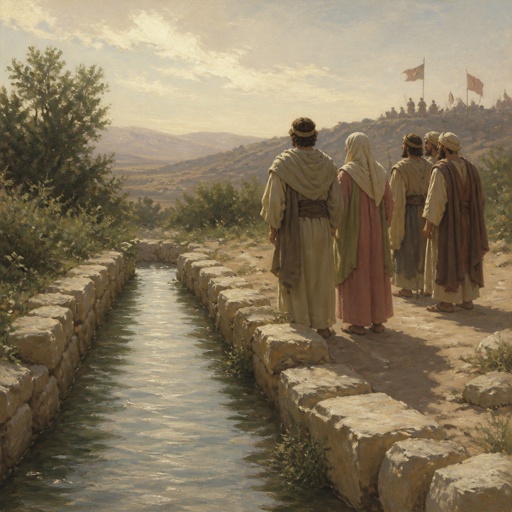
"Forasmuch as this people refuseth the waters of Shiloah that go softly, and rejoice in Rezin and Remaliah's son;" - Isaiah 8:6

isaiah 6:6

Isaiah 6

Isaiah 6

Isaiah 6:1-5

Isaiah 6:1-5

isaiah 6:7

Isaiah 6:1-5

Isaiah 6:1-5

Isaiah 19:8

Isaiah 64:8

Isaiah 9:6

Isaiah 9:6

Isaiah 9:6

isaiah 6:7

Isaiah 29:6

Isaiah 33:6

Isaiah 12:6

Isaiah 12:6

isaiah 60:6

Isaiah 6:1

Isaiah 33:6