What does Isaiah 7:14 mean?
“Therefore the Lord himself shall give you a sign; Behold, a virgin shall conceive, and bear a son, and shall call his name Immanuel.” — Isaiah 7:14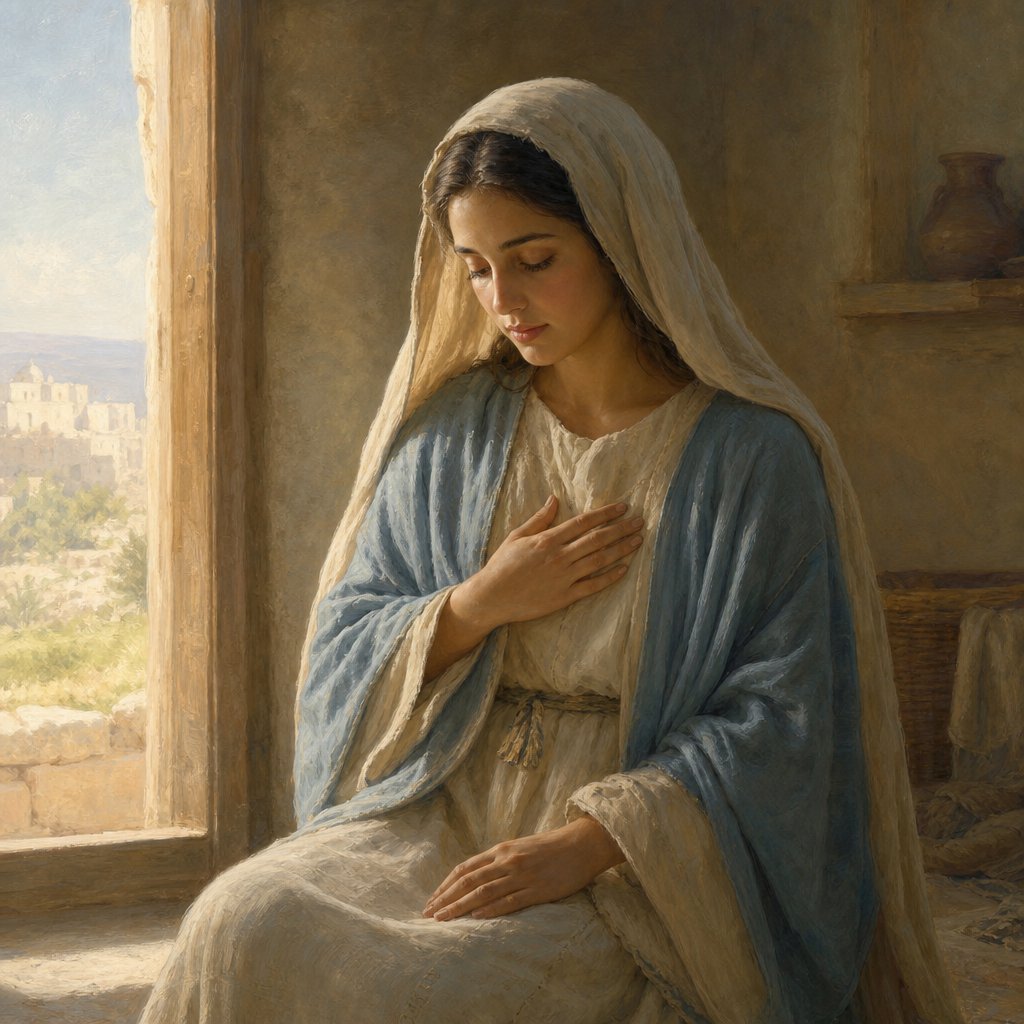
Isaiah 7:14 in the King James Version reads, “Therefore the Lord himself shall give you a sign; Behold, a virgin shall conceive, and bear a son, and shall call his name Immanuel.” In its immediate setting, the verse stands in the middle of a real political crisis facing Judah in the days of King Ahaz. Isaiah is speaking into fear and pressure, when threats from surrounding powers are pushing the king toward human schemes and foreign alliances instead of resting in the LORD. The force of the verse begins with “Therefore,” because it is God’s answer to that moment: when faith is strained and the king is wavering, God does not merely offer advice but declares that he will give a sign of his own choosing. The sign is not presented as a riddle for curiosity’s sake, but as a divine pledge that God’s word and God’s presence will stand when nations rage and rulers panic.
The themes of the verse are anchored in the words “the Lord himself.” The sign is not chiefly about what Ahaz can do, or what Judah can negotiate, but about what God will do. Human strength, diplomacy, and calculation are pushed into the background. The sign is meant to confront unbelief and steady the faithful: the LORD is not absent, not cornered by history, not dependent on the king’s courage. He “himself” gives the sign, and that emphasis makes the promised child more than a private family event. The birth is framed as a divine intervention with public meaning, a testimony that God is actively governing the fate of his people.
The symbolism is concentrated in the figure of the “virgin,” the “son,” and the name “Immanuel.” In prose, the verse draws your attention to an unexpected origin and an unexpected outcome. “Behold” signals that what follows is meant to be contemplated as extraordinary. A “virgin” conceiving is presented as something that cannot be credited to ordinary human cause. Whatever else one says, the language of the sign points beyond the normal course of nature and beyond the normal course of politics. In the context of a threatened kingdom, the LORD answers with a promise that does not arise from Judah’s military strength but from God’s creative power. The child’s coming is a declaration that the future is not closed by present danger.
The “son” in the verse functions as a living sign. Scripture often uses names and births to embody God’s message, and here the name is the heart of the prophecy: “Immanuel.” The name is not treated as a mere label but as a sentence compressed into a word. “Immanuel” means “God with us,” and in the KJV the prophet’s point is that the LORD’s presence is the true security of Judah. Not “God with us” as a vague comfort, but as a covenant reality: the Holy One is not abandoning his people to their enemies, and the outcome of the crisis will be governed by his presence rather than by the terror of the moment. In that sense the child is a sign that God remains engaged, faithful, and near, even when the house of David appears fragile.
The verse also carries the weight of the Davidic promise running through the Old Testament. Isaiah speaks in a setting where the royal house is threatened, and God’s sign centers on a birth—on continuation, on posterity, on a future that cannot be extinguished by immediate threats. The mention of a son evokes the broader biblical theme that God advances his purposes through promised offspring, turning what seems weak into the vehicle of redemption. A child is the opposite of a warhorse; the sign undercuts worldly expectations. Instead of saying, “You will survive because you are strong,” God says, in effect, “You will know I am with you because I will give life, and the meaning of that life will be my presence.”
In the wider significance of Christian reading, Isaiah 7:14 becomes a key prophetic window into the coming of Jesus Christ. The KJV itself points the reader toward that fulfillment by its wording “a virgin shall conceive,” language that the New Testament directly applies to the birth of Christ. In that fuller horizon, “Immanuel” is not only a message that God supports his people, but the revelation that God comes among them in a unique and decisive way. The sign reaches beyond a temporary deliverance from immediate political threat and opens into the grand theme of incarnation, the mystery of God present with his people not merely by help from afar, but by entering human life.
The verse, then, gathers several layers of meaning into one sentence: God answers fear with a sign rooted in his own initiative; he promises life where circumstances suggest collapse; he anchors hope in a child rather than in strategy; and he seals the message with a name that declares the central truth of biblical salvation, that the security and destiny of God’s people rests in this reality—“God with us.”
Get our apps


Artwork for Isaiah 7:14

Isaiah 7:14 - "Therefore the Lord himself shall give you a sign; Behold, a virgin shall conceive, and bear a son, and shall call his name Immanuel."

"Therefore the Lord himself shall give you a sign; Behold, a virgin shall conceive, and bear a son, and shall call his name Immanuel." - Isaiah 7:14

Isaiah 14:7 - "The whole earth is at rest, and is quiet: they break forth into singing."

"The whole earth is at rest, and is quiet: they break forth into singing." - Isaiah 14:7

Isaiah 14:12

isaiah 5:14

Isaiah 14:25

Isaiah 14:14 - "I will ascend above the heights of the clouds; I will be like the most High."

isaiah 6:7

isaiah 6:7

Isaiah 14:28 - "In the year that king Ahaz died was this burden."

Isaiah 7:7 - "Thus saith the Lord GOD, It shall not stand, neither shall it come to pass."

Isaiah 50:7–9

Isaiah 49 1-7

Isaiah 6:4-7

Matthew 7:13-14

Matthew 7:13-14

Matthew 7:13-14

Matthew 7:13-14

Matthew 7:13-14

Matthew 7:13-14

Matthew 7:13-14

Matthew 7:13-14

Matthew 7:13-14

Matthew 7:13-14

Matthew 7:13-14

Isaiah 14:5 - "The LORD hath broken the staff of the wicked, and the sceptre of the rulers."

Isaiah 23:14 - "Howl, ye ships of Tarshish: for your strength is laid waste."

Isaiah 14:15 - "Yet thou shalt be brought down to hell, to the sides of the pit."

Acts 14:7 - "And there they preached the gospel."