What does Isaiah 7:3 mean?
“Then said the LORD unto Isaiah, Go forth now to meet Ahaz, thou, and Shear-jashub thy son, at the end of the conduit of the upper pool in the highway of the fuller’s field;” — Isaiah 7:3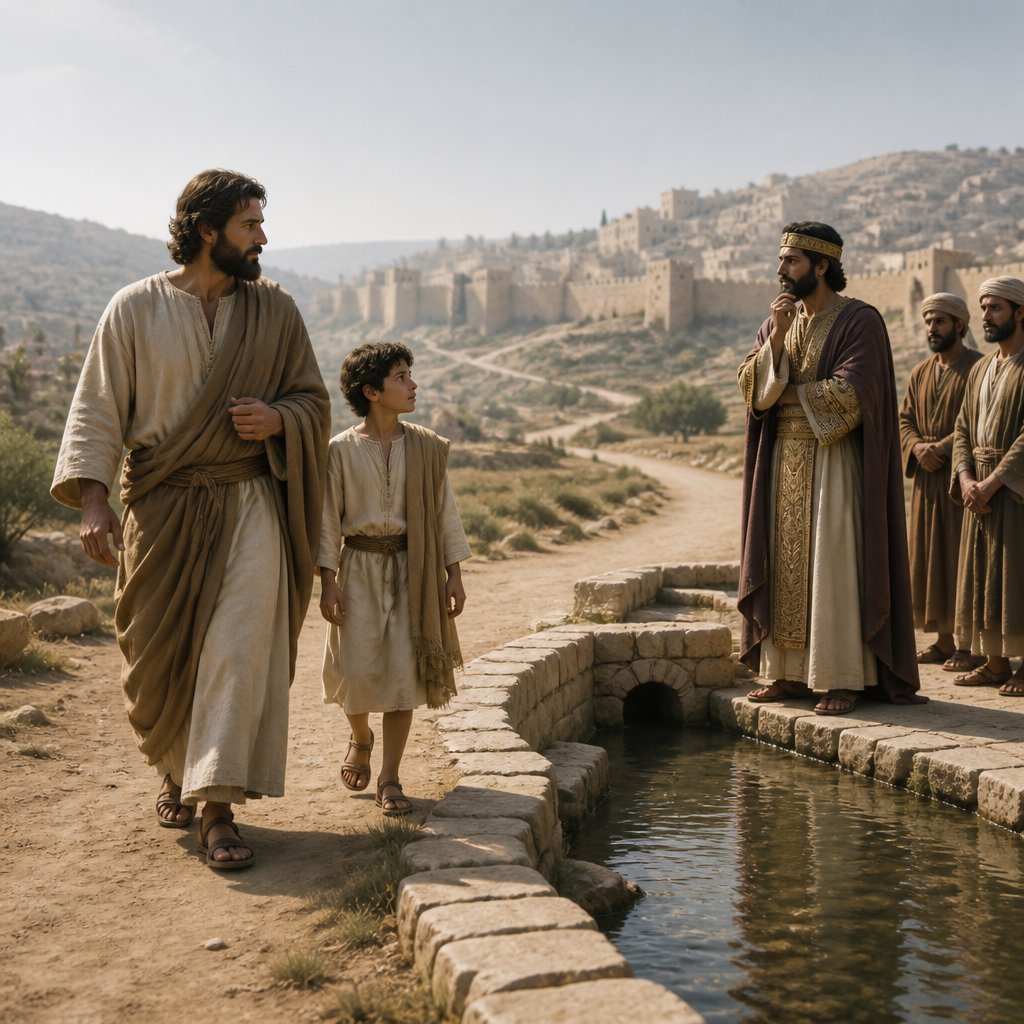
The verse Isaiah 7:3 from the King James Version of the Bible reads, "Then said the Lord unto Isaiah, Go forth now to meet Ahaz, thou, and Shearjashub thy son, at the end of the conduit of the upper pool in the highway of the fuller's field." This verse is part of the larger passage found in the book of Isaiah, which is a prophetic book in the Old Testament. In order to understand the significance of this verse, it is important to delve into the context, themes, and symbolism present in the book of Isaiah and the specific historical background in which this verse is situated.
The book of Isaiah is traditionally attributed to the prophet Isaiah, who ministered in the southern kingdom of Judah during the eighth century B.C. The book is divided into two main sections: First, Isaiah prophesies about the coming judgement upon Judah and the surrounding nations due to their wickedness and idolatry. Second, he speaks of the restoration and redemption that will come through a future Messiah. The themes of judgement and redemption are interwoven throughout the book, and they provide a backdrop for understanding the specific context of Isaiah 7:3.
In the particular historical context of Isaiah 7:3, the nation of Judah was under threat from the combined forces of Israel and Syria. King Ahaz of Judah was facing a dire situation, and in the midst of this crisis, the Lord commands Isaiah to meet with Ahaz at a specific location. The choice of location, "the end of the conduit of the upper pool in the highway of the fuller's field," holds symbolic significance. The mention of a conduit and a pool evokes images of water, which is a common symbol of life, purification, and divine blessing throughout the Bible. Additionally, the fuller's field may be seen as a place of cleansing and transformation, as fullers were responsible for washing and whitening clothes. This setting serves as a visual representation of the spiritual renewal and restoration that the Lord desires to bring to King Ahaz and the nation of Judah.
The presence of Isaiah's son, Shearjashub, in this verse also carries symbolic weight. The name Shearjashub means "a remnant shall return," and it is a prophetic sign of the future restoration and preservation of a remnant of God's people, even in the face of impending judgement. This concept of a faithful remnant is a recurring theme in the book of Isaiah, and it underscores the Lord's commitment to preserving a faithful people for himself.
Furthermore, the broader themes of trust and faith in God's promises are evident in this verse. The Lord's instruction for Isaiah to meet with Ahaz is a demonstration of God's faithfulness and willingness to communicate with His people, even in the midst of their weakness and unbelief. The meeting at the specified location also serves as a tangible sign of God's presence and guidance in the midst of a desperate situation. This theme of trust in God's promises and presence is central to the message of Isaiah and has implications for all believers who are called to trust in the Lord's faithfulness, even in difficult circumstances.
In conclusion, Isaiah 7:3 from the King James Version of the Bible holds deep spiritual and symbolic significance within the larger context of the book of Isaiah. The verse conveys a message of God's presence, guidance, and faithfulness in the midst of crisis, and it foreshadows the greater themes of judgement, redemption, and restoration that permeate the entire book. Through the specific historical context, the symbolism of the location and the presence of Isaiah's son, and the broader themes of trust and faith in God, this verse offers profound insights into the nature of God's dealings with His people and His unchanging promises of redemption and restoration.
Get our apps


Artwork for Isaiah 7:3

Isaiah 7:3 - "Then said the LORD unto Isaiah, Go forth now to meet Ahaz, thou, and Shear-jashub thy son, at the end of the conduit of the upper pool in the highway of the fuller's field;"
"Then said the LORD unto Isaiah, Go forth now to meet Ahaz, thou, and Shear-jashub thy son, at the end of the conduit of the upper pool in the highway of the fuller's field;" - Isaiah 7:3

Isaiah 3:7 - "In that day shall he swear, saying, I will not be an healer; for in my house is neither bread nor clothing: make me not a ruler of the people."

Isaiah53:3-7

isaiah 6:7

isaiah 6:7

Isaiah 7:7 - "Thus saith the Lord GOD, It shall not stand, neither shall it come to pass."

Isaiah 12:3
Isaiah 12:3

Isaiah 12:3

Isaiah 12:3

Isaiah 12:3

Isaiah 12:3

Isaiah 12:3

Isaiah 12:3

Isaiah 12:3

isaiah 44:3

Isaiah 12:3

Isaiah 12:3

Isaiah 12:3

Isaiah 12:3

Isaiah 12:3

Isaiah 12:3

Isaiah 50:7–9

Isaiah 49 1-7

Isaiah 26:3

Isaiah 12:3

Isaiah 12:3

Isaiah 12:3

Isaiah 12:3