What does James 2:13 mean?
“For he shall have judgment without mercy, that hath shewed no mercy; and mercy rejoiceth against judgment.” — James 2:13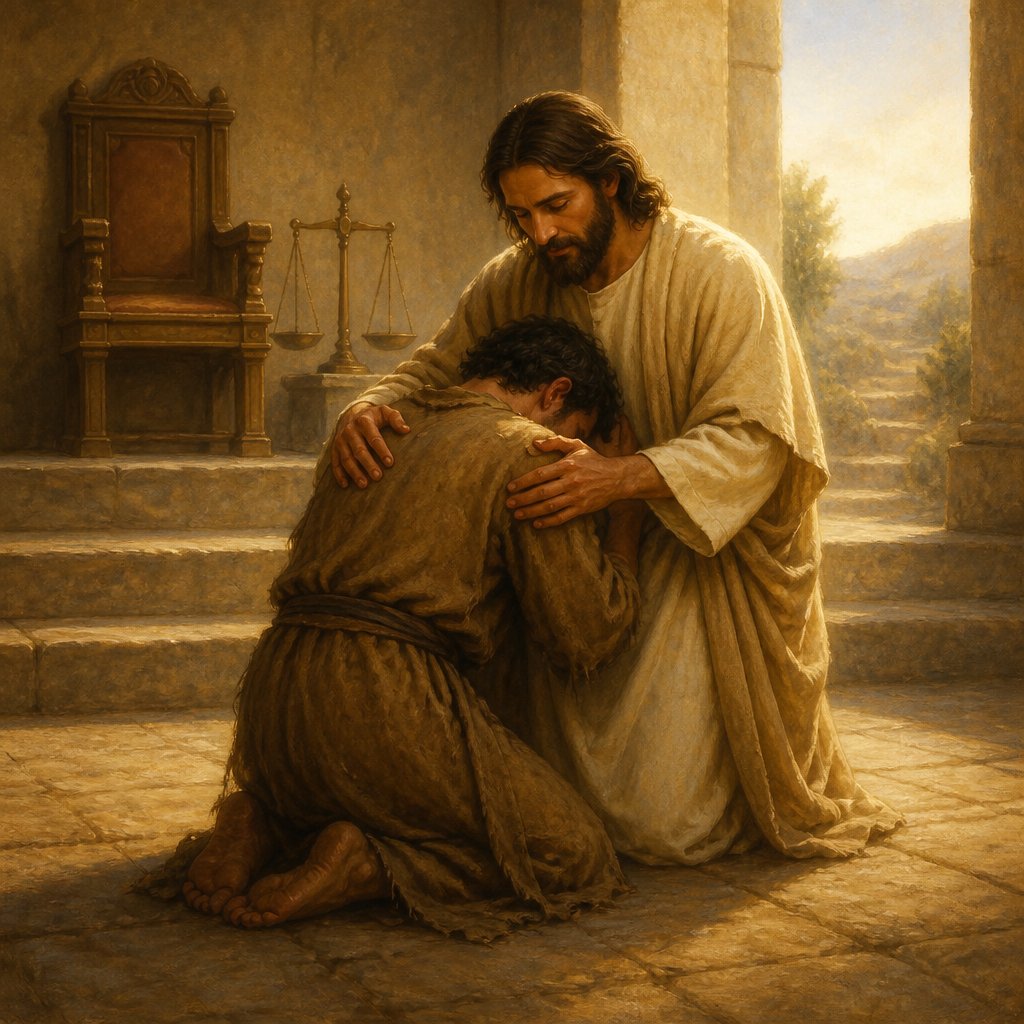
James 2:13 states, "For he shall have judgment without mercy, that hath shewed no mercy; and mercy rejoiceth against judgment." This verse is from the New Testament of the Bible and is part of a larger passage in the Book of James that addresses the importance of living out one's faith through actions and not just words.
The Book of James is believed to have been written by James, the half-brother of Jesus, and is often considered to be a practical guide for Christian living. In the surrounding verses, James admonishes believers for showing favoritism and emphasizes the importance of living out one's faith through acts of mercy and compassion.
The verse James 2:13, in particular, focuses on the concept of mercy and judgment. It states that those who show no mercy will be judged without mercy, while mercy triumphs over judgment. This verse is an important reminder for Christians to show compassion and forgiveness to others, just as they have received mercy from God.
One of the key themes of this verse is the idea of mercy triumphing over judgment. This concept speaks to the heart of the Christian faith, emphasizing the mercy and grace that God extends to His people. It also challenges believers to extend that same mercy and compassion to others, rather than passing judgment or condemnation.
The context for this verse is important to consider in understanding its full meaning. In the preceding verses, James addresses the sin of showing favoritism to the wealthy while neglecting the poor. He argues that this type of behavior is contrary to the teachings of Jesus and is inconsistent with true faith. Instead, James encourages believers to show love and compassion to all, without regard for their social status or wealth.
In light of this context, James 2:13 serves as a warning to those who fail to show mercy and compassion to others. It suggests that those who are quick to judge and condemn others will themselves be subject to judgment without mercy. This is a sobering reminder of the standard to which Christians will be held accountable, and it reinforces the importance of extending mercy to others as a reflection of God's mercy toward us.
Furthermore, the symbolism in this verse is profound. Mercy is often seen as a central component of the Christian faith, reflecting the love and compassion that God has shown to His people. The idea that mercy rejoices against judgment symbolizes the victory of grace over condemnation. It also serves as a reminder of the redemptive power of mercy, both in the lives of believers and in their relationships with others.
In conclusion, James 2:13 is a powerful and convicting verse that carries significant meaning for Christians. It challenges believers to extend mercy and compassion to others, rather than passing judgment or showing favoritism. It also serves as a reminder of the mercy and grace that God has extended to His people and the call to reflect that mercy in our own lives. This verse highlights the profound truth that mercy triumphs over judgment, and it calls believers to live out this truth in their daily interactions with others. As such, it is a reminder of the transformative power of mercy and the profound impact it can have on both individuals and communities.
Get our apps


Artwork for James 2:13

James 2:13 - "For he shall have judgment without mercy, that hath shewed no mercy; and mercy rejoiceth against judgment."
"For he shall have judgment without mercy, that hath shewed no mercy; and mercy rejoiceth against judgment." - James 2:13

James 1:2-13

James 1:2-13

Acts 1:13 - "And when they were come in, they went up into an upper room, where abode both Peter, and James, and John, and Andrew, Philip, and Thomas, Bartholomew, and Matthew, James the son of Alphaeus, and Simon Zelotes, and Judas the brother of James."

James 2:2-4

james 2:26

Acts 15:13 - "¶ And after they had held their peace, James answered, saying, Men and brethren, hearken unto me:"

Matthew 13:55 - "Is not this the carpenter's son? is not his mother called Mary? and his brethren, James, and Joses, and Simon, and Judas?"

James 1: 2-4

James 1:2-4

James 5:13 - "Is any among you afflicted? let him pray. Is any merry? let him sing psalms."

Mark 13:3 - "And as he sat upon the mount of Olives over against the temple, Peter and James and John and Andrew asked him privately,"

James 4:13 - "Go to now, ye that say, To day or to morrow we will go into such a city, and continue there a year, and buy and sell, and get gain:"

James 5:2 - "Your riches are corrupted, and your garments are motheaten."

Acts 12:2 - "And he killed James the brother of John with the sword."

James 2:15 - "If a brother or sister be naked, and destitute of daily food,"

Genesis 13:2 KJV And Abram was very rich in cattle, in silver, and in gold.

James 2:4 - "Are ye not then partial in yourselves, and are become judges of evil thoughts?"

James 3:13 - "Who is a wise man and endued with knowledge among you? let him shew out of a good conversation his works with meekness of wisdom."

James 2:7 - "Do not they blaspheme that worthy name by the which ye are called?"

James 2:17 - "Even so faith, if it hath not works, is dead, being alone."

James 2:24 - "Ye see then how that by works a man is justified, and not by faith only."
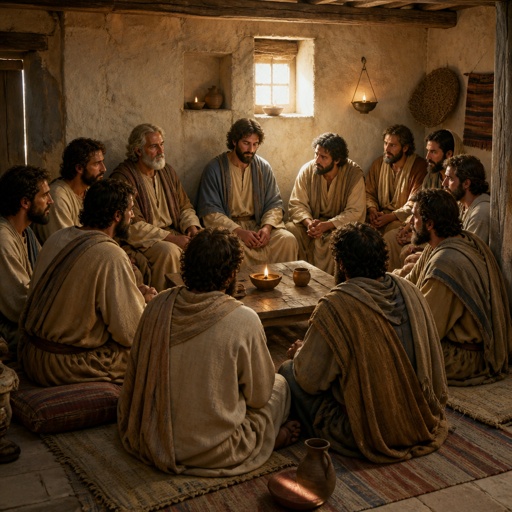
"And when they were come in, they went up into an upper room, where abode both Peter, and James, and John, and Andrew, Philip, and Thomas, Bartholomew, and Matthew, James the son of Alphaeus, and Simon Zelotes, and Judas the brother of James." - Acts 1:13

James 1:13 - "Let no man say when he is tempted, I am tempted of God: for God cannot be tempted with evil, neither tempteth he any man:"

James 2:12 - "So speak ye, and so do, as they that shall be judged by the law of liberty."

James 2:2 - "For if there come unto your assembly a man with a gold ring, in goodly apparel, and there come in also a poor man in vile raiment;"

James 2:26 - "For as the body without the spirit is dead, so faith without works is dead also."

James 1:2 - "My brethren, count it all joy when ye fall into divers temptations;"

James 2:9 - "But if ye have respect to persons, ye commit sin, and are convinced of the law as transgressors."