What does James 4:2 mean?
“Ye lust, and have not: ye kill, and desire to have, and cannot obtain: ye fight and war, yet ye have not, because ye ask not.” — James 4:2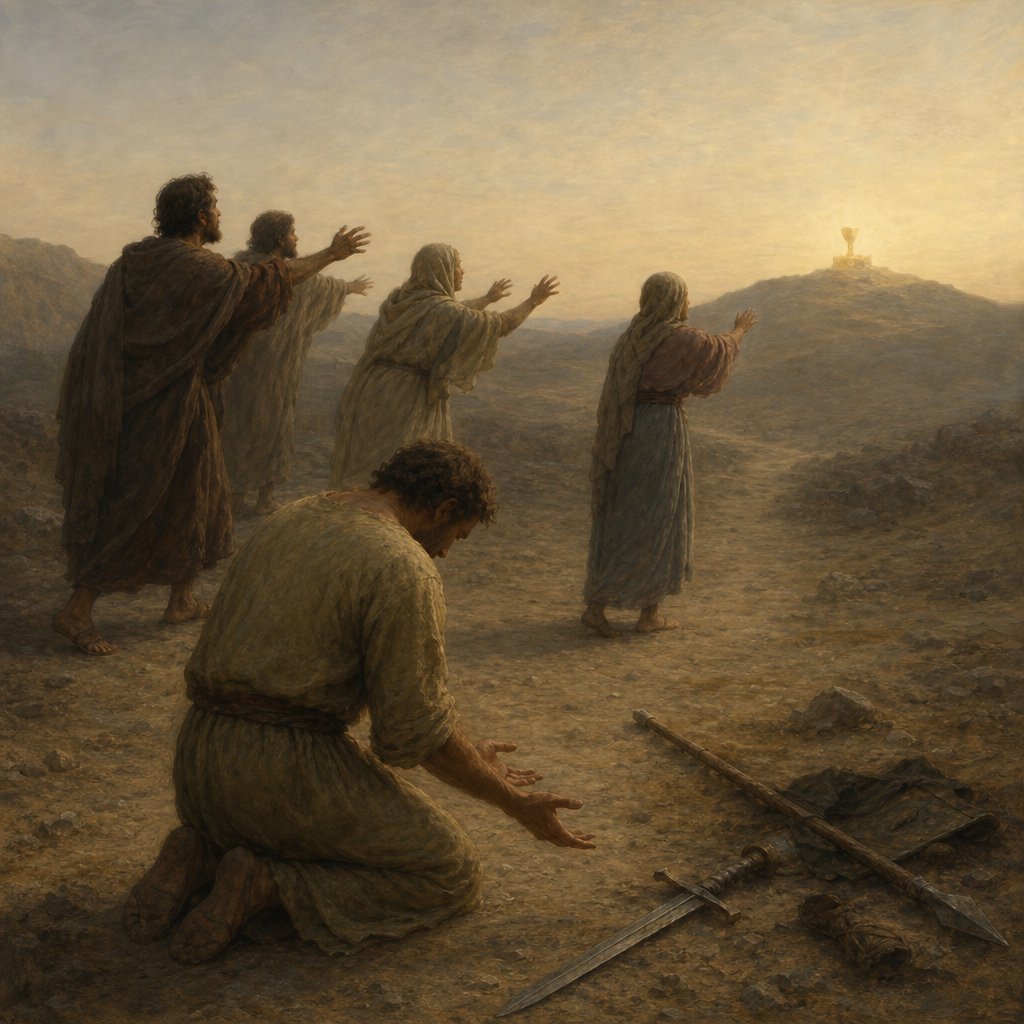
James 4:2 in the King James Version reads, “Ye lust, and have not: ye kill, and desire to have, and cannot obtain: ye fight and war, yet ye have not, because ye ask not.”
James is speaking to professing believers who are experiencing turmoil not merely “out there” in the world, but among themselves. The verse sits inside a larger rebuke that begins in James 4:1, where he asks, “From whence come wars and fightings among you? come they not hence, even of your lusts that war in your members?” and it continues into James 4:3, where he adds, “Ye ask, and receive not, because ye ask amiss, that ye may consume it upon your lusts.” Taken together, James 4:2 is not a stand‑alone proverb about prayer; it is part of a diagnosis of spiritual disorder. It describes the inner engine driving outward conflict and then exposes the emptiness of trying to satisfy the soul through covetous desire rather than through God.
The first phrase, “Ye lust, and have not,” captures the basic frustration of disordered desire. In KJV language, “lust” is not limited to sexual craving; it can mean any intense, self‑centered longing that wants something as an idol rather than receiving it as a gift. The tragedy is not only that they desire, but that they desire in a way that cannot truly be filled. “Have not” signals more than the lack of a particular object; it suggests the spiritual poverty that comes from chasing satisfaction where satisfaction cannot finally be found. Desire, in James’s picture, becomes a kind of hunger that grows by feeding on itself.
The next line intensifies the diagnosis: “ye kill, and desire to have, and cannot obtain.” James’s language is sharp, and it is meant to be. In the immediate, literal sense, “kill” could describe real violence that can arise where jealousy and rivalry rule; Scripture elsewhere shows how envy can become murderous. Yet even when not literal homicide, the moral weight of the word is deliberate because the same heart‑logic is present in “killing” another through hatred, malice, and destructive speech. The progression matters: lust does not stay private; it spills into actions that harm community. “Desire to have” is the language of coveting, a grasping spirit that sees another person’s blessing as a personal deprivation. And still, “cannot obtain” underlines the irony: the more fiercely they grasp, the more inaccessible peace becomes. James is showing a spiritual law of sorts: covetous desire is a master that demands much and pays little, and the soul that serves it is kept restless.
Then James describes the social consequences: “ye fight and war, yet ye have not.” The inner “lusts” he mentioned in the previous verse become outward “fightings” and “wars.” The words paint a battlefield of relationships: quarrels, factions, power struggles, competition for status, and contention over resources. James’s symbolism is that of civil conflict, as though the church or community has become a theater of war. The key point is that these wars promise gain but deliver loss. “Yet ye have not” repeats the earlier verdict. Even if someone “wins” an argument or secures an advantage, they still “have not” what they most need: contentment, righteousness, peace, and the settled sense of God’s favor. James’s repetition functions like a refrain of futility.
The final clause reveals the deepest layer: “because ye ask not.” The issue is not simply that they want things; it is that they are living as though God is irrelevant to their wanting. James is contrasting two ways of seeking: the way of grasping and the way of asking. “Ask” is prayerful dependence. It assumes God is Father, Giver, and Governor. To “ask not” is to operate in practical unbelief, relying on manipulation, rivalry, or force rather than submitting desire to God. In context, this does not mean that any requested object will automatically be granted if only the request is spoken; James immediately warns in the next verse that some “ask” wrongly. But James 4:2 exposes that before there is even the problem of asking “amiss,” there is often the prior problem of not praying at all, of attempting to satisfy the heart without reference to God.
The themes of the verse therefore braid together. It is about the anatomy of conflict: inward lust produces outward war. It is about the deceitfulness of covetousness: it promises fulfillment but yields emptiness. It is about the moral seriousness of desire: unchecked longing can become destructive enough for James to speak in the language of “kill.” It is also about the spiritual alternative: dependence on God through prayer instead of self‑assertion. And beneath it all is the theme of divided allegiance, which the surrounding passage makes explicit when it speaks of friendship with the world and calls God’s people back to humility. James is pressing his readers to see that their desires are not neutral forces; they are either being brought under God in submission or they are becoming idols that command them.
In significance, James 4:2 functions like a mirror held up to the heart. It names the cycle many experience: wanting, striving, clashing, and still feeling empty. James insists that the true battleground is within, that the wars “among you” begin as wars “in your members,” and that peace begins when desire is reordered—when the soul turns from grasping at life and begins to ask God, not as a technique to get more fuel for lust, but as an act of trust that God Himself is the source of what finally satisfies.
Get our apps


Artwork for James 4:2

James 4:2 - "Ye lust, and have not: ye kill, and desire to have, and cannot obtain: ye fight and war, yet ye have not, because ye ask not."
"Ye lust, and have not: ye kill, and desire to have, and cannot obtain: ye fight and war, yet ye have not, because ye ask not." - James 4:2

James 4:2-3 KJVA (2) Ye lust, and have not: ye kill, and desire to have, and cannot obtain: ye fight and war, yet ye have not, because ye ask not. (3) Ye ask, and receive not, because ye ask amiss, that ye may consume it upon your lusts.

James 4:2-3 KJVA (2) Ye lust, and have not: ye kill, and desire to have, and cannot obtain: ye fight and war, yet ye have not, because ye ask not. (3) Ye ask, and receive not, because ye ask amiss, that ye may consume it upon your lusts.

James 4:2-3 KJVA (2) Ye lust, and have not: ye kill, and desire to have, and cannot obtain: ye fight and war, yet ye have not, because ye ask not. (3) Ye ask, and receive not, because ye ask amiss, that ye may consume it upon your lusts.

James 4:2-3 KJVA (2) Ye lust, and have not: ye kill, and desire to have, and cannot obtain: ye fight and war, yet ye have not, because ye ask not. (3) Ye ask, and receive not, because ye ask amiss, that ye may consume it upon your lusts.
"Ye lust, and have not: ye kill, and desire to have, and cannot obtain: ye fight and war, yet ye have not, because ye ask not." - James 4:2

James 2:2-4

James 1:2-4

James 1: 2-4

James 2:4 - "Are ye not then partial in yourselves, and are become judges of evil thoughts?"

Matthew 10:2-4…Matthew 10:2-4 New International Version 2 These are the names of the twelve apostles: first, Simon (who is called Peter) and his brother Andrew; James son of Zebedee, and his brother John; 3 Philip and Bartholomew; Thomas and Matthew the tax collector; James son of Alphaeus, and Thaddaeus; 4 Simon the Zealot and Judas Iscariot, who betrayed him.

Matthew 10:2-4…Matthew 10:2-4 New International Version 2 These are the names of the twelve apostles: first, Simon (who is called Peter) and his brother Andrew; James son of Zebedee, and his brother John; 3 Philip and Bartholomew; Thomas and Matthew the tax collector; James son of Alphaeus, and Thaddaeus; 4 Simon the Zealot and Judas Iscariot, who betrayed him.

James 4:4

James 4:10

James 4:7

James 4:7

James 4:10

James 4:10

James 4:10

James 4:10

James 4:10

James 4:10

James 4:10

James 4:10

James 4:10

James 4:7

James 4:7

James 4:10

James 4:10