What does James 5:16 mean?
“Confess your faults one to another, and pray one for another, that ye may be healed. The effectual fervent prayer of a righteous man availeth much.” — James 5:16
“Confess your faults one to another, and pray one for another, that ye may be healed. The effectual fervent prayer of a righteous man availeth much.” (James 5:16, KJV)
In James 5:16 the Holy Ghost, by James, gathers several strands of Christian life into one sentence: truth spoken in humility, mercy shown in intercession, restoration granted by God, and the mysterious power God is pleased to attach to prayer. The verse stands in the closing exhortations of the epistle, where James turns from rebuking sin and partiality to shepherding the church through suffering, sickness, discipline, and mutual care. Immediately around it, he speaks of patience in affliction, of prayer in trouble, of praise in gladness, and of the elders praying over the sick; then he widens the circle from the elders to the whole fellowship, pressing the duty of believers toward one another. The setting is not private religion alone but the life of a congregation that must learn how to carry burdens, address sin, and seek God together.
“Confess your faults one to another” does not present confession as a display of shame for its own sake, nor as a means of earning pardon by human approval. It is a call to honesty and lowliness among brethren so that hidden sin, private injuries, and unresolved wrongs do not harden into spiritual disease. The word “faults” in the KJV points to real failings and offences, not merely misunderstandings, and the phrase “one to another” suggests mutuality rather than a one-sided act of public humiliation. In context, James has just said, “Confess your faults one to another,” after speaking of prayer for the sick and before speaking of the power of prayer; the confession is tied to healing and restoration. The church is to be a place where sin is brought into the light, not to be exploited, but to be dealt with in truth and grace. Confession here is also a means of reconciliation: where one has wronged another, confession clears the conscience and opens the way for forgiveness. It recognizes that sin is never purely private; it wounds fellowship, weakens testimony, and invites chastening. James therefore urges believers not to hide their faults behind religious talk, but to speak truly so that mercy may proceed.
“And pray one for another” joins confession with intercession, teaching that the proper answer to acknowledged faults is not gossip, contempt, or cold distance, but prayer. Prayer “one for another” makes the church a spiritual family: the burden of one becomes the burden of all, and the needs of the weak are carried to God by the strong. This also guards confession from becoming an end in itself; confession without prayer can become mere exposure, but confession accompanied by prayer becomes a doorway to God’s restoring work. James is not describing prayer as a ritual to soothe feelings; he is pointing to prayer as an act of faith in the living God who hears. When believers pray for one another, they are not merely wishing that things improve; they are asking the Lord to forgive, to cleanse, to strengthen, and to correct, trusting that God uses means, including the loving pleading of His people, to accomplish His will.
“That ye may be healed” gathers up both bodily and spiritual dimensions that are present in the surrounding context. James has already spoken of sickness and the prayer of faith, and in the same breath he speaks of sins being forgiven. In Scripture, “healing” can refer to physical recovery, but also to the restoration of the inner man: a conscience relieved, a backslider reclaimed, a relationship mended, a soul strengthened against temptation. James does not separate the body from the soul as though God cares for only one; rather, he recognizes that sin and suffering often intertwine. At times sickness may be connected to sin in the sense of chastening, and at other times it is simply a trial of life in a fallen world; James does not give a universal rule, but he does show that the response of the church is to be spiritual and compassionate: confession where sin is present, prayer in every case, and a hopeful expectation of God’s restoring touch. The healing he speaks of is therefore not a mechanical guarantee but the intended fruit of humble repentance and believing intercession under God’s hand.
“The effectual fervent prayer of a righteous man availeth much” explains why this way of life matters. James does not praise prayer as a vague spirituality; he speaks of prayer that is “effectual” and “fervent,” prayer that is active, earnest, and real, as opposed to prayer that is cold, formal, or merely spoken. The word “availeth” in the KJV emphasizes that true prayer has actual force and outcome, because God has ordained to work through it. Yet James carefully sets prayer within the moral and spiritual frame of “a righteous man.” He is not teaching that prayer is powerful because the man is impressive, but that God delights to hear the one who walks uprightly, who does not cherish sin, and whose life is aligned with God’s ways. Righteousness here is not the boasting of perfection; it is the condition of a heart made right with God and seeking to live right before Him. In the immediate continuation, James points to Elias as an example, a man “subject to like passions as we are,” and yet heard mightily when he prayed. The symbolism of that example is that prayer is not reserved for a spiritual elite; the “righteous man” is not a different species of human, but an obedient servant who depends upon God. The power lies not in human will but in God who answers, and the righteousness described is the kind that refuses double-mindedness and yields itself to God in faith.
Several themes converge in this verse. It teaches the communal nature of holiness: faults confessed “one to another” acknowledge that the Christian life is not lived in isolation. It teaches the necessity of humility: confession breaks pride, which is one of the most stubborn barriers to repentance and to restored fellowship. It teaches the ministry of intercession: the church is called not only to instruct but to pray, not only to diagnose sin but to seek mercy for sinners. It teaches that healing is God’s gift: believers confess and pray, but the Lord heals, whether by restoring the body, cleansing the conscience, reconciling brethren, or strengthening the heart. It teaches that prayer is not empty: it “availeth much,” not because words are magic, but because God is faithful. And it teaches that spiritual power is bound to a righteous walk: not to earn answers, but because fellowship with God and hatred of sin belong together.
The significance of James 5:16, read in its context, is that it presents a pattern for church life and personal restoration that resists both secrecy and self-reliance. Sin tends to isolate, and suffering can embitter; James calls believers back into the light of fellowship and under the shelter of mutual prayer. The verse is therefore both corrective and hopeful: corrective, because it refuses the false safety of hiding faults; hopeful, because it insists that God hears, that prayer works, and that healing is possible when believers humble themselves, speak truthfully, and seek God together.
Get our apps


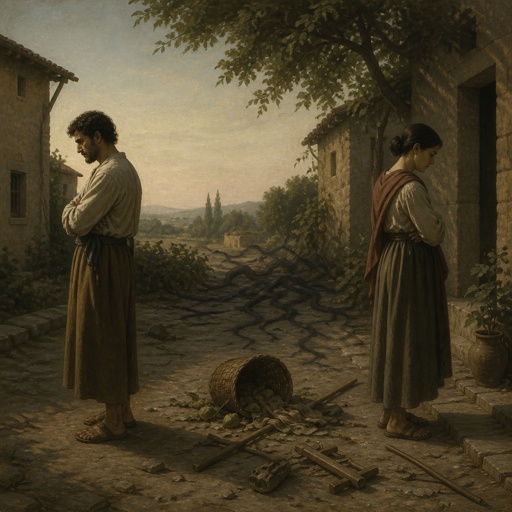
Artwork for James 5:16

James 5:16

James 5:16

James 5:16

James 5:16

James 5:16 - "Confess your faults one to another, and pray one for another, that ye may be healed. The effectual fervent prayer of a righteous man availeth much."

"Confess your faults one to another, and pray one for another, that ye may be healed. The effectual fervent prayer of a righteous man availeth much." - James 5:16

James 5:16-18 - "Therefore confess your sins to each other and pray for each other so that you may be healed. The prayer of a righteous person is powerful and effective. Elijah was a human being, even as we are. He prayed earnestly that it would not rain, and it did not rain on the land for three and a half years. Again he prayed, and the heavens gave rain, and the earth produced its crops."

"Confess your faults one to another, and pray one for another, that ye may be healed. The effectual fervent prayer of a righteous man availeth much." - James 5:16

"Therefore confess your sins to each other and pray for each other so that you may be healed. The prayer of a righteous person is powerful and effective. Elijah was a human being, even as we are. He prayed earnestly that it would not rain, and it did not rain on the land for three and a half years. Again he prayed, and the heavens gave rain, and the earth produced its crops." - James 5:16-18

Mark 5:37 - "And he suffered no man to follow him, save Peter, and James, and John the brother of James."

James 1:16 - "Do not err, my beloved brethren."

James 21:5-120

James 1:5-20

James 5:14-15

James 3:16 - "For where envying and strife is, there is confusion and every evil work."

James 5:15-16 - "And the prayer offered in faith will make the sick person well; the Lord will raise them up. If they have sinned, they will be forgiven. Therefore confess your sins to each other and pray for each other so that you may be healed. The prayer of a righteous person is powerful and effective."

James 4:16 - "But now ye rejoice in your boastings: all such rejoicing is evil."

Luke 6:16 - "And Judas the brother of James, and Judas Iscariot, which also was the traitor."

James 5:7 – "Be patient, then, brothers and sisters, until the Lord’s coming."

James 5:7 – "Be patient, then, brothers and sisters, until the Lord’s coming."

James 5:2 - "Your riches are corrupted, and your garments are motheaten."

James 5:5 - "Ye have lived in pleasure on the earth, and been wanton; ye have nourished your hearts, as in a day of slaughter."

James 5:6 - "Ye have condemned and killed the just; and he doth not resist you."

"And he suffered no man to follow him, save Peter, and James, and John the brother of James." - Mark 5:37

"Do not err, my beloved brethren." - James 1:16

James 5:8 - "Be ye also patient; stablish your hearts: for the coming of the Lord draweth nigh."

James 5:19 - "Brethren, if any of you do err from the truth, and one convert him;"

James 4:5 - "Do ye think that the scripture saith in vain, The spirit that dwelleth in us lusteth to envy?"

James 5:18 - "And he prayed again, and the heaven gave rain, and the earth brought forth her fruit."
"For where envying and strife is, there is confusion and every evil work." - James 3:16