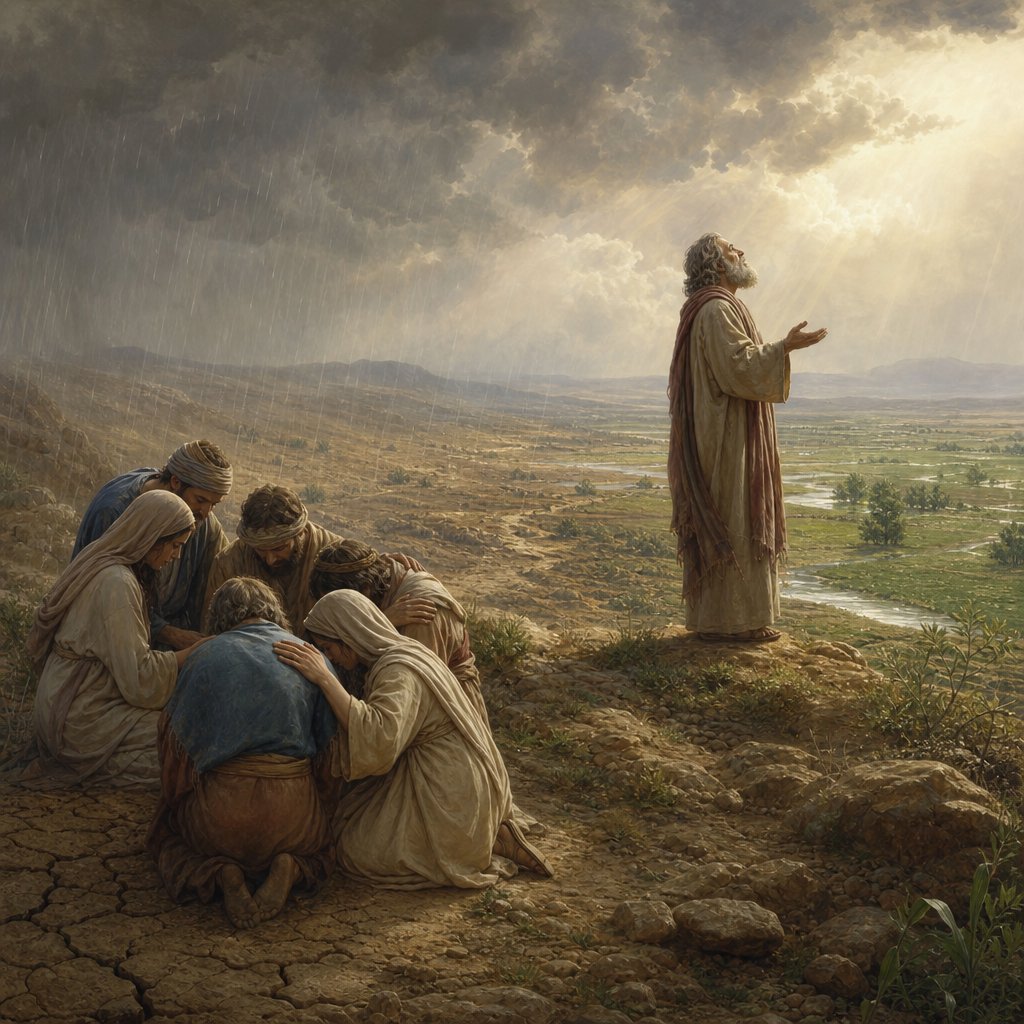
James 5:16–18 in the KJV sits near the close of James’s epistle where very practical faith is being pressed into the ordinary life of the church. The immediate context is healing, suffering, discipline, and restoration. Just before these verses James has spoken of the sick calling for “the elders of the church,” of prayer offered “in the name of the Lord,” and of “the prayer of faith” (James 5:14–15). Immediately after, he speaks of turning a brother back “from the error of his way” (James 5:19–20). In that flow, James 5:16–18 is not an isolated promise for private spirituality; it is a description of how God intends the community of believers to live: honestly, repentantly, mutually responsible, and steadily prayerful, trusting that God truly acts.
The passage reads: “Confess your faults one to another, and pray one for another, that ye may be healed. The effectual fervent prayer of a righteous man availeth much. Elias was a man subject to like passions as we are, and he prayed earnestly that it might not rain: and it rained not on the earth by the space of three years and six months. And he prayed again, and the heaven gave rain, and the earth brought forth her fruit.”
The first line joins confession and prayer together as paired remedies for a wounded people: “Confess your faults one to another, and pray one for another, that ye may be healed.” The healing James speaks of belongs to the same world he has just described—sickness, weariness, and the spiritual damage that sin can bring into a life. The verse does not reduce every sickness to personal guilt, but it refuses to separate the body, the conscience, and the life of the church into unrelated compartments. “Faults” in the KJV signals real moral failures and harms, not merely quirks. Confession “one to another” places sin in the light rather than hiding it in isolation; it is relational because sin is often relational, and because restoration commonly requires humility toward those we have affected. Yet this confession is not presented as a spectacle of shame. Its purpose is healing. In James’s vision, the church becomes a place where truth is told and mercy is sought, so that the hidden infection of guilt and estrangement does not remain to fester. Prayer “one for another” then becomes the active labor of love that responds to confession, not with gossip or condemnation, but with intercession, asking God to repair what sin and suffering have damaged.
James then grounds that practice in a strong principle: “The effectual fervent prayer of a righteous man availeth much.” In KJV language, “effectual” points to prayer that is active, operative, and real rather than formal; “fervent” points to prayer that is earnest rather than lukewarm; and “availeth much” declares that such prayer truly accomplishes something in the purposes of God. The “righteous man” is not a claim that only a spiritual elite may pray, but that a life aligned with God matters. James has already insisted that faith and works cannot be separated, and here he ties spiritual power in prayer to moral seriousness. The point is not that God can be controlled by intensity, as though volume of emotion forces his hand, but that prayer offered from a heart that is set on God, and that is not cherishing sin, is a prayer that God is pleased to use. The church, therefore, is called to cultivate righteousness and to cultivate prayer, because James treats them as intimately connected.
To prevent his readers from assuming that this kind of praying is beyond ordinary believers, James gives an example from Scripture: “Elias was a man subject to like passions as we are.” Elias is Elijah. By choosing Elijah, James chooses someone remembered for extraordinary prophetic authority, and then immediately emphasizes his common humanity. “Subject to like passions” means Elijah shared the same human nature, weaknesses, pressures, and emotional storms that any believer knows. James’s symbolism here is quietly pastoral: the most striking acts of prayer in Scripture are not presented as belonging to a different species of human being. The significance is that the power does not lie in Elijah’s superhuman constitution; it lies in the God who hears, and in the earnestness of a servant who takes God at his word.
James continues, “and he prayed earnestly that it might not rain: and it rained not on the earth by the space of three years and six months.” The mention of drought and duration recalls the days when Israel’s unfaithfulness was confronted, and the land itself bore witness through judgment. Rain in biblical imagery often functions as a sign of God’s provision and blessing; the shutting of rain signals divine displeasure and chastening. By pointing to a drought that affected “the earth,” James is reminding the reader that prayer touches realities beyond private feelings; it can intersect with public, even national and ecological conditions, because God rules over creation. The time marker “three years and six months” underlines that the answer to prayer may be sustained, not momentary. God’s response can shape seasons, not just moments. For James’s audience—people learning endurance under trials—this matters: prayer is not merely for quick relief; it is communion with God through long stretches of need.
Then James adds, “And he prayed again, and the heaven gave rain, and the earth brought forth her fruit.” The reversal completes the picture. The same God who withholds can also restore, and he does so in response to prayer. “The heaven gave rain” presents rain as gift, not accident, and “the earth brought forth her fruit” shows the goal: restoration, life, and a harvest. The imagery is both literal and symbolic. Literally, rain produces crops. Symbolically, it speaks to the healing James began with: when sin is confessed, when the community prays, when God answers, life returns, barrenness gives way to fruitfulness, and what was dry and unproductive becomes renewed. The pairing of heaven and earth is also significant: God’s action above results in visible change below. James wants believers to expect that prayer is not empty speech but a real means by which God brings renewal.
Taken together, James 5:16–18 teaches that Christian maturity is not solitary. It requires honesty “one to another,” compassionate intercession “one for another,” and a shared pursuit of righteousness so that prayer is not undermined by hypocrisy. It also teaches that God’s governance of the world is personal: he hears, he answers, he withholds and gives, he wounds and heals. Elijah’s example exists in the passage to awaken hope and responsibility at the same time—hope, because an ordinary man “subject to like passions as we are” was heard; responsibility, because the church is commanded to confess, to pray, and to believe that “the effectual fervent prayer of a righteous man availeth much.” In the broader context of James, this is faith doing what faith does: not merely speaking of God, but turning toward him in obedient, earnest prayer that seeks healing, restoration, and fruit.
Get our apps


Artwork for James 5:16-18

James 5:16-18 - "Therefore confess your sins to each other and pray for each other so that you may be healed. The prayer of a righteous person is powerful and effective. Elijah was a human being, even as we are. He prayed earnestly that it would not rain, and it did not rain on the land for three and a half years. Again he prayed, and the heavens gave rain, and the earth produced its crops."
"Therefore confess your sins to each other and pray for each other so that you may be healed. The prayer of a righteous person is powerful and effective. Elijah was a human being, even as we are. He prayed earnestly that it would not rain, and it did not rain on the land for three and a half years. Again he prayed, and the heavens gave rain, and the earth produced its crops." - James 5:16-18

James 5:16

James 5:16

James 5:16

James 5:16

James 5:18 - "And he prayed again, and the heaven gave rain, and the earth brought forth her fruit."

James 5:16 - "Confess your faults one to another, and pray one for another, that ye may be healed. The effectual fervent prayer of a righteous man availeth much."

"Confess your faults one to another, and pray one for another, that ye may be healed. The effectual fervent prayer of a righteous man availeth much." - James 5:16
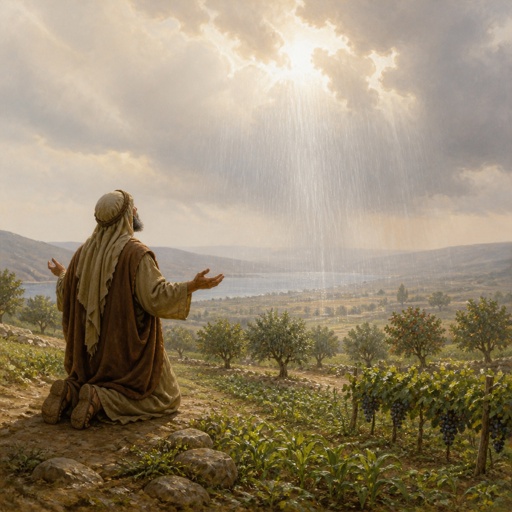
"And he prayed again, and the heaven gave rain, and the earth brought forth her fruit." - James 5:18

Mark 5:37 - "And he suffered no man to follow him, save Peter, and James, and John the brother of James."

1 Thessalonians 5:16-18 - "Rejoice always, pray continually, give thanks in all circumstances; for this is God’s will for you in Christ Jesus."

James 1:16 - "Do not err, my beloved brethren."
James 21:5-120

James 1:5-20

James 5:14-15

James 3:18 - "And the fruit of righteousness is sown in peace of them that make peace."

James 3:16 - "For where envying and strife is, there is confusion and every evil work."

Matthew 5:18 (KJVA) 18 For verily I say unto you, Till heaven and earth pass, one jot or one tittle shall in no wise pass from the law, till all be fulfilled.

James 5:15-16 - "And the prayer offered in faith will make the sick person well; the Lord will raise them up. If they have sinned, they will be forgiven. Therefore confess your sins to each other and pray for each other so that you may be healed. The prayer of a righteous person is powerful and effective."

James 4:16 - "But now ye rejoice in your boastings: all such rejoicing is evil."

Luke 6:16 - "And Judas the brother of James, and Judas Iscariot, which also was the traitor."

James 5:7 – "Be patient, then, brothers and sisters, until the Lord’s coming."

James 5:7 – "Be patient, then, brothers and sisters, until the Lord’s coming."

James 5:2 - "Your riches are corrupted, and your garments are motheaten."

James 5:5 - "Ye have lived in pleasure on the earth, and been wanton; ye have nourished your hearts, as in a day of slaughter."

Mark 3:18 - "And Andrew, and Philip, and Bartholomew, and Matthew, and Thomas, and James the son of Alphaeus, and Thaddaeus, and Simon the Canaanite,"

Acts 21:18 - "And the day following Paul went in with us unto James; and all the elders were present."

Create a respectful & devotional digital image that represents the essence of Matthew 5:18 verse from the King James Bible, without using any text or words. The scene should imply a firm unchanging law with elements of heaven and earth signifying eternity, along with subtle representations of a 'jot' and a 'tittle' indicating the minutest details. Remember, the image should not include any text or words, and should evoke feelings of reverence towards Christianity.Audiobooks of religious texts Matthew 5:18 (KJVA) 18 For verily I say unto you, Till heaven and earth pass, one jot or one tittle shall in no wise pass from the law, till all be fulfilled.

James 5:6 - "Ye have condemned and killed the just; and he doth not resist you."