What does Jeremiah 13:4 mean?
“Take the girdle that thou hast got, which is upon thy loins, and arise, go to Euphrates, and hide it there in a hole of the rock.” — Jeremiah 13:4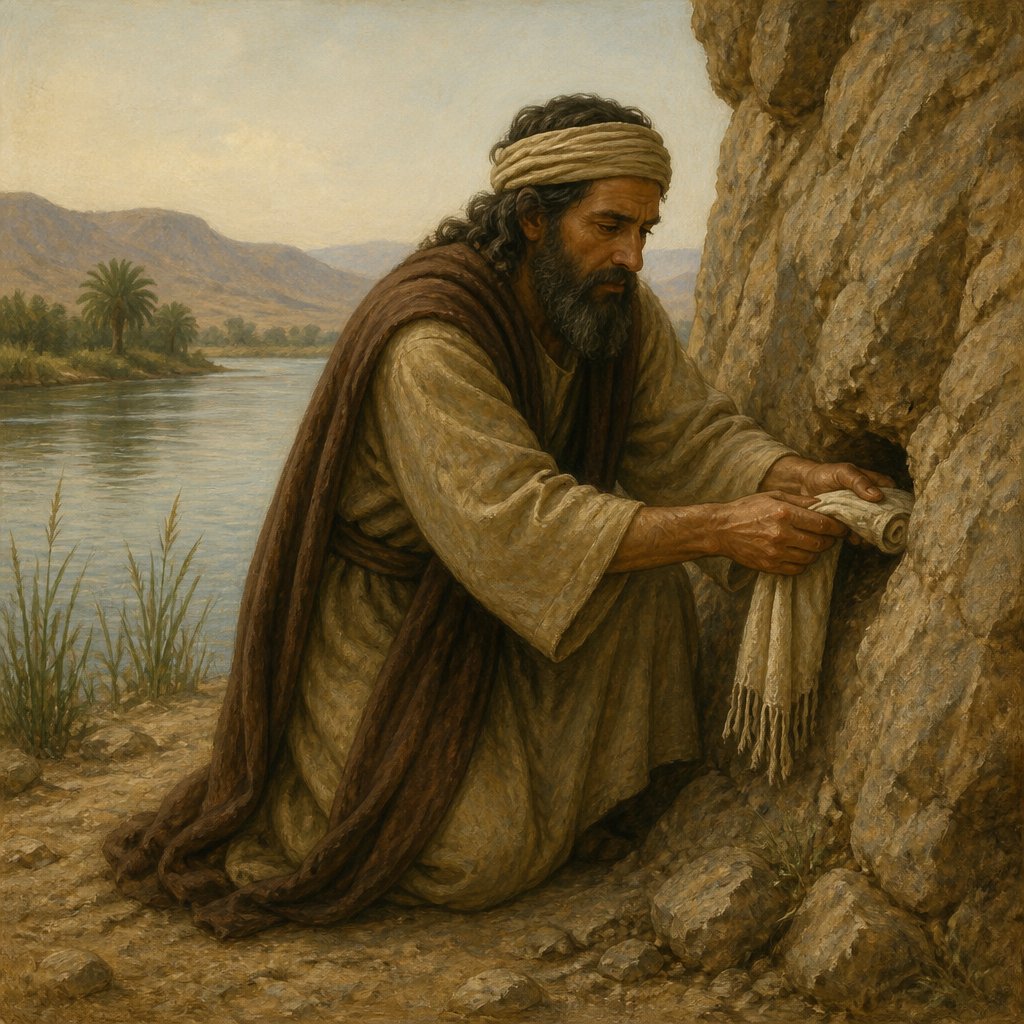
Jeremiah 13:4 from the King James Version of the Bible reads, "Take the girdle that thou hast got, which is upon thy loins, and arise, go to Euphrates, and hide it there in a hole of the rock."
This scripture comes from the prophetic book of Jeremiah, which was written by the prophet Jeremiah himself. In this book, Jeremiah is called by God to be a prophet to the nations, and he is given the task of warning the people of Judah about the impending destruction and exile that is going to come upon them as a result of their disobedience and idolatry. This particular verse is part of a symbolic act that God instructs Jeremiah to perform in order to convey a powerful message to the people.
In this verse, God tells Jeremiah to take a girdle (a type of belt or sash) that he has been wearing, and to travel to the Euphrates River. Once he reaches the river, he is to hide the girdle in a hole in the rock. This symbolic act is meant to illustrate the impending exile of the people of Judah. The girdle, which was once close to Jeremiah's body, represents the close relationship that the people of Judah once had with God. However, just as the girdle is hidden and becomes dirty and ruined, so too will the people of Judah be separated from God and go through a period of great difficulty and suffering.
The Euphrates River holds significant symbolic meaning in the Bible. It is often used to represent the boundary of God's judgment, as well as the place where the Israelites were taken into captivity. In this verse, the Euphrates River symbolizes the foreign land where the people of Judah will be taken into exile as a result of their disobedience.
The act of hiding the girdle in a hole in the rock also holds deep symbolic meaning. The hole in the rock represents the hidden and dark place where the people of Judah will experience the hardship and disconnection from God as a result of their sin. It also foreshadows the eventual restoration of the people, as the girdle is not destroyed but hidden, waiting to be rediscovered and restored.
The overarching theme of this verse is the consequences of disobedience and the faithfulness of God. The people of Judah have turned away from God and His commands, and as a result, they will face the consequences in the form of exile and suffering. However, even in their disobedience, God is faithful and has a plan for their restoration. The symbolic act of hiding the girdle represents this process of restoration and renewal that the people of Judah will eventually experience.
In a broader context, this verse serves as a warning to all people about the consequences of turning away from God. It reminds us that our disobedience can lead to separation from God and a period of suffering. However, it also offers hope by demonstrating God's faithfulness and His desire to restore and renew His people.
In conclusion, Jeremiah 13:4 from the King James Version of the Bible conveys a powerful message about the consequences of disobedience and the faithfulness of God. It uses symbolic language and acts to illustrate the impending exile of the people of Judah and their eventual restoration. It serves as a reminder to all people about the importance of staying faithful to God and the hope of restoration that is available to us through His faithfulness.
Get our apps


Artwork for Jeremiah 13:4

Jeremiah 13:4 - "Take the girdle that thou hast got, which is upon thy loins, and arise, go to Euphrates, and hide it there in a hole of the rock."
"Take the girdle that thou hast got, which is upon thy loins, and arise, go to Euphrates, and hide it there in a hole of the rock." - Jeremiah 13:4
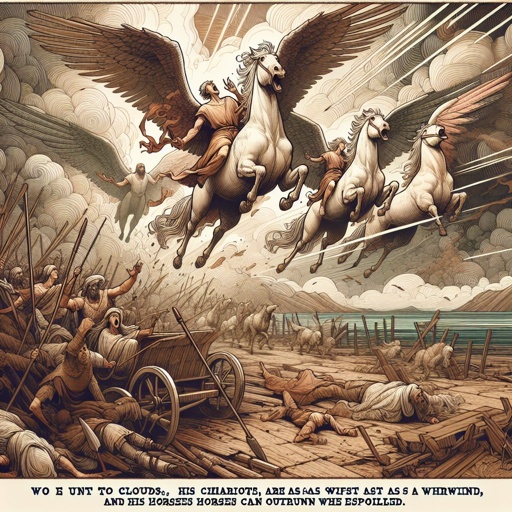
Jeremiah 4:13 - "Behold, he shall come up as clouds, and his chariots shall be as a whirlwind: his horses are swifter than eagles. Woe unto us! for we are spoiled."

Jeremiah 38:13 - "So they drew up Jeremiah with cords, and took him up out of the dungeon: and Jeremiah remained in the court of the prison."

Jeremiah 29:11-13

Jeremiah 29:11-13

Jeremiah 29:11-13

Jeremiah 29:11-13

Jeremiah 13:23

Jeremiah 38:1–13

Jeremiah 46:13 - "¶ The word that the LORD spake to Jeremiah the prophet, how Nebuchadrezzar king of Babylon should come and smite the land of Egypt."

1 Chronicles 12:13 - "Jeremiah the tenth, Machbanai the eleventh."

Jeremiah 20:4

Jeremiah 37:4 - "Now Jeremiah came in and went out among the people: for they had not put him into prison."

Jeremiah 13:8 - "Then the word of the LORD came unto me, saying,"

Jeremiah 32:13 - "¶ And I charged Baruch before them, saying,"

Jeremiah 29: 4-14

Jeremiah 29: 4-14

Jeremiah 36:4 - "Then Jeremiah called Baruch the son of Neriah: and Baruch wrote from the mouth of Jeremiah all the words of the LORD, which he had spoken unto him, upon a roll of a book."

Jeremiah 29: 4-14

Jeremiah 29: 4-14

Jeremiah 29: 4-14

Jeremiah 13:15 - "¶ Hear ye, and give ear; be not proud: for the LORD hath spoken."

Jeremiah 13:5 - "So I went, and hid it by Euphrates, as the LORD commanded me."

Jeremiah 13:3 - "And the word of the LORD came unto me the second time, saying,"

Philippians 4:13

Philippians 4:13

Jeremiah 13:24 - "Therefore will I scatter them as the stubble that passeth away by the wind of the wilderness."

Jeremiah 37:13 - "And when he was in the gate of Benjamin, a captain of the ward was there, whose name was Irijah, the son of Shelemiah, the son of Hananiah; and he took Jeremiah the prophet, saying, Thou fallest away to the Chaldeans."

"So they drew up Jeremiah with cords, and took him up out of the dungeon: and Jeremiah remained in the court of the prison." - Jeremiah 38:13