What does Jeremiah 28:13 mean?
“Go and tell Hananiah, saying, Thus saith the LORD; Thou hast broken the yokes of wood; but thou shalt make for them yokes of iron.” — Jeremiah 28:13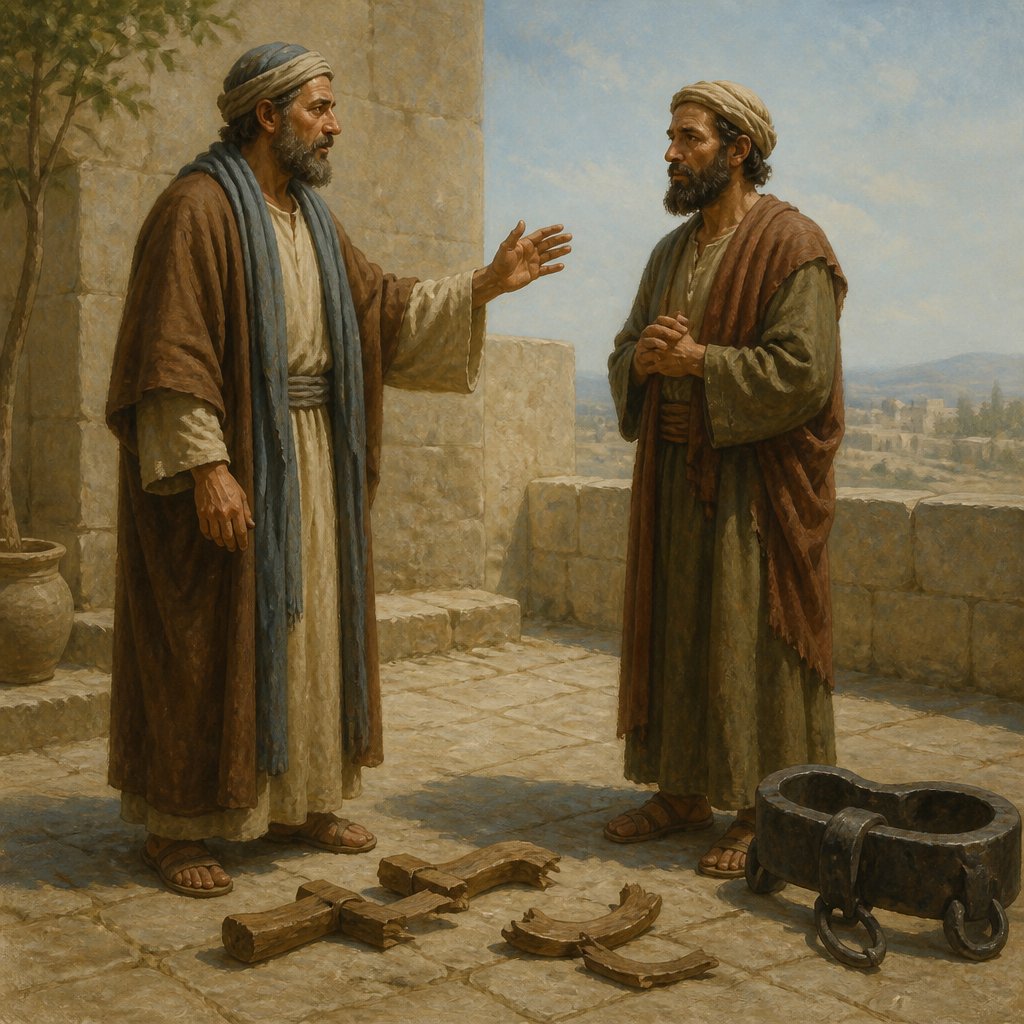
Jeremiah 28:13 in the King James Version of the Bible states, "Go and tell Hananiah, saying, Thus saith the Lord; Thou hast broken the yokes of wood; but thou shalt make for them yokes of iron." This verse is part of a conversation between the prophet Jeremiah and Hananiah, a false prophet who had been spreading lies and false prophecies among the people of Israel.
The context of this verse is crucial to understanding its meaning and significance. At this time, the nation of Israel was facing tumultuous times, as they were under the rule and oppression of the Babylonians. Jeremiah, as a true prophet of God, had been warning the people about the impending judgment and destruction that would come upon them if they did not turn from their wicked ways and repent. However, Hananiah had been contradicting Jeremiah's message by falsely prophesying that the Babylonian yoke would be broken within two years, and that the people would be brought back from exile and the temple treasures returned. In other words, Hananiah was offering the people a message of hope and deliverance without the need for repentance or turning back to God.
In this specific verse, Jeremiah is directed by the Lord to confront Hananiah and expose the falsity of his prophecies. The image of "yokes of wood" being broken and replaced with "yokes of iron" holds significant symbolic meaning in the overall context of the situation. The yoke was a common symbol in the Old Testament, referring to the burden of servitude and oppression that the people of Israel were experiencing under foreign rulers. By breaking the yokes of wood, Hananiah was essentially claiming that the people would soon be free and released from their bondage to the Babylonians. However, the Lord's response through Jeremiah makes it clear that this is not the case. Instead, the people would face an even harsher and more oppressive yoke, symbolized by the "yokes of iron." This is a powerful and sobering message, indicating that the consequences of the people's sin and rebellion would be severe and unrelenting.
This verse speaks to the broader theme of false prophets and the danger of listening to messages that are contrary to the truth of God's word. Throughout the Bible, there are numerous warnings about false prophets who deceive and lead people astray with their lies and false teachings. Hananiah's actions serve as a harrowing example of the destructive impact that false prophecy can have on the spiritual well-being of individuals and the nation as a whole.
Furthermore, this verse also underscores the biblical principle of divine judgment and accountability. The people of Israel were reaping the consequences of their disobedience and idolatry, and false prophets like Hananiah were exacerbating the situation by offering empty promises of deliverance and prosperity without addressing the root issue of sin. In a broader theological sense, this verse serves as a reminder of the righteousness and sovereignty of God, who holds the power to judge and discipline His people according to His purposes and plans.
In conclusion, Jeremiah 28:13 is a powerful and poignant reminder of the dangers of false prophecy, the consequences of disobedience, and the unwavering righteousness of God. The imagery of the yokes of wood and iron serves as a symbolic representation of the gravity of the situation facing the nation of Israel and the sobering reality of divine judgment. This verse is a sobering call to discernment and obedience to the true word of God, as well as a poignant reminder of the consequences of turning away from His truth.
Get our apps


Artwork for Jeremiah 28:13

Jeremiah 28:13 - "Go and tell Hananiah, saying, Thus saith the LORD; Thou hast broken the yokes of wood; but thou shalt make for them yokes of iron."
"Go and tell Hananiah, saying, Thus saith the LORD; Thou hast broken the yokes of wood; but thou shalt make for them yokes of iron." - Jeremiah 28:13

Jeremiah 28:12 - "Then the word of the LORD came unto Jeremiah the prophet, after that Hananiah the prophet had broken the yoke from off the neck of the prophet Jeremiah, saying,"

Jeremiah 38:28 - "So Jeremiah abode in the court of the prison until the day that Jerusalem was taken: and he was there when Jerusalem was taken."

Jeremiah 28:5 - "Then the prophet Jeremiah said unto the prophet Hananiah in the presence of the priests, and in the presence of all the people that stood in the house of the LORD,"

Genesis 28-13

Ezekiel 28:13

Jeremiah 28:10 - "Then Hananiah the prophet took the yoke from off the prophet Jeremiah's neck, and brake it."

Jeremiah 28:15 - "Then said the prophet Jeremiah unto Hananiah the prophet, Hear now, Hananiah; The LORD hath not sent thee; but thou makest this people to trust in a lie."

Jeremiah 28:17 - "So Hananiah the prophet died the same year in the seventh month."

Jeremiah 38:13 - "So they drew up Jeremiah with cords, and took him up out of the dungeon: and Jeremiah remained in the court of the prison."

Mark 13:28-37

Mark 13:28-37

Jeremiah 29:11-13

Jeremiah 29:11-13

Jeremiah 29:11-13

Jeremiah 29:11-13

Mark 13:28-37

luke 13:28-37

Luke 13:28-27

Luke 13:28-27

Luke 13:28-27

Mark 13:28-37

luke 13:28-37

Jeremiah 6:28 - "They are all grievous revolters, walking with slanders: they are brass and iron; they are all corrupters."

Jeremiah 13:23

Exodus 28:13 - "¶ And thou shalt make ouches of gold;"

Jeremiah 52:28-30 - "Jeremiah 52:28-30: 28 This is the people whom Nebuchadrezzar carried away captive: in the seventh year three thousand Jews and three and twenty: 29 In the eighteenth year of Nebuchadrezzar he carried away captive from Jerusalem eight hundred thirty and two persons: 30 In the three and twentieth year of Nebuchadrezzar Nebuzaradan the captain of the guard carried away captive of the Jews seven hundred forty and five persons: all the persons were four thousand and six hundred."

Jeremiah 28:7 - "Nevertheless hear thou now this word that I speak in thine ears, and in the ears of all the people;"

Jeremiah 38:1–13