What does Job 1:6 mean?
“Now there was a day when the sons of God came to present themselves before the LORD, and Satan came also among them.” — Job 1:6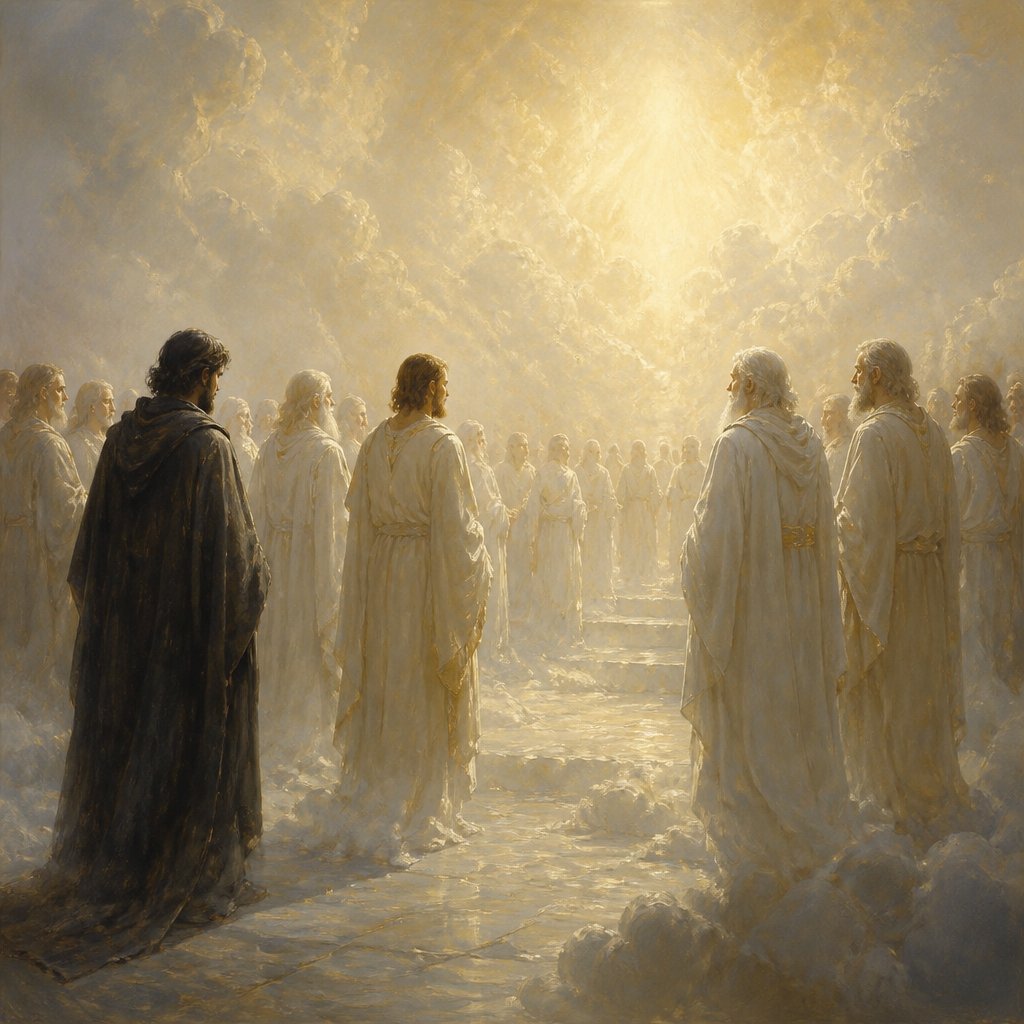
Job 1:6 in the King James Version of the Bible states, "Now there was a day when the sons of God came to present themselves before the Lord, and Satan came also among them." This verse is the opening to the book of Job, one of the most profound and challenging books in the Bible. It sets the stage for the trials and tribulations that Job will face and introduces one of the central themes of the book - the sovereignty of God and the existence of evil.
The book of Job is set in the land of Uz and tells the story of a man named Job who is described as blameless, upright, and God-fearing (Job 1:1). He is a wealthy and prosperous man with a large family and a good reputation. However, in a series of tragic events, Job loses his wealth, his children, and his health, leading him to question the fairness and justice of God. Throughout the book, Job wrestles with the problem of suffering and the nature of evil, and his friends offer various explanations and counsel. In the end, God appears to Job and answers his questions, but not in the way Job or his friends expect.
In Job 1:6, the phrase "sons of God" refers to angelic beings who come to present themselves before the Lord. This assembly of heavenly beings is a common motif in the Bible, and it portrays the divine council or heavenly court where God reigns supreme. The fact that Satan also came among them indicates that he too was a member of this heavenly council. This is a significant detail as it highlights the divine sovereignty of God and the reality of spiritual beings that are at work in the world.
The presence of Satan in the heavenly court raises profound theological questions about the nature of evil and its relationship to God. In the book of Job, Satan is portrayed as the accuser or adversary, and his role is to challenge the righteousness of Job and to test his faith. This challenges the traditional notion of God as being entirely in control of all things, including evil. The presence of Satan in the heavenly court suggests that God allows evil to exist and operate within certain limits and for specific purposes. This is a concept that is difficult for many people to grapple with, but it forces us to consider the sovereignty of God in the face of suffering and evil in the world.
Another important theme in Job 1:6 is the concept of spiritual warfare. The presence of Satan among the sons of God suggests that there is a cosmic battle taking place in the spiritual realm. This is mirrored in the earthly realm through the trials and tribulations that Job experiences. It reminds us that there is a spiritual dimension to the events that unfold in our lives and that we are engaged in a larger battle between good and evil.
The book of Job challenges our understanding of God and the nature of suffering. It reminds us that there are mysteries beyond our comprehension, and it calls us to trust in the sovereignty and wisdom of God, even when we cannot fully understand His ways. Job's faithfulness in the midst of his suffering serves as a powerful example for us to persevere and remain faithful to God, even when we face trials and hardships.
In conclusion, Job 1:6 is a crucial verse that sets the stage for the profound theological questions and themes that are explored in the book of Job. It invites us to consider the existence of evil, the sovereignty of God, and the reality of spiritual warfare. It challenges us to trust in God's wisdom and goodness, even when we face trials and suffering. The book of Job ultimately points us to the redemptive work of God and His ability to bring hope and restoration in the midst of our darkest moments.
Get our apps


Artwork for Job 1:6

Job 1:6 - "¶ Now there was a day when the sons of God came to present themselves before the LORD, and Satan came also among them."
"¶ Now there was a day when the sons of God came to present themselves before the LORD, and Satan came also among them." - Job 1:6

Job 6:1 - "But Job answered and said,"

"But Job answered and said," - Job 6:1

Job 40:6 - "¶ Then answered the LORD unto Job out of the whirlwind, and said,"

Job 27:6

Job 6:6 - "Can that which is unsavoury be eaten without salt? or is there any taste in the white of an egg?"

"¶ Then answered the LORD unto Job out of the whirlwind, and said," - Job 40:6

Job 12:1 - "And Job answered and said,"

Job 23:1 - "Then Job answered and said,"

Job 30:6 - "To dwell in the clifts of the valleys, in caves of the earth, and in the rocks."

Job 42:1 - "Then Job answered the LORD, and said,"

Job 9:1 - "Then Job answered and said,"

Job 19:1 - "Then Job answered and said,"

Job 21:1 - "But Job answered and said,"

Job 26:1 - "But Job answered and said,"

Job 16:1 - "Then Job answered and said,"

Job 28:6 - "The stones of it are the place of sapphires: and it hath dust of gold."

Job 6:16 - "Which are blackish by reason of the ice, and wherein the snow is hid:"

Job 36:6 - "He preserveth not the life of the wicked: but giveth right to the poor."

Job 42:6 - "Wherefore I abhor myself, and repent in dust and ashes."

Job 26:6 - "Hell is naked before him, and destruction hath no covering."

Job 6:18 - "The paths of their way are turned aside; they go to nothing, and perish."

Job 6:19 - "The troops of Tema looked, the companies of Sheba waited for them."

Job 6:12 - "Is my strength the strength of stones? or is my flesh of brass?"

Job 38:1 - "Then the LORD answered Job out of the whirlwind, and said,"

Job 40:1 - "Moreover the LORD answered Job, and said,"

Job 13:6 - "Hear now my reasoning, and hearken to the pleadings of my lips."

Job 1:22 - "In all this Job sinned not, nor charged God foolishly."

Job 6:13 - "Is not my help in me? and is wisdom driven quite from me?"