What does Job 10:6 mean?
“That thou enquirest after mine iniquity, and searchest after my sin?” — Job 10:6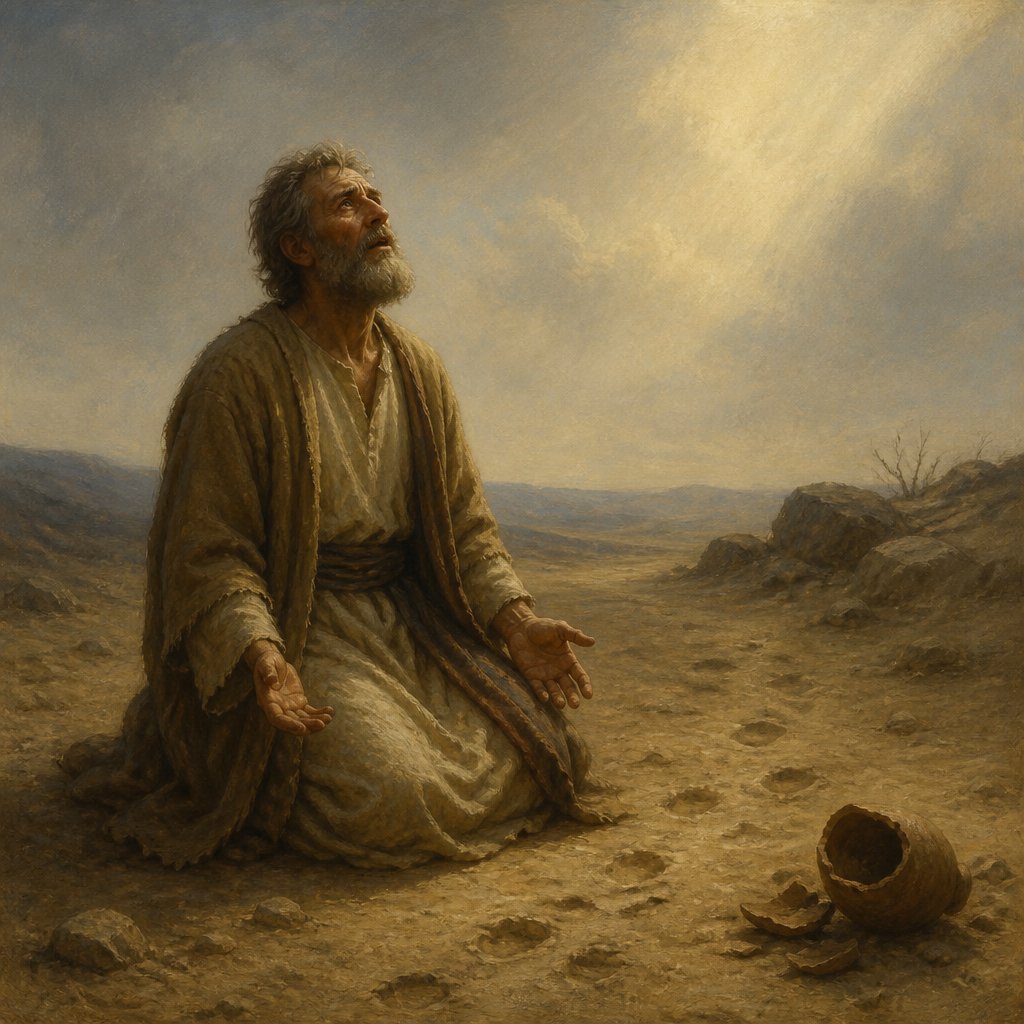
Job 10:6 in the King James Version of the Bible reads, "That thou inquirest after mine iniquity, and searchest after my sin?" This verse is part of a larger passage in the book of Job, which is often seen as a book of poetry and wisdom literature in the Old Testament. In this verse, Job is addressing God, lamenting the fact that God seems to be focused on his sin and iniquity.
The book of Job is a complex and often misunderstood text, and this verse is a key part of Job's lament as he struggles to understand the suffering he is enduring. Job is portrayed as a blameless and upright man who is suddenly struck with a series of calamities, including the loss of his children, his wealth, and his health. As he sits in the ashes, covered in sores, Job wrestles with deep questions about the nature of suffering and the justice of God.
In Job 10:6, Job expresses a sense of frustration and bewilderment at God's apparent focus on his sin. He feels as though God is relentlessly searching for any wrongdoing on his part, and this adds to his despair and sense of alienation from God. The verse reflects the idea that God is distant, aloof, and unfairly accusing Job of hidden sins.
The themes in this verse are profound and are central to the message of the book of Job. One of the main themes is the problem of evil and suffering. Job's story raises questions about the nature of suffering and the reasons for why good people experience pain and loss. Job's friends try to explain his suffering as a result of his sin, but Job vehemently denies this and pleads for an audience with God to seek an explanation.
Another important theme in this verse is the tension between divine justice and human suffering. Job feels as though he is being unfairly targeted by God, and he yearns for a chance to present his case and defend himself against these accusations. This raises questions about the nature of justice and the relationship between God and humanity.
The context of this verse is important for understanding its significance. Job is challenging God and expressing a deep sense of anguish at the suffering he is experiencing. He is searching for answers and seeking to make sense of his pain. This verse captures Job's sense of alienation from God and his frustration at the lack of understanding and compassion in his situation.
The symbolism in this verse reflects the broader themes of the book of Job. The image of God searching for Job's iniquity symbolizes the idea of divine scrutiny and judgment. Job feels as though God is unsympathetically scrutinizing his every move, and this symbolizes the intense pressure and sense of accusation that Job experiences.
In the larger context of the book of Job, this verse ultimately points to the need for faith and trust in God, even in the midst of suffering and doubt. Job's story ultimately ends with a revelation of God's wisdom and power, and Job is restored and blessed abundantly. This verse captures a moment of despair and questioning, but it is part of a larger narrative of struggle, growth, and eventual reconciliation with God.
In summary, Job 10:6 is a poignant and emotional expression of Job's distress and confusion in the face of immense suffering. It encapsulates the central themes of the book of Job, including the problem of evil, the tension between divine justice and human experience, and the need for faith and trust in God. This verse is a powerful reflection of human struggle and the search for meaning in the midst of pain and doubt.
Get our apps


Artwork for Job 10:6

Job 10:6 - "That thou enquirest after mine iniquity, and searchest after my sin?"

"That thou enquirest after mine iniquity, and searchest after my sin?" - Job 10:6

Job 6:10 - "Then should I yet have comfort; yea, I would harden myself in sorrow: let him not spare; for I have not concealed the words of the Holy One."

Job 6:1 - "But Job answered and said,"

Job 40:6 - "¶ Then answered the LORD unto Job out of the whirlwind, and said,"

"But Job answered and said," - Job 6:1

Job 42:10 - "And the LORD turned the captivity of Job, when he prayed for his friends: also the LORD gave Job twice as much as he had before."

Job 27:6

Job 10:10 - "Hast thou not poured me out as milk, and curdled me like cheese?"

Job 6:6 - "Can that which is unsavoury be eaten without salt? or is there any taste in the white of an egg?"

"¶ Then answered the LORD unto Job out of the whirlwind, and said," - Job 40:6

Job 30:6 - "To dwell in the clifts of the valleys, in caves of the earth, and in the rocks."

Job 37:10 - "By the breath of God frost is given: and the breadth of the waters is straitened."

Job 18:10 - "The snare is laid for him in the ground, and a trap for him in the way."

Job 28:6 - "The stones of it are the place of sapphires: and it hath dust of gold."

Job 29:10 - "The nobles held their peace, and their tongue cleaved to the roof of their mouth."

Job 6:16 - "Which are blackish by reason of the ice, and wherein the snow is hid:"

Job 36:6 - "He preserveth not the life of the wicked: but giveth right to the poor."

Job 42:6 - "Wherefore I abhor myself, and repent in dust and ashes."

Job 26:6 - "Hell is naked before him, and destruction hath no covering."

Job 38:10 - "And brake up for it my decreed place, and set bars and doors,"

Job 6:18 - "The paths of their way are turned aside; they go to nothing, and perish."

Job 6:19 - "The troops of Tema looked, the companies of Sheba waited for them."

Job 6:12 - "Is my strength the strength of stones? or is my flesh of brass?"

Job 10:5 - "Are thy days as the days of man? are thy years as man's days,"

Job 21:10 - "Their bull gendereth, and faileth not; their cow calveth, and casteth not her calf."

Job 10:4 - "Hast thou eyes of flesh? or seest thou as man seeth?"

Job 13:6 - "Hear now my reasoning, and hearken to the pleadings of my lips."

Job 5:10 - "Who giveth rain upon the earth, and sendeth waters upon the fields:"

Job 4:10 - "The roaring of the lion, and the voice of the fierce lion, and the teeth of the young lions, are broken."