What does Job 14:2 mean?
“He cometh forth like a flower, and is cut down: he fleeth also as a shadow, and continueth not.” — Job 14:2
Job 14:2 in the KJV says, “He cometh forth like a flower, and is cut down: he fleeth also as a shadow, and continueth not.” In the flow of Job’s speech, this verse is part of his sober meditation on what human life is like under the weight of suffering and the certainty of death. Job is not giving a detached proverb; he is speaking as a man afflicted, trying to make sense of existence before God while his body, reputation, and hopes seem to be collapsing. The words are simple, but they carry a layered meaning: life appears briefly, possesses a real beauty and promise, and then vanishes with a speed and finality that feels shocking.
The immediate context begins in Job 14:1, “Man that is born of a woman is of few days, and full of trouble.” Job 14:2 continues that thought by turning “few days” into two pictures the reader can see. A “flower” suggests freshness, color, delicacy, and a season of opening. To “cometh forth like a flower” is to say that human life arrives into the world with a kind of splendor and potential, as if it were meant to bloom. Yet “and is cut down” abruptly reverses the image: the flower’s end is not gradual fading only, but something swift, decisive, and often outside its control. The symbolism fits Job’s lived experience. He had “come forth” into a life marked by abundance and honor, but calamity has “cut down” what seemed stable. The flower image captures both the dignity of human life and its fragility: it is real and beautiful, but easily destroyed.
The second image intensifies the point: “he fleeth also as a shadow, and continueth not.” A shadow is inseparable from the moment that produces it, changing with the light and disappearing when the light shifts. It has shape but no substance to hold; you cannot grasp it. To “flee” as a shadow is to pass quickly, almost as if time itself is running. “Continueth not” presses the finality: human life does not remain; it does not stay in the same condition; it cannot be extended by human strength. In Job’s mouth, this is not merely poetic pessimism but a theological lament—an appeal to God to take seriously how brief and vulnerable man is.
Several themes converge in this verse. One is mortality: Job is emphasizing that death is not an abstract doctrine but an ever-present reality that makes human plans precarious. Another is transience: even at its best, life is fleeting; at its worst, it seems violently interrupted. There is also the theme of frailty and dependence: a flower depends on conditions it cannot command, and a shadow depends on light it cannot create. By choosing these images, Job is implicitly saying that man’s life is contingent—given, sustained, and removed at God’s pleasure, whether or not man understands the reasons.
The verse also carries a subtle tension between beauty and loss. The flower is not described as ugly or worthless; it is something worth noticing, which makes its cutting down more poignant. Job’s grief is sharpened by the sense that life is not only short but precious, and therefore the apparent waste of suffering feels intolerable. The shadow image likewise suggests that human life has a real outline and meaning in its moment, but it cannot “continue” in the same visible way. In the broader argument of Job 14, this prepares for Job’s yearning questions about whether there is any hope beyond the grave and why God would scrutinize so fragile a creature.
Significantly, Job 14:2 functions as part of Job’s plea for mercy and perspective. As the chapter proceeds, Job will say in Job 14:5, “Seeing his days are determined, the number of his months are with thee, thou hast appointed his bounds that he cannot pass.” The brevity described in verse 2 is therefore not random fate in Job’s theology; it exists under God’s knowledge and boundary-setting. That conviction deepens the emotional force: if God knows man is like a flower and a shadow, why does God’s dealing with man sometimes feel so severe? Job is pushing the reader to sit inside that question rather than resolving it quickly.
In its significance, Job 14:2 speaks with universal honesty about the human condition, but it does so through Job’s particular anguish. It teaches that life’s outward bloom does not guarantee durability, and that time moves with the ungraspable speed of a shadow. At the same time, it preserves the worth of human life by choosing images that are vivid and meaningful, not contemptuous. The verse is meant to humble human pride, to awaken compassion toward sufferers, and to drive the heart to consider God’s sovereignty over life’s seasons, especially when those seasons are cut short.
Get our apps


Artwork for Job 14:2

Job 14:2

Job 14:2 - "He cometh forth like a flower, and is cut down: he fleeth also as a shadow, and continueth not."
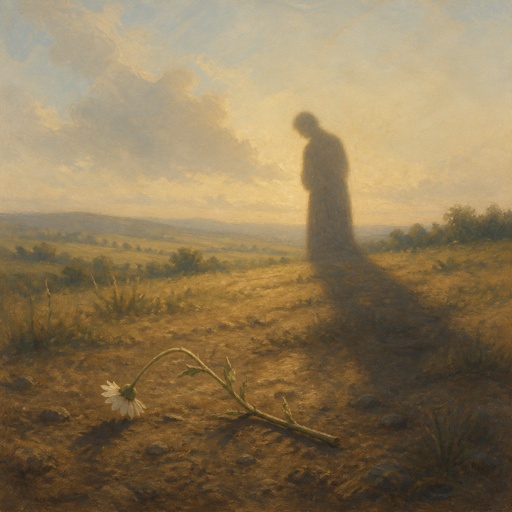
"He cometh forth like a flower, and is cut down: he fleeth also as a shadow, and continueth not." - Job 14:2

"He cometh forth like a flower, and is cut down: he fleeth also as a shadow, and continueth not." - Job 14:2

Job 37:14 - "Hearken unto this, O Job: stand still, and consider the wondrous works of God."

Job 1:14 - "And there came a messenger unto Job, and said, The oxen were plowing, and the asses feeding beside them:"

Job 38:14 - "It is turned as clay to the seal; and they stand as a garment."

Job 36:14 - "They die in youth, and their life is among the unclean."

Job 3:2 - "And Job spake, and said,"

Job 5:14 - "They meet with darkness in the daytime, and grope in the noonday as in the night."

Job 28:14 - "The depth saith, It is not in me: and the sea saith, It is not with me."

Ezekiel 14:14 - "Though these three men, Noah, Daniel, and Job, were in it, they should deliver but their own souls by their righteousness, saith the Lord GOD."

Job 14:1 - "Man that is born of a woman is of few days, and full of trouble."

Job 14:14 - "If a man die, shall he live again? all the days of my appointed time will I wait, till my change come."

Job 23:14 - "For he performeth the thing that is appointed for me: and many such things are with him."

Job 39:14 - "Which leaveth her eggs in the earth, and warmeth them in dust,"

Job 7:14 - "Then thou scarest me with dreams, and terrifiest me through visions:"

Job 24:14 - "The murderer rising with the light killeth the poor and needy, and in the night is as a thief."

Job 3:14 - "With kings and counsellors of the earth, which built desolate places for themselves;"

Job 14:4 - "Who can bring a clean thing out of an unclean? not one."

Job 33:14 - "For God speaketh once, yea twice, yet man perceiveth it not."

Job 14:11 - "As the waters fail from the sea, and the flood decayeth and drieth up:"

Job 29:14 - "I put on righteousness, and it clothed me: my judgment was as a robe and a diadem."

Job 27:14 - "If his children be multiplied, it is for the sword: and his offspring shall not be satisfied with bread."

Job 19:14 - "My kinsfolk have failed, and my familiar friends have forgotten me."

Job 8:14 - "Whose hope shall be cut off, and whose trust shall be a spider's web."

Job 14:7 - "For there is hope of a tree, if it be cut down, that it will sprout again, and that the tender branch thereof will not cease."

Job 14:17 - "My transgression is sealed up in a bag, and thou sewest up mine iniquity."

"Hearken unto this, O Job: stand still, and consider the wondrous works of God." - Job 37:14

"And Job spake, and said," - Job 3:2