What does Job 14:4 mean?
“Who can bring a clean thing out of an unclean? not one.” — Job 14:4
Job 14:4 (KJV) says, "Who can bring a clean thing out of an unclean? not one."
This verse comes from the book of Job in the Old Testament, which tells the story of a man who experiences immense suffering and loss, yet remains faithful to God. Job is grappling with the meaning of suffering and the justice of God, as he deals with the loss of his wealth, health, and family. In this verse, Job is questioning the ability for something pure to emerge from an impure source, which reflects his struggle to understand the reason for his suffering.
The theme of purity and impurity is central to this verse. Job is grappling with the idea that something clean and pure can come from a source that is unclean and impure. This can be understood in both a physical and spiritual sense. Job may be questioning whether good can come out of a situation that seems inherently bad, or whether a person can find purity in the midst of impurity. This theme ties into Job's larger struggle with suffering and the justice of God, as he tries to make sense of his experiences and find meaning in the midst of his pain.
The context of this verse is important to understand its significance. Job is facing overwhelming challenges and is in the midst of a heated debate with his friends about the reasons for his suffering. His friends are convinced that Job’s suffering is a result of his own sin, while Job maintains his innocence and questions the justice of God. This verse can be seen as part of Job's argument against his friends' simplistic understanding of suffering and his attempt to grapple with the complicated nature of pain and hardship.
Symbolism also plays a significant role in this verse. The idea of something clean coming from something unclean can be seen as a spiritual concept, reflecting the human struggle to find purity and goodness in a world that is often filled with suffering and evil. It can also be seen as a reflection of Job's own experience, as he seeks to find a sense of righteousness and justice in the midst of his suffering.
Overall, Job 14:4 (KJV) is a powerful verse that speaks to the universal struggle to find purity and goodness in the midst of impurity and suffering. It reflects Job's larger existential crisis and his attempt to grapple with the complexities of human experience. This verse forces readers to confront the difficult questions surrounding suffering and the justice of God, and challenges simplistic understandings of good and evil. Ultimately, the verse calls for a deeper reflection on the meaning of suffering and the human search for purity and goodness in a world filled with impurity and hardship.
Get our apps


Artwork for Job 14:4

Job 14:4 - "Who can bring a clean thing out of an unclean? not one."

"Who can bring a clean thing out of an unclean? not one." - Job 14:4

Job 4:14 - "Fear came upon me, and trembling, which made all my bones to shake."
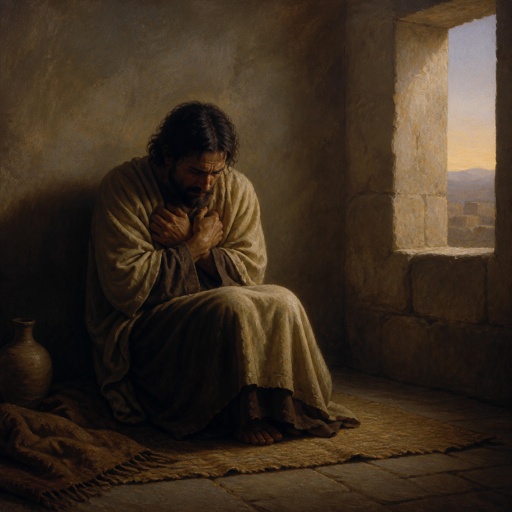
"Fear came upon me, and trembling, which made all my bones to shake." - Job 4:14

Job 37:14 - "Hearken unto this, O Job: stand still, and consider the wondrous works of God."

Job 14:2

Eliphaz speaks to Job in Job 4.

Job 1:14 - "And there came a messenger unto Job, and said, The oxen were plowing, and the asses feeding beside them:"

Job 38:14 - "It is turned as clay to the seal; and they stand as a garment."

Job 36:14 - "They die in youth, and their life is among the unclean."

Job 5:14 - "They meet with darkness in the daytime, and grope in the noonday as in the night."

Job 28:14 - "The depth saith, It is not in me: and the sea saith, It is not with me."

Ezekiel 14:14 - "Though these three men, Noah, Daniel, and Job, were in it, they should deliver but their own souls by their righteousness, saith the Lord GOD."

Job 32:4 - "Now Elihu had waited till Job had spoken, because they were elder than he."

Job 14:1 - "Man that is born of a woman is of few days, and full of trouble."

Job 4:4 - "Thy words have upholden him that was falling, and thou hast strengthened the feeble knees."

Job 14:14 - "If a man die, shall he live again? all the days of my appointed time will I wait, till my change come."

Job 23:14 - "For he performeth the thing that is appointed for me: and many such things are with him."

Job 39:14 - "Which leaveth her eggs in the earth, and warmeth them in dust,"

Job 7:14 - "Then thou scarest me with dreams, and terrifiest me through visions:"

Job 24:14 - "The murderer rising with the light killeth the poor and needy, and in the night is as a thief."

Job 4:1 - "Then Eliphaz the Temanite answered and said,"

Job 38:4-7

Job 3:14 - "With kings and counsellors of the earth, which built desolate places for themselves;"

Job 33:14 - "For God speaketh once, yea twice, yet man perceiveth it not."

Job 14:11 - "As the waters fail from the sea, and the flood decayeth and drieth up:"

Job 29:14 - "I put on righteousness, and it clothed me: my judgment was as a robe and a diadem."

Job 27:14 - "If his children be multiplied, it is for the sword: and his offspring shall not be satisfied with bread."

Job 19:14 - "My kinsfolk have failed, and my familiar friends have forgotten me."

Job 8:14 - "Whose hope shall be cut off, and whose trust shall be a spider's web."