What does Job 18:2 mean?
“How long will it be ere ye make an end of words? mark, and afterwards we will speak.” — Job 18:2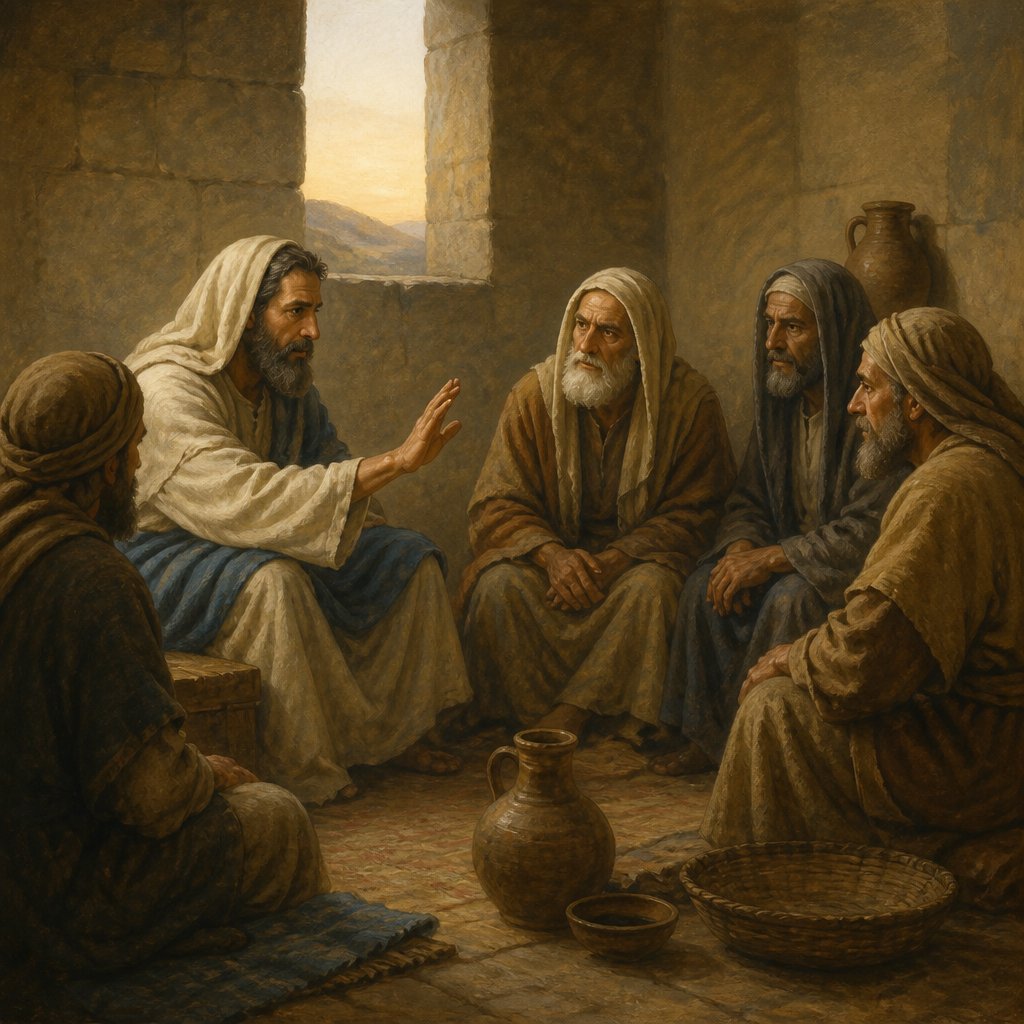
The Bible verse Job 18:2 from the King James Version (KJV) states, "How long will it be ere ye make an end of words? mark, and afterwards we will speak." This verse comes from the book of Job, which is typically attributed to Moses and is found in the Old Testament. Job is a book that grapples with the problem of suffering and the questions it raises about the nature of God and human existence. The verse in question is part of a larger dialogue between Job and his friends as they try to make sense of the suffering Job has experienced.
In this verse, Job's friend Bildad is asking Job how long he will continue to speak and whether he will listen and then respond. The use of the phrase "make an end of words" suggests that Bildad is growing impatient with Job's speeches and is seeking an end to the ongoing debate. Bildad is essentially challenging Job to listen to what he has to say before responding. This can be seen as a reflection of the frustration and impatience that Bildad and the other friends feel as they try to understand and respond to Job's suffering.
The larger context of this verse is important for understanding its meaning. Job is a righteous man who experiences immense suffering, including the loss of his children, his wealth, and his health. Despite his friends' attempts to offer explanations for his suffering, Job continues to express his anguish and despair, questioning why this has happened to him. The book of Job is a profound exploration of the human experience of suffering and the search for meaning in the face of adversity.
The verse also reflects a broader theme in the book of Job, which is the limitations of human understanding. Job's friends, including Bildad, attempt to provide reasons for Job's suffering, but their explanations are ultimately inadequate. The verse captures the tension between human attempts to find meaning in suffering and the incomprehensibility of God's ways. Bildad's impatience with Job's words reflects the frustration of trying to make sense of something that is ultimately beyond human understanding.
Symbolically, the verse can be seen as a reflection of the limitations of human speech. Bildad's impatience with Job's words suggests a frustration with the inadequacy of language to capture the depth of human suffering and the mystery of God's ways. The verse also highlights the importance of listening and understanding before speaking, a theme that is echoed throughout the Bible.
In conclusion, Job 18:2 from the King James Version of the Bible is a verse that captures the frustration and impatience of Job's friend Bildad as he seeks to understand and respond to Job's suffering. The verse reflects the broader themes of the book of Job, including the limitations of human understanding and the inadequacy of language in the face of profound suffering. Ultimately, the verse points towards the mystery of God's ways and the importance of listening and understanding before speaking.
Get our apps


Artwork for Job 18:2

Job 18:2 - "How long will it be ere ye make an end of words? mark, and afterwards we will speak."
"How long will it be ere ye make an end of words? mark, and afterwards we will speak." - Job 18:2

Job 18:18 - "He shall be driven from light into darkness, and chased out of the world."

Job 18-19

Job 18:1 - "Then answered Bildad the Shuhite, and said,"

Job 3:18 - "There the prisoners rest together; they hear not the voice of the oppressor."

Job 18:10 - "The snare is laid for him in the ground, and a trap for him in the way."

Job 3:2 - "And Job spake, and said,"

Job 6:18 - "The paths of their way are turned aside; they go to nothing, and perish."

Job 21:18 - "They are as stubble before the wind, and as chaff that the storm carrieth away."

Job 12:18 - "He looseth the bond of kings, and girdeth their loins with a girdle."

Job 18:21 - "Surely such are the dwellings of the wicked, and this is the place of him that knoweth not God."

Job 18:3 - "Wherefore are we counted as beasts, and reputed vile in your sight?"

Job 27:18 - "He buildeth his house as a moth, and as a booth that the keeper maketh."

Job 38:18 - "Hast thou perceived the breadth of the earth? declare if thou knowest it all."

Job 9:18 - "He will not suffer me to take my breath, but filleth me with bitterness."

Job 18:12 - "His strength shall be hungerbitten, and destruction shall be ready at his side."

Job 15:18 - "Which wise men have told from their fathers, and have not hid it:"

Job 28:18 - "No mention shall be made of coral, or of pearls: for the price of wisdom is above rubies."

Job 34:18 - "Is it fit to say to a king, Thou art wicked? and to princes, Ye are ungodly?"

Job 32:18 - "For I am full of matter, the spirit within me constraineth me."

"He shall be driven from light into darkness, and chased out of the world." - Job 18:18

Job 18:8 - "For he is cast into a net by his own feet, and he walketh upon a snare."

Job 41:18 - "By his neesings a light doth shine, and his eyes are like the eyelids of the morning."

Job 40:18 - "His bones are as strong pieces of brass; his bones are like bars of iron."

Job 24:18 - "He is swift as the waters; their portion is cursed in the earth: he beholdeth not the way of the vineyards."
"Then answered Bildad the Shuhite, and said," - Job 18:1

Job 7:18 - "And that thou shouldest visit him every morning, and try him every moment?"

Job 19:18 - "Yea, young children despised me; I arose, and they spake against me."

Job 18:9 - "The gin shall take him by the heel, and the robber shall prevail against him."