What does Job 25:2 mean?
“Dominion and fear are with him, he maketh peace in his high places.” — Job 25:2
Job 25:2 in the King James Version (KJV) reads as follows: "Dominion and fear are with him, he maketh peace in his high places."
This verse is part of the dialogue between Job and his friends, in which they discuss the nature of God and the reasons for Job's suffering. Job's friends have come to comfort him after he has experienced great loss and suffering, but their attempts to explain his suffering have been misguided. This particular verse comes from the speech of Bildad the Shuhite, one of Job's friends.
The verse speaks to the sovereignty and power of God. The word "dominion" refers to authority, control, and rule. In this context, it emphasizes the extent of God's power and his absolute authority over all creation. The word "fear" here does not refer to terror, but rather reverence, awe, and respect. It signifies an acknowledgment of God's greatness and rightful place as the ultimate authority.
The phrase "he maketh peace in his high places" emphasizes God's ability to bring order and harmony to the highest realms of existence. This can be understood as a reference to the heavenly realms, suggesting that God's rule extends beyond the earth to encompass all levels of existence. It also signifies his ability to calm even the most tumultuous and chaotic situations, instilling peace and order in all that he oversees.
Bildad's words are meant to highlight the majesty and power of God. By emphasizing God's dominion and the peace he brings, Bildad is asserting that God is in control of all things and that his rule brings about harmony and stability. However, it is important to note that Bildad's intention in this context is to convey the idea that Job's suffering must be a result of some sin on his part, as he believed in the concept of divine retribution.
From a thematic perspective, this verse ties into the broader themes of the book of Job, which include the nature of suffering, the justice of God, and the limitations of human wisdom. Throughout the book, Job wrestles with the apparent injustice of his suffering and grapples with the limitations of human understanding in the face of God's divine wisdom. Bildad's words reflect a common theological perspective of his time, which linked suffering directly to sin and divine punishment. However, the book of Job ultimately challenges this simplistic understanding, as God himself reproves Job's friends and praises Job for his righteousness.
Symbolically, this verse serves as a reminder of God's ultimate authority and the peace that comes from submitting to his rule. It emphasizes the importance of revering and acknowledging God's sovereignty, regardless of the circumstances. It also speaks to the idea that God is able to bring order and calm to even the most turbulent situations, offering hope and reassurance to those experiencing trials and tribulations.
In conclusion, Job 25:2 from the King James Version of the Bible is a powerful and evocative verse that underscores the majesty and power of God. It reflects the theological perspectives of its time while also contributing to the rich tapestry of themes and ideas found in the book of Job. Through its emphasis on God's dominion, fear, and ability to bring peace, this verse offers profound insights into the nature of divine authority and the reassurance it brings to those who trust in it.
Get our apps


Artwork for Job 25:2

Job 25:2 - "Dominion and fear are with him, he maketh peace in his high places."

"Dominion and fear are with him, he maketh peace in his high places." - Job 25:2

Job 39:13-25

Job 25:1 - "Then answered Bildad the Shuhite, and said,"

Job 28:25 - "To make the weight for the winds; and he weigheth the waters by measure."

Job 21:25 - "And another dieth in the bitterness of his soul, and never eateth with pleasure."

Job 30:25 - "Did not I weep for him that was in trouble? was not my soul grieved for the poor?"

Job 25:5 - "Behold even to the moon, and it shineth not; yea, the stars are not pure in his sight."

Job 36:25 - "Every man may see it; man may behold it afar off."

Job 6:25 - "How forcible are right words! but what doth your arguing reprove?"

Job 38:25 - "Who hath divided a watercourse for the overflowing of waters, or a way for the lightning of thunder;"

Job 25:6 - "How much less man, that is a worm? and the son of man, which is a worm?"
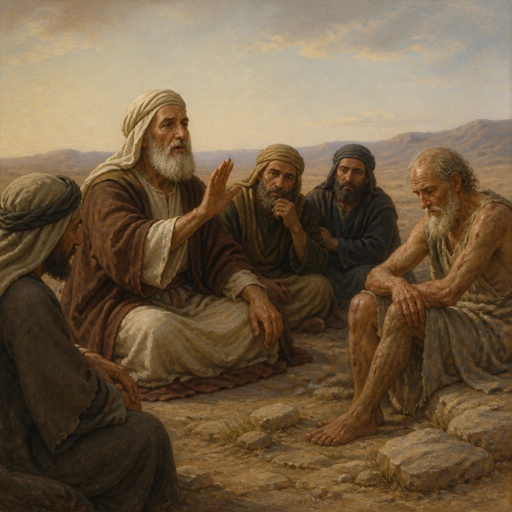
"Then answered Bildad the Shuhite, and said," - Job 25:1

Job 25:3 - "Is there any number of his armies? and upon whom doth not his light arise?"

Job 34:25 - "Therefore he knoweth their works, and he overturneth them in the night, so that they are destroyed."

Job 9:25 - "Now my days are swifter than a post: they flee away, they see no good."

Job 22:25 - "Yea, the Almighty shall be thy defence, and thou shalt have plenty of silver."

Job 15:25 - "For he stretcheth out his hand against God, and strengtheneth himself against the Almighty."

Job 25:4 - "How then can man be justified with God? or how can he be clean that is born of a woman?"

Job 13:25 - "Wilt thou break a leaf driven to and fro? and wilt thou pursue the dry stubble?"

Job 41:25 - "When he raiseth up himself, the mighty are afraid: by reason of breakings they purify themselves."

Job 24:25 - "And if it be not so now, who will make me a liar, and make my speech nothing worth?"

Job 39:19-25 – "Do you give the horse its strength or clothe its neck with a flowing mane?"

Job 12:25 - "They grope in the dark without light, and he maketh them to stagger like a drunken man."

Job 3:2 - "And Job spake, and said,"

Job 19:25 - "For I know that my redeemer liveth, and that he shall stand at the latter day upon the earth:"

Job 31:25 - "If I rejoiced because my wealth was great, and because mine hand had gotten much;"

Job 33:25 - "His flesh shall be fresher than a child's: he shall return to the days of his youth:"

Job 5:25 - "Thou shalt know also that thy seed shall be great, and thine offspring as the grass of the earth."

Job 29:25 - "I chose out their way, and sat chief, and dwelt as a king in the army, as one that comforteth the mourners."