What does Job 26:2 mean?
“How hast thou helped him that is without power? how savest thou the arm that hath no strength?” — Job 26:2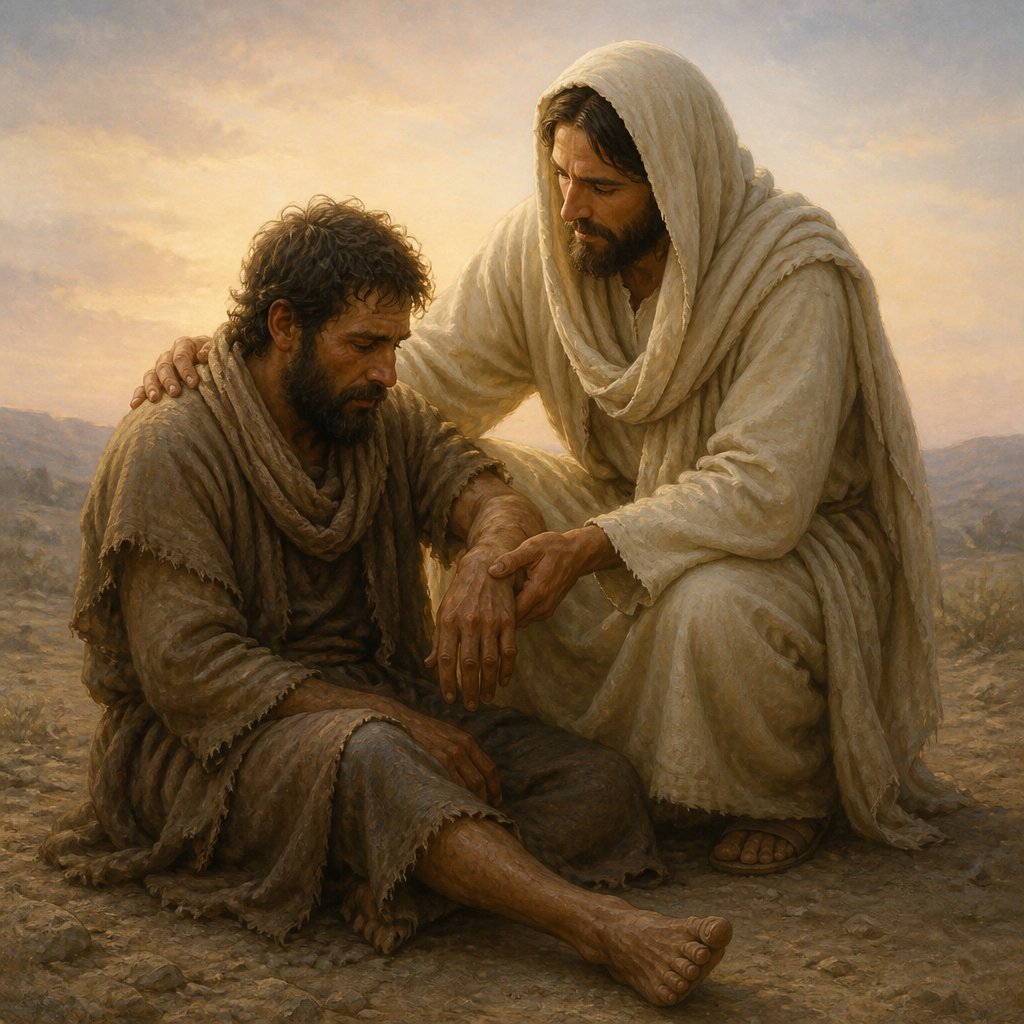
Job 26:2 (KJV) says, "How hast thou helped him that is without power? how savest thou the arm that hath no strength?"
In order to fully understand the meaning and significance of this verse, it's important to provide some context from the Book of Job. The Book of Job is found in the Old Testament and tells the story of a man named Job who experiences immense suffering and loss. Despite his faithfulness, Job is tested by God, and throughout the book, Job questions God's actions and seeks understanding for his suffering.
In Job 26:2, Job addresses his friends who have come to offer him advice and comfort. In previous chapters, Job has expressed his desire for someone to advocate on his behalf before God, to plead his case and defend his innocence. However, in this verse, Job is questioning the capability of his friends to truly offer him help and support. The verse can be seen as a lament, as Job questions the comfort and aid that his friends have provided in his time of need.
The verse also touches on themes of powerlessness and strength. Job is essentially asking his friends how they can assist those who have no power or strength. It serves as a reminder of the vulnerability of the human condition and the limitations of human efforts in the face of suffering and hardship.
The context of this verse is also important to consider. In the larger narrative of the Book of Job, Job's friends have been trying to convince him that his suffering is a result of his own sin, and that he must repent in order to receive God's favor once again. This verse can be seen as Job challenging his friends' understanding of justice and righteousness. He questions how they can claim to support and help someone who is powerless and has no strength, while at the same time accusing him of being the cause of his own suffering.
This verse can also be interpreted symbolically in the broader context of the Bible. It can be seen as a reflection of the broader theme of human weakness and the need for divine assistance. Throughout the Bible, there are numerous references to God's strength being made perfect in human weakness, and the idea that God is a refuge and source of strength for those who are vulnerable and in need.
In summary, Job 26:2 is a verse that raises questions about the nature of support and assistance in times of weakness and suffering. It showcases Job's frustration with his friends' attempts to comfort and assist him, and can be seen as a reflection of the broader themes of powerlessness, strength, and the need for divine aid. As with many verses in the Book of Job, it prompts readers to ponder the complexities of human suffering and the limitations of human understanding in the face of adversity.
Get our apps


Artwork for Job 26:2

Job 26:2 - "How hast thou helped him that is without power? how savest thou the arm that hath no strength?"

"How hast thou helped him that is without power? how savest thou the arm that hath no strength?" - Job 26:2

Job 26:1 - "But Job answered and said,"

"But Job answered and said," - Job 26:1

Job 26:11 - "The pillars of heaven tremble and are astonished at his reproof."

Job 26:6 - "Hell is naked before him, and destruction hath no covering."

Job 9:26 - "They are passed away as the swift ships: as the eagle that hasteth to the prey."

Job 26:5 - "Dead things are formed from under the waters, and the inhabitants thereof."

Job 34:26 - "He striketh them as wicked men in the open sight of others;"

Job 38:26 - "To cause it to rain on the earth, where no man is; on the wilderness, wherein there is no man;"

Job 31:26 - "If I beheld the sun when it shined, or the moon walking in brightness;"

Job 28:26 - "When he made a decree for the rain, and a way for the lightning of the thunder:"

Job 21:26 - "They shall lie down alike in the dust, and the worms shall cover them."

Job 26:10 - "He hath compassed the waters with bounds, until the day and night come to an end."

Job 26:9 - "He holdeth back the face of his throne, and spreadeth his cloud upon it."

Job 6:26 - "Do ye imagine to reprove words, and the speeches of one that is desperate, which are as wind?"

Job 41:26 - "The sword of him that layeth at him cannot hold: the spear, the dart, nor the habergeon."

Job 39:26 - "Doth the hawk fly by thy wisdom, and stretch her wings toward the south?"

Job 26:4 - "To whom hast thou uttered words? and whose spirit came from thee?"

Job 26:12 - "He divideth the sea with his power, and by his understanding he smiteth through the proud."

Job 26:7 - "He stretcheth out the north over the empty place, and hangeth the earth upon nothing."

Job 26:8 - "He bindeth up the waters in his thick clouds; and the cloud is not rent under them."

Job 26:13 - "By his spirit he hath garnished the heavens; his hand hath formed the crooked serpent."

Job 3:2 - "And Job spake, and said,"

Job 15:26 - "He runneth upon him, even on his neck, upon the thick bosses of his bucklers:"

Job 13:26 - "For thou writest bitter things against me, and makest me to possess the iniquities of my youth."

Job 3:26 - "I was not in safety, neither had I rest, neither was I quiet; yet trouble came."

Job 36:26 - "Behold, God is great, and we know him not, neither can the number of his years be searched out."

Job 26:3 - "How hast thou counselled him that hath no wisdom? and how hast thou plentifully declared the thing as it is?"

Job 5:26 - "Thou shalt come to thy grave in a full age, like as a shock of corn cometh in in his season."