What does Job 27:12 mean?
“Behold, all ye yourselves have seen it; why then are ye thus altogether vain?” — Job 27:12
Job 27:12 (KJV) says, "Behold, all ye yourselves have seen it; why then are ye thus altogether vain?" This verse is part of a larger section in the book of Job where Job is responding to his friends who have been accusing him of being a sinner and deserving of his suffering. In this specific verse, Job is challenging his friends to consider the evidence before them and to recognize the futility of their arguments.
To understand the full meaning and context of Job 27:12, it is important to have a grasp of the overall narrative of the book of Job. The story of Job is one of suffering, faith, and the sovereignty of God. Job is a righteous man who experiences extreme hardship and loss, including the deaths of his children and the infliction of painful physical ailments. Throughout the book, Job's friends come to offer him comfort and explanations for his suffering, suggesting that it is a result of his own sin. Job, however, maintains his innocence and wrestles with the apparent injustice of his situation.
In chapter 27, Job is making his final defense against his friends' accusations. He declares that he will not renounce his integrity, and he condemns the hypocrisy of his friends. In verse 12, Job is challenging his friends to consider the evidence that is before them. He is essentially saying, "You have seen the truth with your own eyes, why are you persisting in your empty and futile arguments?"
The theme of truth and perception is central to this verse. Job is imploring his friends to see the reality of the situation, rather than blindly holding on to their misguided beliefs. The word "vain" in this verse carries the connotation of emptiness, futility, and worthlessness. Job is pointing out the emptiness of his friends' arguments and urging them to reconsider their position.
There is also an element of frustration in Job's words. He is exasperated by his friends' refusal to acknowledge the truth that is evident to all. This speaks to the broader theme of human fallibility and the limitations of human understanding. Job's friends are unable to see beyond their own preconceived notions and prejudices, and Job is calling them out on this shortsightedness.
Symbolism can be found in the imagery of sight and perception in this verse. Job is using the sense of sight as a metaphor for understanding and perception. He is calling his friends to truly "see" and comprehend the reality of his innocence. This symbolism underscores the importance of discernment and wisdom in interpreting the circumstances of life and in relating to others.
In a broader theological context, Job's struggle and the discourse with his friends invite contemplation on the nature of suffering and the ways in which humans make sense of hardship. Job's story challenges the idea that suffering is always directly linked to personal sin, and it prompts the reader to consider the complexities of divine justice and human experience.
In conclusion, Job 27:12 is a pivotal verse in the book of Job, capturing the tension and frustration of Job's defense against his friends' accusations. The verse echoes themes of truth, perception, and the limitations of human understanding. It serves as a reminder to approach life's complexities with humility, discernment, and a willingness to see beyond our own preconceived notions.
Get our apps


Artwork for Job 27:12

Job 27:12 - "Behold, all ye yourselves have seen it; why then are ye thus altogether vain?"
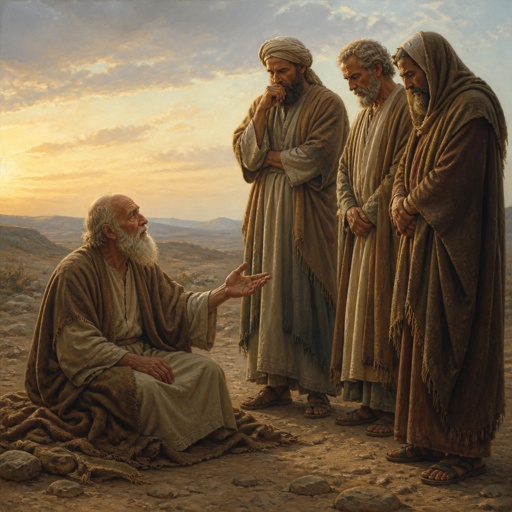
"Behold, all ye yourselves have seen it; why then are ye thus altogether vain?" - Job 27:12

Job 27:1 - "Moreover Job continued his parable, and said,"

Job 27:6

Job 12:1 - "And Job answered and said,"

"Moreover Job continued his parable, and said," - Job 27:1

Job 12:12 - "With the ancient is wisdom; and in length of days understanding."

Job 41:27 - "He esteemeth iron as straw, and brass as rotten wood."

"And Job answered and said," - Job 12:1

Job 30:27 - "My bowels boiled, and rested not: the days of affliction prevented me."

Job 27:18 - "He buildeth his house as a moth, and as a booth that the keeper maketh."

Job 6:27 - "Yea, ye overwhelm the fatherless, and ye dig a pit for your friend."

Job 27:11 - "I will teach you by the hand of God: that which is with the Almighty will I not conceal."

Job 27:3 - "All the while my breath is in me, and the spirit of God is in my nostrils;"

Job 27:10 - "Will he delight himself in the Almighty? will he always call upon God?"

Job 27:9 - "Will God hear his cry when trouble cometh upon him?"

Job 27:14 - "If his children be multiplied, it is for the sword: and his offspring shall not be satisfied with bread."

Job 27:16 - "Though he heap up silver as the dust, and prepare raiment as the clay;"

Job 28:27 - "Then did he see it, and declare it; he prepared it, yea, and searched it out."

Job 27:7 - "Let mine enemy be as the wicked, and he that riseth up against me as the unrighteous."

Job 27:20 - "Terrors take hold on him as waters, a tempest stealeth him away in the night."

Job 27:17 - "He may prepare it, but the just shall put it on, and the innocent shall divide the silver."

Job 39:27 - "Doth the eagle mount up at thy command, and make her nest on high?"

Job 5:27 - "Lo this, we have searched it, so it is; hear it, and know thou it for thy good."

Job 27:4 - "My lips shall not speak wickedness, nor my tongue utter deceit."

Job 34:27 - "Because they turned back from him, and would not consider any of his ways:"

Job 27:13 - "This is the portion of a wicked man with God, and the heritage of oppressors, which they shall receive of the Almighty."

Job 38:27 - "To satisfy the desolate and waste ground; and to cause the bud of the tender herb to spring forth?"

Job 27:15 - "Those that remain of him shall be buried in death: and his widows shall not weep."

Job 20:27 - "The heaven shall reveal his iniquity; and the earth shall rise up against him."