What does Job 3:3 mean?
“Let the day perish wherein I was born, and the night in which it was said, There is a man child conceived.” — Job 3:3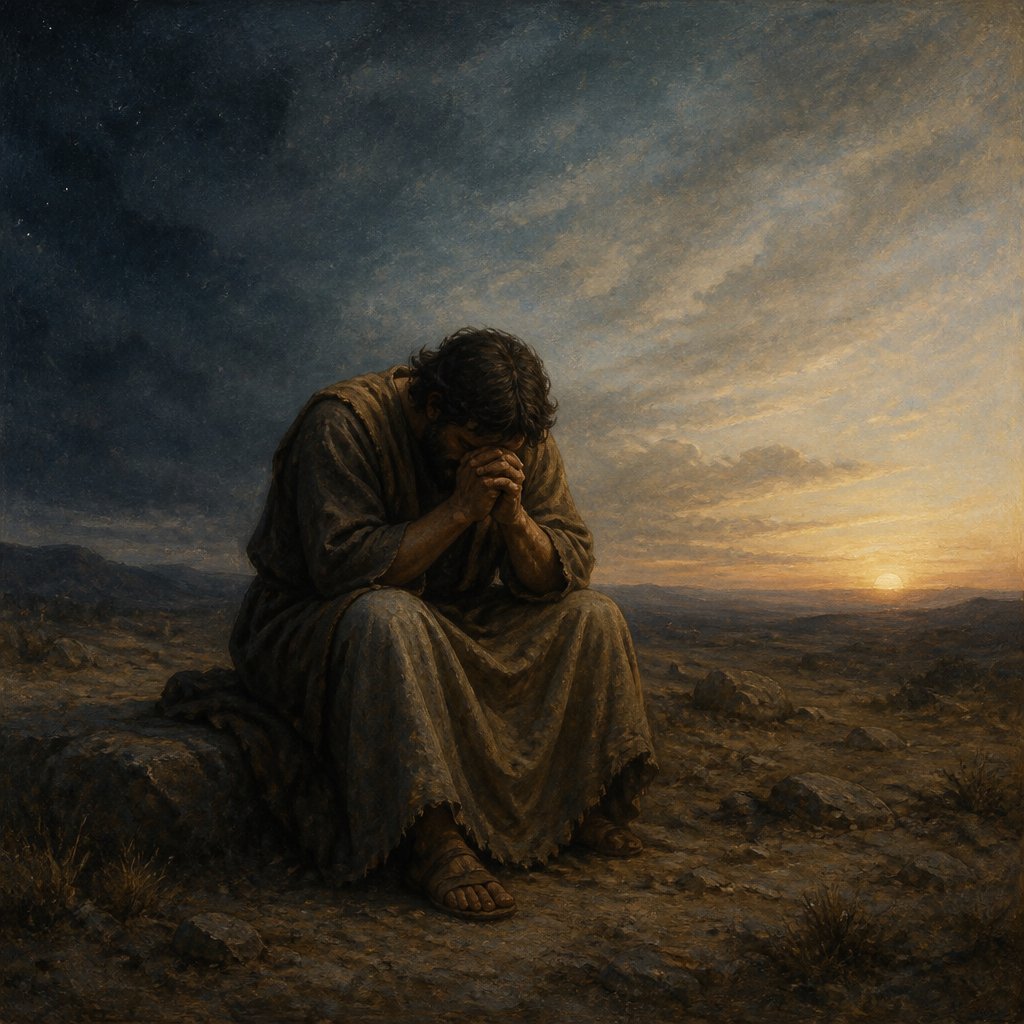
Job 3:3 (KJV) says, "Let the day perish wherein I was born, and the night in which it was said, There is a man child conceived." This verse comes from the book of Job in the Old Testament and is part of Job's lamentation after experiencing immense suffering and loss.
The book of Job is one of the most famous and enduring pieces of biblical literature, and it deals with the age-old question of why bad things happen to good people. Job is described as a blameless and upright man who feared God and turned away from evil (Job 1:1), yet he is subjected to a series of trials and tribulations that test his faith to its limits. The verse Job 3:3 is part of Job's initial lament as he curses the day of his birth.
Job's words in this verse express his deep despair and desire to erase the very moment of his existence. His anguish is so profound that he longs to undo not only the day of his birth but also the night of his conception. This extreme and visceral expression of anguish serves as a powerful reminder of the depth of human suffering and the raw emotions that accompany it.
One of the central themes of the book of Job is the problem of evil and the mystery of suffering. Job's experiences cause him to question the justice and fairness of God, as he grapples with the seemingly arbitrary nature of his suffering. The verse Job 3:3 reflects Job's intense emotional turmoil and his struggle to come to terms with the profound suffering he endures.
The context of this verse is important for understanding its significance. Job has just finished sitting in silence with his three friends for seven days, mourning his losses and physical ailments. The onset of his lamentations begins in chapter 3, as he curses the day of his birth and expresses his longing for death. His lamentations continue throughout the rest of the chapter, as he bemoans the fact that he was even brought into the world if this is the suffering he is destined to endure.
In a broader sense, Job's words in this verse speak to the universal experience of suffering and the desire to find meaning in the midst of it. The book of Job grapples with the age-old question of why the righteous suffer, and Job's outcry in verse 3 reflects the human struggle to make sense of pain and suffering.
Symbolically, Job's desire for the day of his birth to perish and the night of his conception to be erased represents a profound longing for a release from his suffering. It also symbolizes the extent to which suffering can cause a person to question the very foundations of their existence and to long for an escape from the pain.
In conclusion, Job 3:3 from the King James Version of the Bible captures the depth of Job's anguish and his desperate desire to be free from the suffering he is enduring. This verse is a poignant reflection of the human experience of suffering and the universal struggle to find meaning and hope in the midst of pain. Job's lamentations serve as a powerful reminder of the complexity of human emotions and the profound questions that arise in the face of suffering.
Get our apps


Artwork for Job 3:3

Job 3:3 - "Let the day perish wherein I was born, and the night in which it was said, There is a man child conceived."

"Let the day perish wherein I was born, and the night in which it was said, There is a man child conceived." - Job 3:3

Job 3:2 - "And Job spake, and said,"

Job 40:3 - "¶ Then Job answered the LORD, and said,"

Job 1:3

Job 28:3

Job 1:3

Job 3:1 - "After this opened Job his mouth, and cursed his day."

Job 28:3

Job 28:3

Job 1:3

"And Job spake, and said," - Job 3:2

Job 3:20-21 - "Job 3:20-21: Why is light given to those in misery, and life to the bitter of soul, to those who long for death that does not come, who search for it more than for hidden treasure?"

"¶ Then Job answered the LORD, and said," - Job 40:3

Job 1:3 no words

Job 34:3 - "For the ear trieth words, as the mouth tasteth meat."

Job 3:17 - "There the wicked cease from troubling; and there the weary be at rest."

Job 3:18 - "There the prisoners rest together; they hear not the voice of the oppressor."

Job 31:3 - "Is not destruction to the wicked? and a strange punishment to the workers of iniquity?"

Job 3:19 - "The small and great are there; and the servant is free from his master."

Job 3:15 - "Or with princes that had gold, who filled their houses with silver:"

Job 32:3 - "Also against his three friends was his wrath kindled, because they had found no answer, and yet had condemned Job."

Job 18:3 - "Wherefore are we counted as beasts, and reputed vile in your sight?"

Job 24:3 - "They drive away the ass of the fatherless, they take the widow's ox for a pledge."

Job 3:14 - "With kings and counsellors of the earth, which built desolate places for themselves;"

Job 8:3 - "Doth God pervert judgment? or doth the Almighty pervert justice?"

Job 3:22 - "Which rejoice exceedingly, and are glad, when they can find the grave?"

Job 3:20 - "Wherefore is light given to him that is in misery, and life unto the bitter in soul;"

Job 3:21 - "Which long for death, but it cometh not; and dig for it more than for hid treasures;"

Job 13:3 - "Surely I would speak to the Almighty, and I desire to reason with God."