What does Job 32:4 mean?
“Now Elihu had waited till Job had spoken, because they were elder than he.” — Job 32:4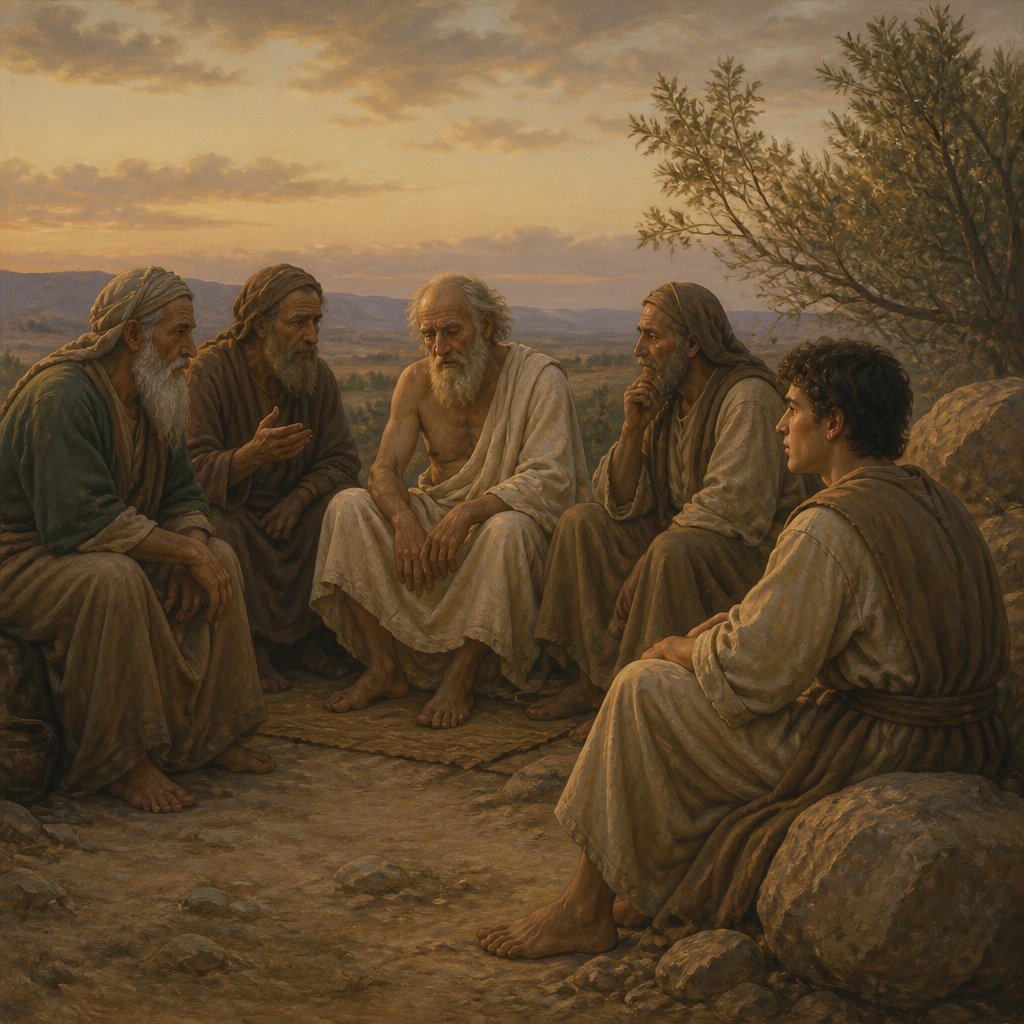
Job 32:4 from the King James Version of the Bible reads, "Now Elihu had waited till Job had spoken, because they were elder than he." This verse is found within the book of Job, which is considered one of the literary masterpieces of the Bible. The book of Job tells the story of a man who faces immense suffering and adversity, testing his faith in God. The verse introduces us to Elihu, a character who appears in the latter part of the book and offers his own perspective on the situation Job is going through.
To fully understand the meaning and significance of Job 32:4, it is necessary to examine the context in which it is situated. The book of Job is part of the poetic and wisdom literature in the Bible, and it grapples with the timeless question of why the righteous suffer. The story revolves around Job, a man who is described as blameless and upright, and yet he experiences a series of unimaginable tragedies, including the loss of his wealth, his children, and his health. Throughout the book, Job engages in a series of discussions with his friends, who attempt to comfort and counsel him. Job's friends argue that his suffering must be a result of sin, and they encourage him to repent. However, Job adamantly maintains his innocence and questions why he is experiencing such intense affliction.
In Job 32, a new character, Elihu, enters the narrative. He is described as being younger in years compared to Job and his friends, and he has been patiently waiting for the older men to finish speaking before he offers his own perspective. This verse serves as a bridge between the previous conversations and Elihu's subsequent speeches, signifying the introduction of a fresh voice and a new perspective on the matter at hand. The arrival of Elihu is significant because it signals a shift in the dialogue about suffering, righteousness, and the nature of God.
Elihu's speeches in the book of Job are marked by their passion and energy, as he seeks to address Job's plight and the arguments put forth by Job's friends. He is critical of both Job and his friends, asserting that they have failed to provide a satisfactory explanation for the suffering that Job is experiencing. Elihu delivers a series of discourses that focus on the theme of divine justice and the nature of God's operations in the world. He emphasizes the importance of humility and the limitations of human understanding when it comes to comprehending the ways of God.
In Job 32:4, the fact that Elihu has patiently waited for his turn to speak highlights his respect for the elder men and the established order of conversation. This demonstrates his humility and willingness to listen before offering his own thoughts. His approach contrasts with the impetuous and hasty manner in which Job's other friends had engaged with him, and it sets the stage for the wisdom and insight that Elihu will later impart.
There are several layers of symbolism and deeper meanings that can be gleaned from Job 32:4. Firstly, the verse conveys the importance of respecting the perspectives and experiences of others, particularly those who are older and wiser. Elihu's actions embody the virtue of patience, and they serve as a reminder of the value of attentive listening and thoughtful reflection before speaking.
Additionally, the arrival of Elihu and his subsequent speeches serve to underscore the theme of the mystery of God's ways. Throughout the book of Job, the characters grapple with the enigma of suffering and the inscrutable nature of divine justice. Elihu's speeches contribute to this overarching theme by highlighting the limitations of human wisdom and the need for humility in the face of the unknown.
Ultimately, Job 32:4 holds a pivotal place in the narrative of the book of Job, as it marks the entrance of a new voice and a fresh perspective. It sets the stage for the profound insights that Elihu will offer as he engages with the central questions and dilemmas that the book presents. The verse serves as a reminder of the importance of respectful dialogue and the value of diverse viewpoints in the pursuit of understanding profound and complex issues.
Get our apps


Artwork for Job 32:4

Job 32:4 - "Now Elihu had waited till Job had spoken, because they were elder than he."

"Now Elihu had waited till Job had spoken, because they were elder than he." - Job 32:4

Job 32:1 - "So these three men ceased to answer Job, because he was righteous in his own eyes."

Job 32:12 - "Yea, I attended unto you, and, behold, there was none of you that convinced Job, or that answered his words:"

Job 32:3 - "Also against his three friends was his wrath kindled, because they had found no answer, and yet had condemned Job."

Job 32:15 - "They were amazed, they answered no more: they left off speaking."

Job 32:8 - "But there is a spirit in man: and the inspiration of the Almighty giveth them understanding."

Job 21:32 - "Yet shall he be brought to the grave, and shall remain in the tomb."

Job 15:32 - "It shall be accomplished before his time, and his branch shall not be green."

Job 36:32 - "With clouds he covereth the light; and commandeth it not to shine by the cloud that cometh betwixt."

Job 32:9 - "Great men are not always wise: neither do the aged understand judgment."

Job 31:32 - "The stranger did not lodge in the street: but I opened my doors to the traveller."

Job 32:18 - "For I am full of matter, the spirit within me constraineth me."

Job 32:16 - "When I had waited, (for they spake not, but stood still, and answered no more;)"

Job 32:2 - "Then was kindled the wrath of Elihu the son of Barachel the Buzite, of the kindred of Ram: against Job was his wrath kindled, because he justified himself rather than God."

Job 32:20 - "I will speak, that I may be refreshed: I will open my lips and answer."

Job 32:7 - "I said, Days should speak, and multitude of years should teach wisdom."

Job 32:10 - "Therefore I said, Hearken to me; I also will shew mine opinion."

Job 32:5 - "When Elihu saw that there was no answer in the mouth of these three men, then his wrath was kindled."

Job 41:32 - "He maketh a path to shine after him; one would think the deep to be hoary."

Job 32:17 - "I said, I will answer also my part, I also will shew mine opinion."

Job 32:19 - "Behold, my belly is as wine which hath no vent; it is ready to burst like new bottles."

Job 33:32 - "If thou hast any thing to say, answer me: speak, for I desire to justify thee."

Job 38:32 - "Canst thou bring forth Mazzaroth in his season? or canst thou guide Arcturus with his sons?"

Job 34:32 - "That which I see not teach thou me: if I have done iniquity, I will do no more."

Job 9:32 - "For he is not a man, as I am, that I should answer him, and we should come together in judgment."

Eliphaz speaks to Job in Job 4.

Job 32:22 - "For I know not to give flattering titles; in so doing my maker would soon take me away."

Job 32:14 - "Now he hath not directed his words against me: neither will I answer him with your speeches."

"So these three men ceased to answer Job, because he was righteous in his own eyes." - Job 32:1