What does Job 32:5 mean?
“When Elihu saw that there was no answer in the mouth of these three men, then his wrath was kindled.” — Job 32:5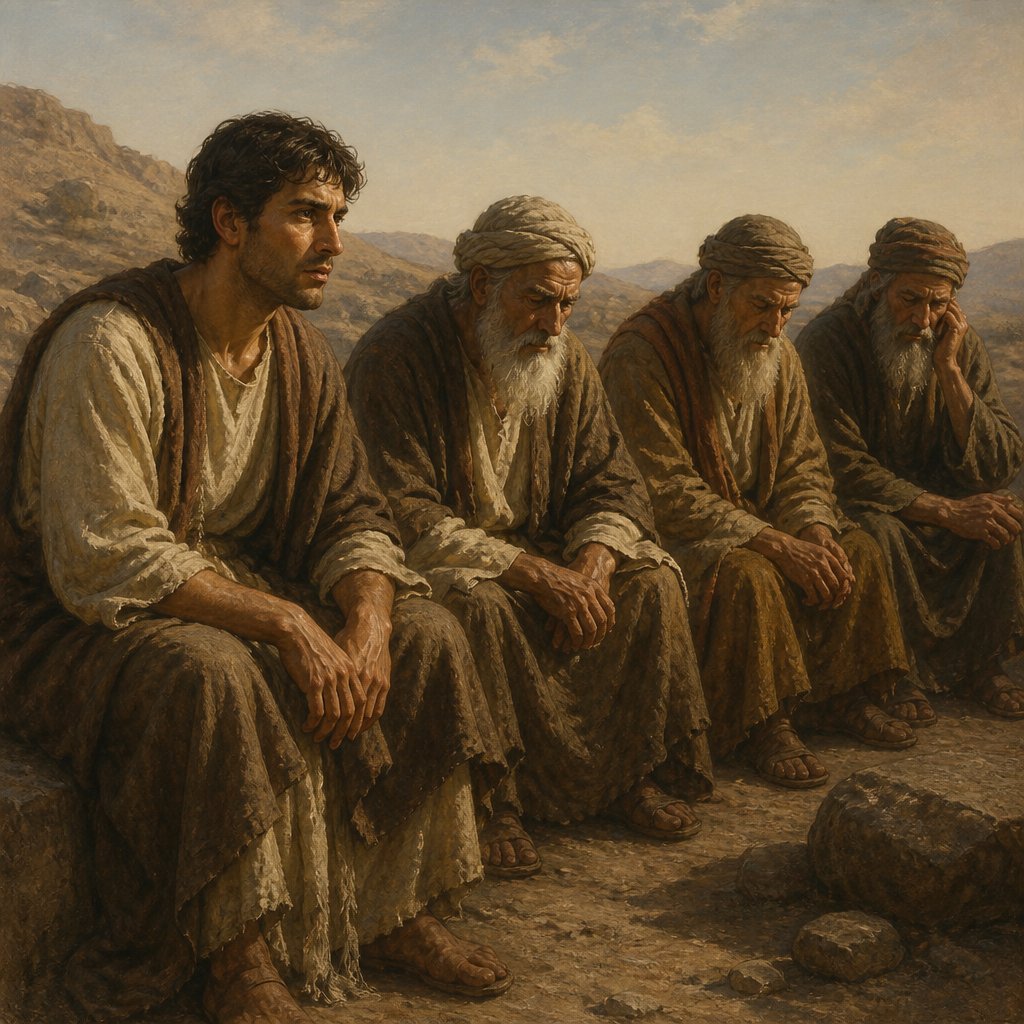
Job 32:5 (KJV) states, "When Elihu saw that there was no answer in the mouth of these three men, then his wrath was kindled." This verse is found in the book of Job, which is a part of the Old Testament in the Bible. The book of Job is a complex and profound work that addresses the age-old question of why the righteous suffer. Job, a righteous and blameless man, experiences a series of devastating trials, including the loss of his possessions, his children, and his health. Throughout the book, Job grapples with the enormity of his suffering and the apparent silence of God in the face of his cries for understanding.
In the context of Job 32:5, Elihu, a younger man who has been observing the debate between Job and his friends, has been waiting patiently to speak. He is frustrated by the lack of a satisfactory answer from Job's three friends, Eliphaz, Bildad, and Zophar, to Job's suffering. Elihu's frustration is a reflection of his belief that the previous arguments have failed to provide a sufficient explanation for Job's suffering. He sees that the three men have been unable to effectively respond to Job's lament and defend God's justice, and this failure ignites his anger.
The verse reflects a turning point in the book of Job, as it marks the beginning of Elihu's speech. Elihu's words are intended to provide a new perspective on the situation that has so far eluded the older men. His impassioned response indicates that he feels compelled to interject in the discussion because he believes he has insights that the others lack.
Thematically, this verse ties in with the broader themes of justice and theodicy explored in the book of Job. The concept of theodicy is particularly relevant, as it concerns the attempt to reconcile the existence of evil and suffering in the world with the idea of a just and loving God. Elihu's frustration with the failure of the three men to effectively address this issue reflects the broader struggle to understand the nature of suffering and God's role in it.
Symbolically, the verse also holds significance. Elihu's anger can be seen as representative of the frustration and righteous indignation of those who yearn for justice and understanding in the face of adversity. His anger reflects a desire for resolution and a refusal to accept platitudes in the face of deep suffering.
In a broader theological context, Job 32:5 can also be seen as reflecting a deeper truth about the nature of God and human suffering. While the inability of Job's friends to provide a satisfying answer to his suffering might suggest a lack of understanding of God's ways, it also points to the limitations of human wisdom and insight. The verse sets the stage for Elihu's speech, in which he offers his own perspective on suffering and the justice of God. Ultimately, the book of Job grapples with the mystery of suffering and the enigmatic nature of God's ways, and Elihu's response serves as a crucial part of this exploration.
In conclusion, Job 32:5 (KJV) is a pivotal verse in the book of Job, marking the beginning of a new perspective on the issue of suffering and God's justice. Elihu's frustration and anger speak to the broader themes of justice and theodicy that permeate the book, as well as the human struggle to understand the nature of suffering and God's role in it. The verse holds great theological and symbolic significance, as it reflects the limitations of human wisdom and the yearning for deeper insight into the mysteries of suffering and God's ways.
Get our apps


Artwork for Job 32:5

Job 32:5 - "When Elihu saw that there was no answer in the mouth of these three men, then his wrath was kindled."
"When Elihu saw that there was no answer in the mouth of these three men, then his wrath was kindled." - Job 32:5

Job 32:1 - "So these three men ceased to answer Job, because he was righteous in his own eyes."

Job 32:12 - "Yea, I attended unto you, and, behold, there was none of you that convinced Job, or that answered his words:"

Job 32:4 - "Now Elihu had waited till Job had spoken, because they were elder than he."

Job 32:3 - "Also against his three friends was his wrath kindled, because they had found no answer, and yet had condemned Job."

Job 32:15 - "They were amazed, they answered no more: they left off speaking."

Job 32:8 - "But there is a spirit in man: and the inspiration of the Almighty giveth them understanding."

Job 21:32 - "Yet shall he be brought to the grave, and shall remain in the tomb."

Job 36:32 - "With clouds he covereth the light; and commandeth it not to shine by the cloud that cometh betwixt."

Job 15:32 - "It shall be accomplished before his time, and his branch shall not be green."

Job 32:9 - "Great men are not always wise: neither do the aged understand judgment."

Job 31:32 - "The stranger did not lodge in the street: but I opened my doors to the traveller."

Job 32:18 - "For I am full of matter, the spirit within me constraineth me."

Job 32:16 - "When I had waited, (for they spake not, but stood still, and answered no more;)"

Job 32:2 - "Then was kindled the wrath of Elihu the son of Barachel the Buzite, of the kindred of Ram: against Job was his wrath kindled, because he justified himself rather than God."

Job 32:20 - "I will speak, that I may be refreshed: I will open my lips and answer."

Job 32:7 - "I said, Days should speak, and multitude of years should teach wisdom."

Job 32:10 - "Therefore I said, Hearken to me; I also will shew mine opinion."

Job 41:32 - "He maketh a path to shine after him; one would think the deep to be hoary."

Job 32:17 - "I said, I will answer also my part, I also will shew mine opinion."

Job 32:19 - "Behold, my belly is as wine which hath no vent; it is ready to burst like new bottles."

Job 33:32 - "If thou hast any thing to say, answer me: speak, for I desire to justify thee."

Psalm 32 1-5

Job 38:32 - "Canst thou bring forth Mazzaroth in his season? or canst thou guide Arcturus with his sons?"

Psalm 32 1-5

Psalm 32 1-5

Job 34:32 - "That which I see not teach thou me: if I have done iniquity, I will do no more."

Job 9:32 - "For he is not a man, as I am, that I should answer him, and we should come together in judgment."

Job 32:22 - "For I know not to give flattering titles; in so doing my maker would soon take me away."