What does Job 38:34 mean?
“Canst thou lift up thy voice to the clouds, that abundance of waters may cover thee?” — Job 38:34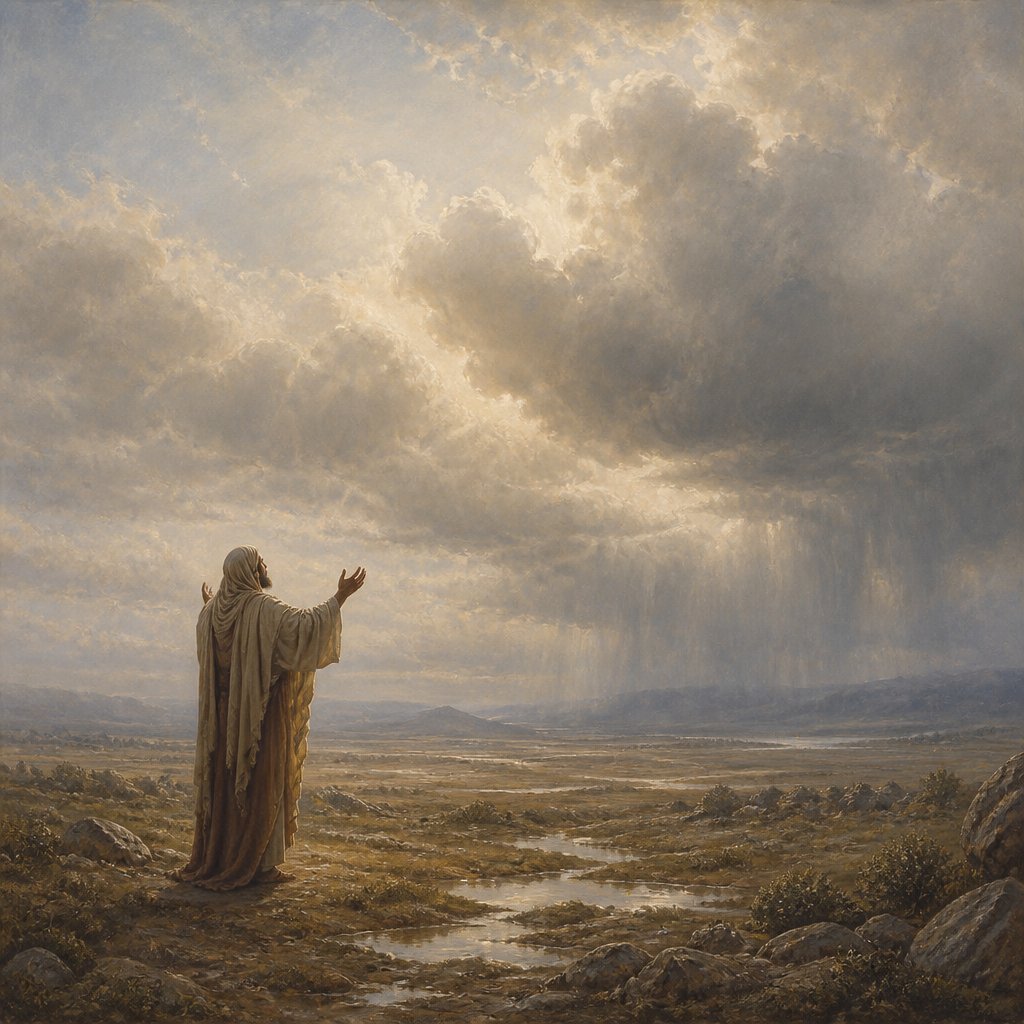
Job 38:34 (KJV) reads: "Canst thou lift up thy voice to the clouds, that abundance of waters may cover thee?"
This verse is part of a passage in the book of Job where God addresses Job and challenges his understanding of the world and his own place in it. In this particular verse, God is asking Job if he has the power to control the weather, specifically the clouds and rain.
Context: The book of Job is a deeply philosophical text that deals with the problem of human suffering and the nature of God's justice. Job, a righteous man, experiences a series of unimaginable tragedies, including the loss of his wealth, health, and family. Throughout the book, Job questions why he is suffering and demands answers from God. In response, God appears to Job in a whirlwind and poses a series of rhetorical questions to illustrate the limitations of human understanding and the vastness of God's power and wisdom.
In this particular verse, God is highlighting the incomprehensible nature of weather and the forces of nature. By asking Job if he can "lift up [his] voice to the clouds," God is emphasizing the impossibility of controlling the elements. The "abundance of waters" refers to the rain that comes from the clouds and covers the earth, symbolizing the uncontrollable and unpredictable nature of natural phenomena.
Meaning: The verse serves to humble Job and remind him of the limitations of human knowledge and understanding. It highlights the vast difference between the abilities of humans and the power of God. In the larger context of the book of Job, this verse is part of a series of questions that God poses to Job in order to emphasize the vastness of God's wisdom and the limitations of human comprehension.
The imagery of lifting one's voice to the clouds speaks to the futility of trying to control things that are beyond human capacity. It also serves as a metaphor for the hubris of humanity in thinking that we can understand and manipulate the natural world. The abundance of waters covering thee represents the overwhelming and uncontrollable forces of nature, highlighting the insignificance of human power in the face of the divine.
Symbolism: The clouds and the waters in this verse have symbolic significance as well. In biblical symbolism, clouds are often associated with the presence and power of God. They represent mystery, transcendence, and the divine. The imagery of lifting up one's voice to the clouds suggests reaching out to the divine and seeking understanding beyond human comprehension.
The abundance of waters symbolizes the forces of nature and the unpredictability of life. In the biblical narrative, water is often associated with chaos and uncontrollable power. In this verse, it represents the overwhelming and incomprehensible aspects of the world that are beyond human control.
Themes: The themes present in this verse include the limitations of human understanding, the power and wisdom of God, and the arrogance of human presumption. It serves as a reminder of the humility and reverence that is required when confronting the mysteries of existence. The verse also speaks to the theme of suffering and the question of why bad things happen to good people. In the larger context of the book of Job, it is a powerful statement about the nature of divine justice and the inherent mystery of God's ways.
Overall, Job 38:34 is a deeply philosophical verse that challenges the reader to contemplate the limits of human knowledge and the vastness of God's power. Its rich imagery and profound symbolism make it a poignant and thought-provoking passage within the larger context of the book of Job.
Get our apps


Artwork for Job 38:34

Job 38:34 - "Canst thou lift up thy voice to the clouds, that abundance of waters may cover thee?"
"Canst thou lift up thy voice to the clouds, that abundance of waters may cover thee?" - Job 38:34

Job 38

Job 38

Job 38:1 - "Then the LORD answered Job out of the whirlwind, and said,"

Job 38:38 - "When the dust groweth into hardness, and the clods cleave fast together?"

Job 38:36

Job 38:36

Job 38:1

Job 38:36

Job 38:36

Job 38:1

Job 38:4-7

Job 34:34 - "Let men of understanding tell me, and let a wise man hearken unto me."

Job 34:35 - "Job hath spoken without knowledge, and his words were without wisdom."

Job 38:14 - "It is turned as clay to the seal; and they stand as a garment."

"Then the LORD answered Job out of the whirlwind, and said," - Job 38:1

Job 34:7 - "What man is like Job, who drinketh up scorning like water?"

Job 38:2 - "Who is this that darkeneth counsel by words without knowledge?"

Job 34:36 - "My desire is that Job may be tried unto the end because of his answers for wicked men."

Job 38:30 - "The waters are hid as with a stone, and the face of the deep is frozen."

"When the dust groweth into hardness, and the clods cleave fast together?" - Job 38:38

Job 38:40 - "When they couch in their dens, and abide in the covert to lie in wait?"

Job 34:5 - "For Job hath said, I am righteous: and God hath taken away my judgment."

Job 34:1 - "Furthermore Elihu answered and said,"

Job 38:7 - "When the morning stars sang together, and all the sons of God shouted for joy?"

Job 38:28 - "Hath the rain a father? or who hath begotten the drops of dew?"

Job 38:15 - "And from the wicked their light is withholden, and the high arm shall be broken."

Job 38:10 - "And brake up for it my decreed place, and set bars and doors,"

Job 38:26 - "To cause it to rain on the earth, where no man is; on the wilderness, wherein there is no man;"