What does Job 39:20 mean?
“Canst thou make him afraid as a grasshopper? the glory of his nostrils is terrible.” — Job 39:20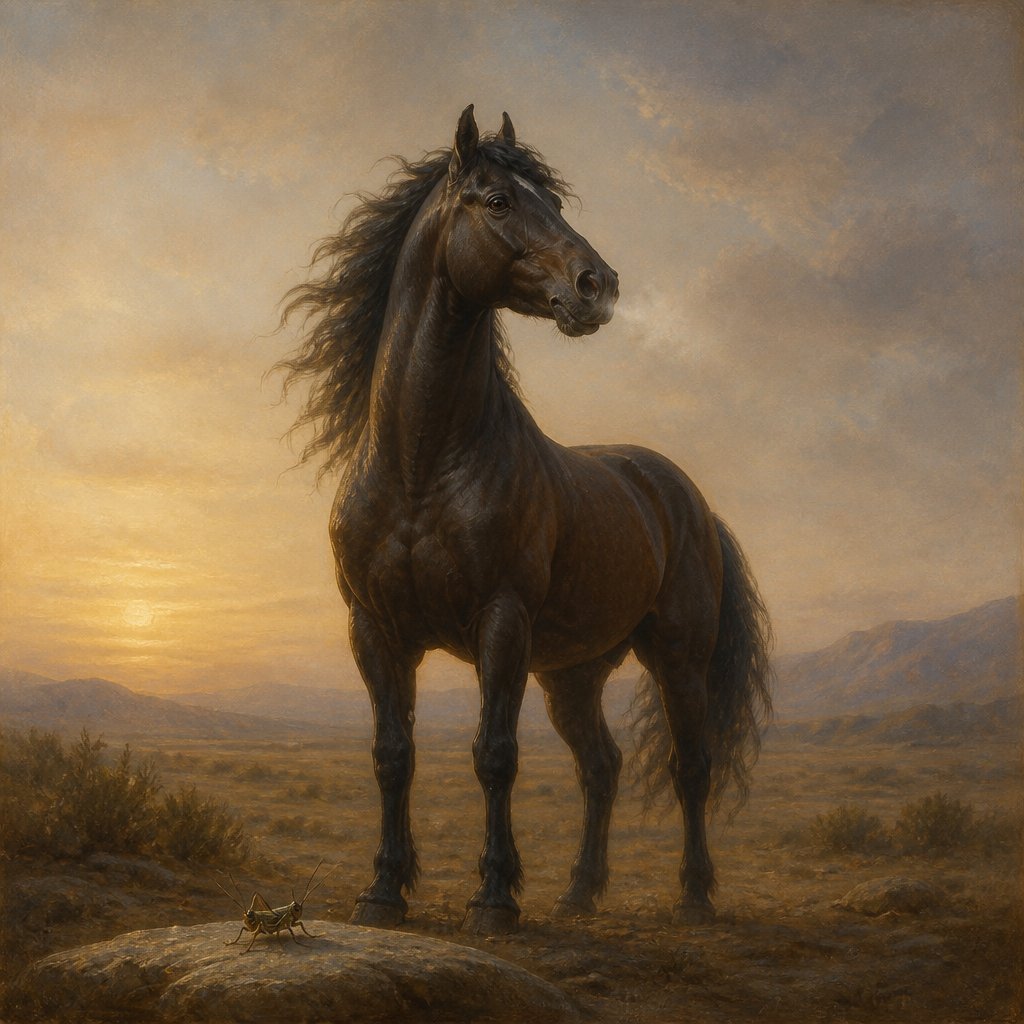
The Bible verse Job 39:20 in the King James Version (KJV) reads, "Canst thou make him afraid as a grasshopper? the glory of his nostrils is terrible." This verse is part of a larger passage in the Book of Job, which is found in the Old Testament. Job is a complex and profound book that deals with the issue of suffering and the sovereignty of God. The book's main character, Job, is a righteous and blameless man who goes through intense suffering and struggles to understand why he is experiencing such hardships. Throughout the book, Job questions God's justice and seeks answers for his suffering.
The passage in which Job 39:20 is found is part of God's response to Job's questions. In this particular section, God is speaking to Job out of a whirlwind, challenging Job's understanding of the natural world and the limitations of human knowledge. The verses that precede and follow Job 39:20 describe the strength and power of a horse, which is used as an example of God's creation that is beyond human control. The horse is depicted as fearless, powerful, and majestic, and the verse in question highlights the creature's fearlessness.
The imagery in Job 39:20 is vivid and powerful, using a grasshopper to make a comparison to the fearlessness and strength of the horse. The grasshopper, a small and seemingly insignificant creature, is unable to make the horse afraid. This comparison emphasizes the idea of the horse's formidable nature and underscores the limitations of human beings in terms of exerting control over such a powerful creature. Additionally, the phrase "the glory of his nostrils is terrible" further emphasizes the strength and majesty of the horse, with the imagery of its nostrils emitting a fearsome and awe-inspiring presence.
From a thematic standpoint, this passage in the Book of Job serves to highlight the sovereignty and power of God over the natural world. The discussion of the horse and its attributes, as well as the seemingly insignificant grasshopper, emphasizes the idea that God's creation exists beyond human understanding and control. This theme ties into the broader context of the Book of Job, which deals with the idea of suffering and the limitations of human knowledge and understanding. Job is ultimately called to trust in the sovereignty of God, even in the midst of his suffering and confusion.
Symbolically, the imagery of the horse and the grasshopper can be interpreted as a representation of the relationship between humanity and the natural world. The horse, as a powerful and majestic creature, can be seen as a symbol of the natural world and the forces that exist beyond human control. In contrast, the grasshopper, as a small and powerless creature, represents human beings and their limitations in the face of the vast and mysterious creation of God. This symbolism serves to underscore the theme of the passage and the broader message of the Book of Job, which is to acknowledge the sovereignty of God and trust in His wisdom and power.
In conclusion, the Bible verse Job 39:20 in the King James Version presents a vivid and powerful depiction of the strength and fearlessness of a horse, using a grasshopper as a comparison. The verse is part of a larger passage in the Book of Job that emphasizes the sovereignty and power of God over the natural world, as well as the limitations of human understanding and control. The imagery and symbolism in this verse serve to underscore the themes of the book and deliver a profound message about trusting in the wisdom and sovereignty of God.
Get our apps


Artwork for Job 39:20

Job 39:20 - "Canst thou make him afraid as a grasshopper? the glory of his nostrils is terrible."
"Canst thou make him afraid as a grasshopper? the glory of his nostrils is terrible." - Job 39:20

Job 39:13-25

Job 39:23 - "The quiver rattleth against him, the glittering spear and the shield."

Job 39:9 - "Will the unicorn be willing to serve thee, or abide by thy crib?"

Job 39:14 - "Which leaveth her eggs in the earth, and warmeth them in dust,"

Job 38:39 - "Wilt thou hunt the prey for the lion? or fill the appetite of the young lions,"

Job 39:7 - "He scorneth the multitude of the city, neither regardeth he the crying of the driver."

Job 39:3 - "They bow themselves, they bring forth their young ones, they cast out their sorrows."

Job 39:28 - "She dwelleth and abideth on the rock, upon the crag of the rock, and the strong place."

Job 39:8 - "The range of the mountains is his pasture, and he searcheth after every green thing."

Job 39:24 - "He swalloweth the ground with fierceness and rage: neither believeth he that it is the sound of the trumpet."

Job 39:13 - "Gavest thou the goodly wings unto the peacocks? or wings and feathers unto the ostrich?"

Job 39:15 - "And forgetteth that the foot may crush them, or that the wild beast may break them."

Job 39:27 - "Doth the eagle mount up at thy command, and make her nest on high?"

Job 39:26 - "Doth the hawk fly by thy wisdom, and stretch her wings toward the south?"

Job 39:22 - "He mocketh at fear, and is not affrighted; neither turneth he back from the sword."

Job 39:29 - "From thence she seeketh the prey, and her eyes behold afar off."

Job 39:6 - "Whose house I have made the wilderness, and the barren land his dwellings."

Job 39:19 - "Hast thou given the horse strength? hast thou clothed his neck with thunder?"

Job 39:19-25 – "Do you give the horse its strength or clothe its neck with a flowing mane?"

Job 39:2 - "Canst thou number the months that they fulfil? or knowest thou the time when they bring forth?"

Job 39:21 - "He paweth in the valley, and rejoiceth in his strength: he goeth on to meet the armed men."

Job 39:17 - "Because God hath deprived her of wisdom, neither hath he imparted to her understanding."

Job 39:10 - "Canst thou bind the unicorn with his band in the furrow? or will he harrow the valleys after thee?"

Job 39:12 - "Wilt thou believe him, that he will bring home thy seed, and gather it into thy barn?"

Job 39:18 - "What time she lifteth up herself on high, she scorneth the horse and his rider."

Job 39:4 - "Their young ones are in good liking, they grow up with corn; they go forth, and return not unto them."

Job 31:39 - "If I have eaten the fruits thereof without money, or have caused the owners thereof to lose their life:"

Job 39:5 - "Who hath sent out the wild ass free? or who hath loosed the bands of the wild ass?"