What does Job 9:7 mean?
“Which commandeth the sun, and it riseth not; and sealeth up the stars.” — Job 9:7
The verse Job 9:7 from the King James Version of the Bible reads, "Which commandeth the sun, and it riseth not; and sealeth up the stars."
This verse is from the book of Job, which is a part of the Old Testament. Job is a book that deals with the problem of suffering and the justice of God. The main character, Job, is a righteous man who faces a series of trials and tribulations, which lead him to question the nature of God and the purpose of suffering. Throughout the book, Job engages in a series of debates with his friends and ultimately with God himself, seeking answers to his questions.
In the context of Job 9:7, Job is responding to Bildad, one of his friends who has been trying to convince him that God is just and that suffering is the result of sin. Job, however, asserts that God's power and wisdom are beyond human understanding, and that there is more to life than a simple equation of sin and suffering. He uses the imagery of the sun and stars to illustrate the vastness and complexity of God's creation and the limits of human comprehension.
The verse itself speaks to the immense power and authority of God. The image of God commanding the sun not to rise and sealing up the stars emphasizes his control over the natural world. It suggests that God's will transcends the laws of nature and that he has the power to alter them at his discretion.
The themes present in this verse include the incomprehensibility of God, the limitations of human understanding, and the sovereignty of God over creation. Job is grappling with the idea that suffering may not always be a direct result of sin, but rather a part of a larger, mysterious plan that is beyond human comprehension. The verse serves as a reminder of the greatness and power of God, as well as the humility and awe that should accompany our attempts to understand and interpret his ways.
Symbolically, the sun and stars represent the entirety of creation. The sun, as the center of our solar system, is essential for life on earth and represents God's provision and sustenance. The stars, on the other hand, are vast and infinite, representing the mysterious and incomprehensible aspects of creation. The fact that God can command the sun not to rise and seal up the stars points to his complete control and sovereignty over all aspects of creation, both the known and the unknown.
Overall, Job 9:7 is a powerful and thought-provoking verse that emphasizes the greatness and sovereignty of God. It challenges our limited understanding of the world and calls us to humble ourselves before the mystery of God's ways. It is a reminder that there is much in life that is beyond our comprehension, and that we must approach God with awe and reverence, recognizing his power and wisdom.
Get our apps


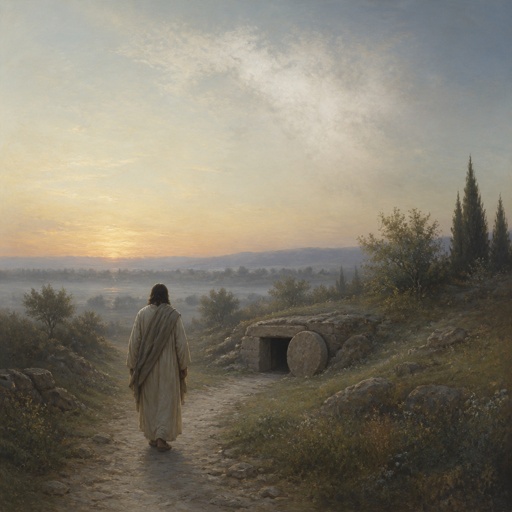
Artwork for Job 9:7

Job 9:7 - "Which commandeth the sun, and it riseth not; and sealeth up the stars."

"Which commandeth the sun, and it riseth not; and sealeth up the stars." - Job 9:7

Job 9:1 - "Then Job answered and said,"

"Then Job answered and said," - Job 9:1

Job 1:9 - "Then Satan answered the LORD, and said, Doth Job fear God for nought?"

Job 9:9 - "Which maketh Arcturus, Orion, and Pleiades, and the chambers of the south."
"As the cloud is consumed and vanisheth away: so he that goeth down to the grave shall come up no more." - Job 7:9

Job 34:7 - "What man is like Job, who drinketh up scorning like water?"

Job 1:7

Job 1:7

Job 1:7

Job 1:9 no words

Job 1:9 no words

Job 7:7 - "O remember that my life is wind: mine eye shall no more see good."

Job 38:4-7

Job 42:9 - "So Eliphaz the Temanite and Bildad the Shuhite and Zophar the Naamathite went, and did according as the LORD commanded them: the LORD also accepted Job."

Job 9:29 - "If I be wicked, why then labour I in vain?"

Job 29:9 - "The princes refrained talking, and laid their hand on their mouth."

Job 12:9 - "Who knoweth not in all these that the hand of the LORD hath wrought this?"

Job 39:9 - "Will the unicorn be willing to serve thee, or abide by thy crib?"

Job 4:9 - "By the blast of God they perish, and by the breath of his nostrils are they consumed."

Job 37:9 - "Out of the south cometh the whirlwind: and cold out of the north."

Job 9:35 - "Then would I speak, and not fear him; but it is not so with me."

Job 24:9 - "They pluck the fatherless from the breast, and take a pledge of the poor."

Job 36:9 - "Then he sheweth them their work, and their transgressions that they have exceeded."

Job 9:26 - "They are passed away as the swift ships: as the eagle that hasteth to the prey."

Job 9:23 - "If the scourge slay suddenly, he will laugh at the trial of the innocent."

"Which maketh Arcturus, Orion, and Pleiades, and the chambers of the south." - Job 9:9

Job 2:7 - "¶ So went Satan forth from the presence of the LORD, and smote Job with sore boils from the sole of his foot unto his crown."

Job 30:9 - "And now am I their song, yea, I am their byword."