What does John 11:34 mean?
“And said, Where have ye laid him? They said unto him, Lord, come and see.” — John 11:34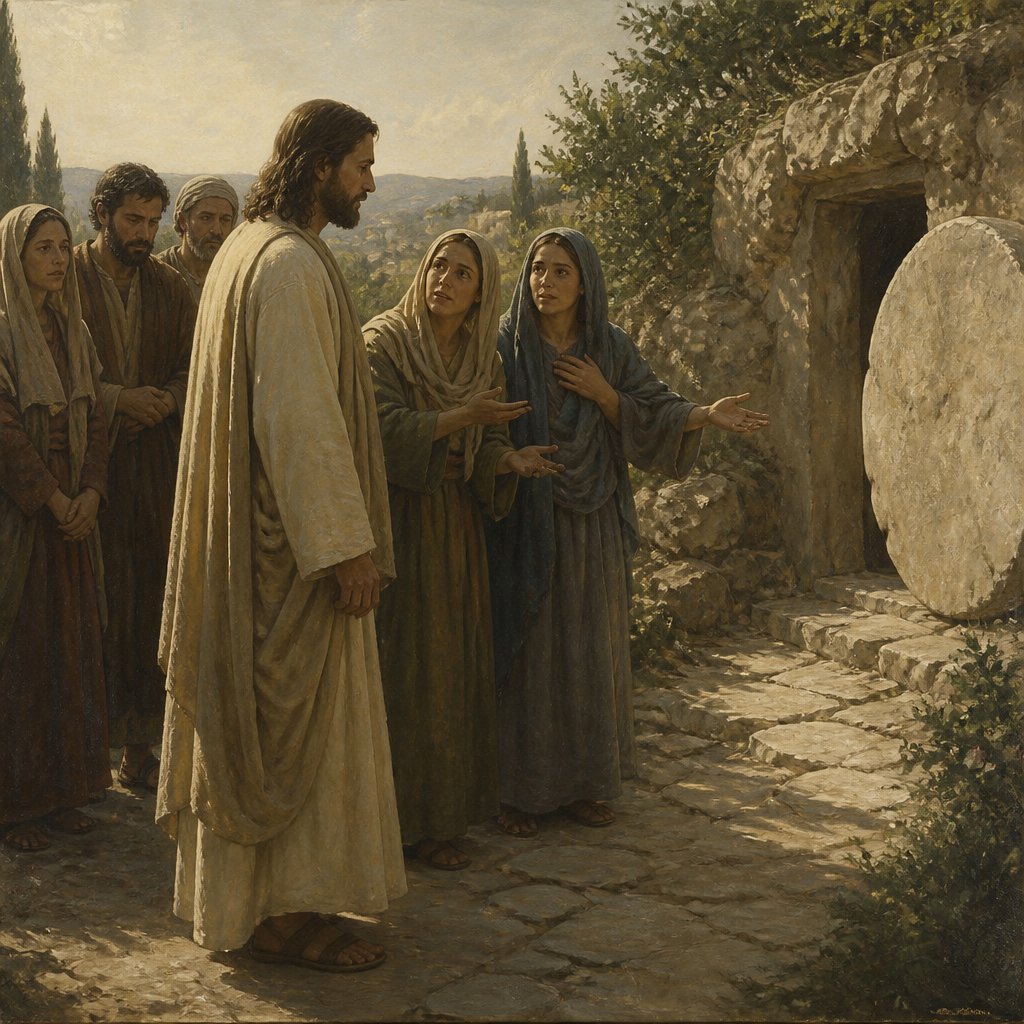
The Bible verse John 11:34 in the King James Version (KJV) states, "And said, Where have ye laid him? They said unto him, Lord, come and see." This verse is part of the story of the resurrection of Lazarus, which is one of the most powerful and well-known stories in the New Testament.
In this verse, Jesus is speaking to the people who were mourning the death of Lazarus, a close friend of Jesus. Jesus had arrived at the town of Bethany, where Lazarus lived, and he was deeply moved by the grief of those around him. He asked where Lazarus had been laid, and the people responded by inviting him to come and see for himself.
This verse is a powerful and poignant moment in the story, as it reveals the deep compassion and empathy that Jesus had for those who were mourning. Despite knowing that he was about to perform an incredible miracle by raising Lazarus from the dead, Jesus took the time to fully engage with the grief and sorrow of those around him. This demonstrates the humanity of Jesus and his ability to empathize with the pain and suffering of others.
In a broader sense, this verse also serves as a reminder of the power and presence of Jesus in our lives. Even in the midst of our deepest grief and sorrow, Jesus is there with us, ready to engage with our pain and offer us comfort. This verse shows that Jesus is not distant or detached from our suffering, but rather, he enters into it with us and offers his loving presence as a source of hope and strength.
The context of this verse is important for understanding its deeper meaning. The story of the resurrection of Lazarus is a powerful demonstration of Jesus's authority over death and his ability to bring about new life. It is a prelude to his own resurrection, which is the central event of the Christian faith. By raising Lazarus from the dead, Jesus foreshadows his own triumph over death and offers a glimpse of the hope and victory that he brings through his resurrection.
The symbolism in this verse is also rich and profound. The question "Where have ye laid him?" reflects Jesus's desire to engage with the reality of death and burial. He enters into the physical and emotional space of death, showing that he is not afraid to confront the pain and brokenness of the world. His willingness to go to the tomb of Lazarus also foreshadows his own journey to the tomb, where he would conquer death once and for all.
The invitation to "come and see" is a poignant reminder of the power of witnessing and experiencing the miracles of Jesus. It is an invitation to encounter the reality of Jesus's presence and power, and to witness the incredible things that he can do. This invitation is not just for those in the story of Lazarus, but for all of us who read and hear about this powerful event. It is an invitation to encounter Jesus in our own lives, to witness his power and presence, and to experience the hope and new life that he offers.
In conclusion, John 11:34 in the King James Version offers a profound and moving portrayal of Jesus's compassion, his power over death, and his invitation for us to encounter him in the midst of our grief and suffering. It is a reminder of the hope and comfort that Jesus offers, and a foreshadowing of the incredible victory that he would achieve through his own resurrection. This verse invites us to come and see for ourselves the power and presence of Jesus in our lives, and to experience the hope and new life that he brings.
Get our apps


Artwork for John 11:34

John 11:34 - "And said, Where have ye laid him? They said unto him, Lord, come and see."
"And said, Where have ye laid him? They said unto him, Lord, come and see." - John 11:34
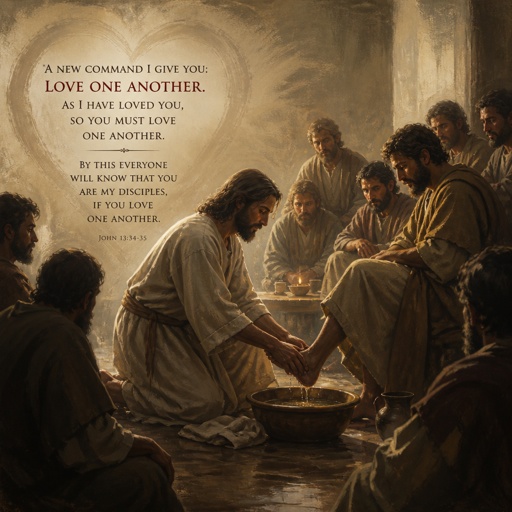
John 13: 34-35

John 1:34 - "And I saw, and bare record that this is the Son of God."

John 6:34 - "Then said they unto him, Lord, evermore give us this bread."

Nehemiah 11:34 - "Hadid, Zeboim, Neballat,"

John 13:34 Love Hope Strength Bless

John 13:34 Love Hope Strength Bless

John 13:34 Love Hope Strength Bless

John 13:34 Love Hope Strength Bless

John 10:34 - "Jesus answered them, Is it not written in your law, I said, Ye are gods?"

John 19:34 - "But one of the soldiers with a spear pierced his side, and forthwith came there out blood and water."

John 5:34 - "But I receive not testimony from man: but these things I say, that ye might be saved."

John 4:34 - "Jesus saith unto them, My meat is to do the will of him that sent me, and to finish his work."

"Hadid, Zeboim, Neballat," - Nehemiah 11:34

John 18:34 - "Jesus answered him, Sayest thou this thing of thyself, or did others tell it thee of me?"

John 7:34 - "Ye shall seek me, and shall not find me: and where I am, thither ye cannot come."

1 Chronicles 11:34 - "The sons of Hashem the Gizonite, Jonathan the son of Shage the Hararite,"

Numbers 11:34 - "And he called the name of that place Kibroth-hattaavah: because there they buried the people that lusted."
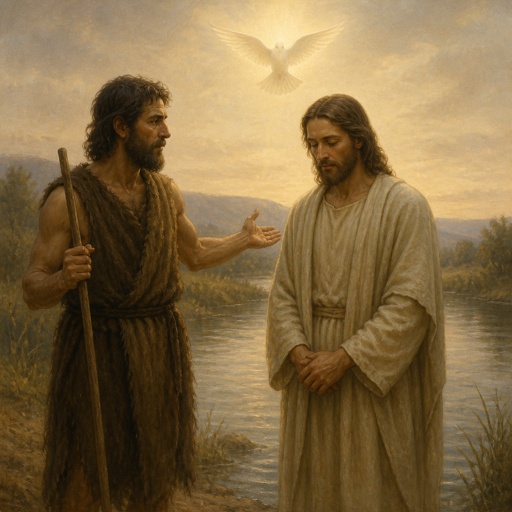
"And I saw, and bare record that this is the Son of God." - John 1:34

John 3:34 - "For he whom God hath sent speaketh the words of God: for God giveth not the Spirit by measure unto him."

John 8:34 - "Jesus answered them, Verily, verily, I say unto you, Whosoever committeth sin is the servant of sin."

Images that depicts the verse Matthew 27:11-34

John 9:34 - "They answered and said unto him, Thou wast altogether born in sins, and dost thou teach us? And they cast him out."

Romans 11:34 - "For who hath known the mind of the Lord? or who hath been his counsellor?"

John (11:35) Jesus wept.
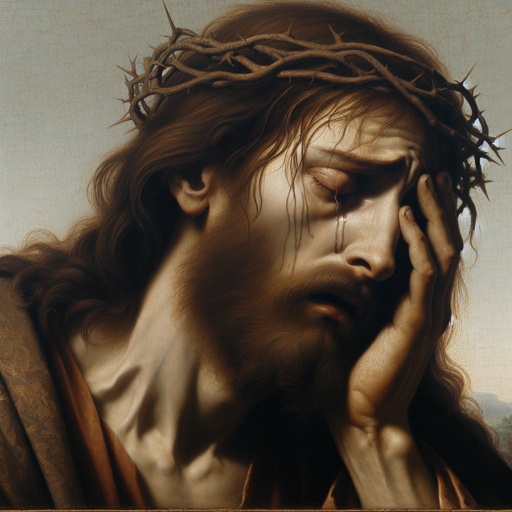
John (11:35) Jesus wept.

John (11:35) Jesus wept.

John 11:35

John 15.1-11