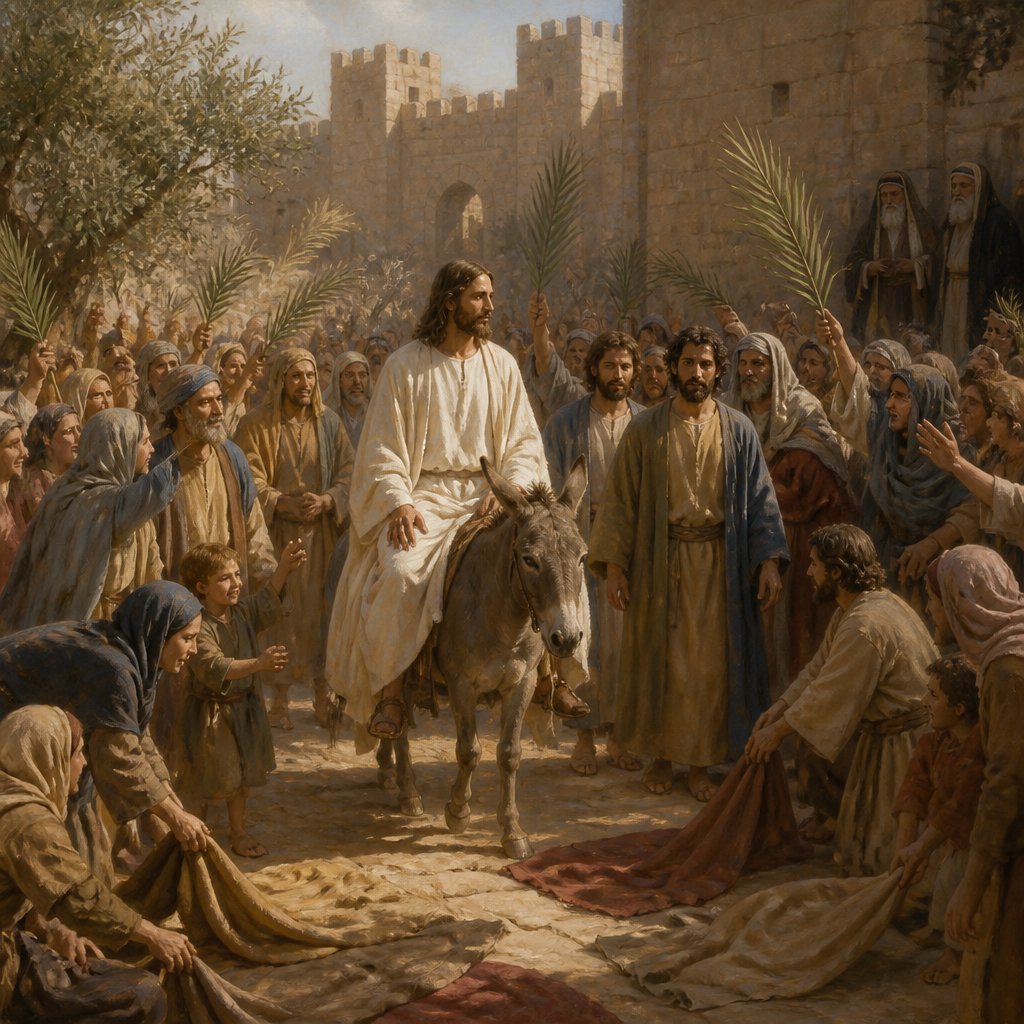
John 12:12-19 (KJV) reads:
12 On the next day much people that were come to the feast, when they heard that Jesus was coming to Jerusalem,
13 Took branches of palm trees, and went forth to meet him, and cried, Hosanna: Blessed is the King of Israel that cometh in the name of the Lord.
14 And Jesus, when he had found a young ass, sat thereon; as it is written,
15 Fear not, daughter of Sion: behold, thy King cometh, sitting on an ass's colt.
16 These things understood not his disciples at the first: but when Jesus was glorified, then remembered they that these things were written of him, and that they had done these things unto him.
17 The people therefore that was with him when he called Lazarus out of his grave, and raised him from the dead, bare record.
18 For this cause the people also met him, for that they heard that he had done this miracle.
19 The Pharisees therefore said among themselves, Perceive ye how ye prevail nothing? behold, the world is gone after him.
In this passage, we witness Jesus' triumphal entry into Jerusalem. This event is often celebrated as Palm Sunday in the Christian tradition, and it holds deep significance in the life and ministry of Jesus. Let's delve into the themes, context, and symbolism present in this powerful passage.
Context:
The events in John 12:12-19 take place during the final week of Jesus’ life, commonly known as Holy Week. Jesus and his disciples were traveling to Jerusalem to celebrate the Passover. As they approached the city, Jesus instructs two of his disciples to bring him a young donkey, fulfilling the prophecy in Zechariah 9:9, “Rejoice greatly, O daughter of Zion! Shout, daughter of Jerusalem! See, your king comes to you, righteous and victorious, lowly and riding on a donkey, on a colt, the foal of a donkey.”
Themes:
1. Fulfillment of Prophecy: The triumphal entry of Jesus into Jerusalem fulfills the prophecy of the coming King in Zechariah 9:9. This demonstrates Jesus' divine authority and the fulfillment of Old Testament prophecies.
2. Recognition of Jesus as the Messiah: The people's reaction to Jesus' entry illustrates their recognition of him as the long-awaited Messiah, evidenced by their use of the term "Hosanna," which means "save, we pray" in Hebrew. The crowd's acknowledgment of Jesus as the King of Israel highlights the theme of Jesus' kingship and the anticipation of a savior.
Symbolism:
1. Palm Branches: The crowd welcomes Jesus by waving palm branches, a symbol of victory and triumph. In Jewish tradition, palm branches were associated with the Feast of Tabernacles and symbolized national deliverance and freedom. By using palm branches, the people express their hope for liberation and redemption through Jesus.
2. The Donkey: Jesus intentionally chooses to ride into Jerusalem on a donkey, signifying humility and peace. In ancient times, a king riding on a donkey symbolized his peaceful intentions, as opposed to riding a horse, which would signify a warrior king. This act aligns with Jesus' message of humility and nonviolent kingship.
Commentary:
The entry of Jesus into Jerusalem on a donkey was a deliberate and symbolic act, fulfilling the prophecy and demonstrating his identity as the long-awaited Messiah. The crowd's exuberant welcome and acknowledgment of Jesus as the King of Israel foreshadow the events to come, including Jesus' crucifixion and resurrection. The Pharisees' response in verse 19 further underscores the significance of Jesus' arrival, as they recognize the growing influence and following he commands.
As we reflect on this passage, we are reminded of Jesus' sacrificial love, humility, and his ultimate purpose of bringing salvation to the world. The triumphal entry serves as a prelude to the events of Holy Week, inviting us to contemplate the significance of Jesus' kingship and the fulfillment of God's redemptive plan through his death and resurrection. It also prompts us to consider our own response to Jesus as the Messiah and King, inviting us to join in the proclamation of "Hosanna" and to surrender our lives to his lordship.
Get our apps


Artwork for John 12:12-19

John 12:12-19 - "The next day the great crowd that had come for the festival heard that Jesus was on his way to Jerusalem. They took palm branches and went out to meet him, shouting, “Hosanna! Blessed is he who comes in the name of the Lord! Blessed is the king of Israel!” Jesus found a young donkey and sat on it, as it is written: “Do not be afraid, Daughter of Zion; see, your king is coming, seated on a donkey’s colt.” At first his disciples did not understand all this. Only after Jesus was glorified did they realize that these things had been written about him and that these things had been done to him. Now the crowd that was with him when he called Lazarus from the tomb and raised him from the dead continued to spread the word. Many people, because they had heard that he had performed this sign, went out to meet him. So the Pharisees said to one another, “See, this is getting us nowhere. Look how the whole world has gone after him!”"

"The next day the great crowd that had come for the festival heard that Jesus was on his way to Jerusalem. They took palm branches and went out to meet him, shouting, “Hosanna! Blessed is he who comes in the name of the Lord! Blessed is the king of Israel!” Jesus found a young donkey and sat on it, as it is written: “Do not be afraid, Daughter of Zion; see, your king is coming, seated on a donkey’s colt.” At first his disciples did not understand all this. Only after Jesus was glorified did they realize that these things had been written about him and that these things had been done to him. Now the crowd that was with him when he called Lazarus from the tomb and raised him from the dead continued to spread the word. Many people, because they had heard that he had performed this sign, went out to meet him. So the Pharisees said to one another, “See, this is getting us nowhere. Look how the whole world has gone after him!”" - John 12:12-19
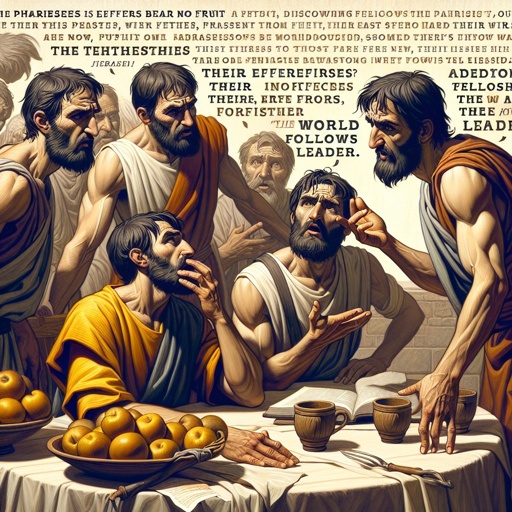
John 12:19 - "The Pharisees therefore said among themselves, Perceive ye how ye prevail nothing? behold, the world is gone after him."

John 12:12 - "¶ On the next day much people that were come to the feast, when they heard that Jesus was coming to Jerusalem,"
John 6:12

John 8:12

John 19:12 - "And from thenceforth Pilate sought to release him: but the Jews cried out, saying, If thou let this man go, thou art not Caesar's friend: whosoever maketh himself a king speaketh against Caesar."

John 12:25
John 8:12

John 8:12

John 8:12
John 12:3

John 8:12

Genesis 19-12

John 20:11-12

Exodus 12:1-19

Nehemiah 12:19 - "And of Joiarib, Mattenai; of Jedaiah, Uzzi;"

Acts 12:12 - "And when he had considered the thing, he came to the house of Mary the mother of John, whose surname was Mark; where many were gathered together praying."

Acts 12:2 - "And he killed James the brother of John with the sword."

1 peter 4:12-19

John 12:39 - "Therefore they could not believe, because that Esaias said again,"

John 12:43 - "For they loved the praise of men more than the praise of God."

John 12:45 - "And he that seeth me seeth him that sent me."

Joshua 12:19 - "The king of Madon, one; the king of Hazor, one;"

John 15:12 love one another

John 18:12 - "Then the band and the captain and officers of the Jews took Jesus, and bound him,"

John 12:33 - "This he said, signifying what death he should die."

John 12:10 - "¶ But the chief priests consulted that they might put Lazarus also to death;"

John 12:5 - "Why was not this ointment sold for three hundred pence, and given to the poor?"

Job 12:19 - "He leadeth princes away spoiled, and overthroweth the mighty."